Ramsey Creek Beach, a popular freshwater swimming spot on Lake Norman in the Charlotte metro area, will stay closed through the end of summer 2026, WCNC reported this month. The reason, as is increasingly common at inland lakes across the Southeast, comes down to water quality — conditions that made the beach unsafe for swimmers.
Most readers will file this under "inconvenient summer news" and move on. That's a reasonable response. But the pattern behind it deserves a closer look, because it shows up at freshwater beaches across the country every July and August, and most families have no backup plan when their local spot goes offline.
What's actually changing
Freshwater beach closures at public lakes and reservoirs are driven primarily by two things: bacterial contamination (usually E. coli from stormwater runoff or waterfowl) and cyanobacteria, also called harmful algal blooms (HABs). Both are worsened by warm temperatures and nutrient runoff from lawns, agriculture, and impervious surfaces upstream.
Recent data from the EPA and state environmental agencies consistently shows HAB events increasing in frequency at inland lakes across the South, Midwest, and Pacific Northwest. This isn't a short-term anomaly. Warmer summers and heavier episodic rain events — which flush more agricultural and lawn-chemical runoff into reservoirs — are pushing closure rates upward at publicly managed beaches.
The practical consequence for families is straightforward: the swimming spot you've relied on for years is increasingly likely to be unavailable on the specific weekend you planned around it. And because closures are often announced with little lead time (water test results can take 24-48 hours to process), you may not know until you're already in the parking lot.
That's a minor inconvenience when the stakes are a cancelled beach day. It becomes more significant if your summer childcare or family routine is built around a specific public amenity that can disappear without warning.
There's a second-order point here for preparedness-minded readers. Public freshwater access — for recreation, but also as a mental reference point for "water near us" — is more conditional than most people realize. The lake isn't closed because something catastrophic happened. It's closed because a routine monitoring threshold was crossed. That's how most real-world resource interruptions work: not dramatically, but administratively.
What we'd actually do
Find out who monitors your nearest public freshwater beach and sign up for their alerts. Most county parks departments and state environmental agencies post beach closure notices online, and some offer email or text alerts. Spending ten minutes finding that signup link means you'll know before you load the car. Search your state's environmental agency website for "beach monitoring" plus your county name.
Identify at least one private or fee-access alternative within a reasonable drive. Many YMCA branches with outdoor pools, private lake clubs, and state park swim beaches operate on independent water systems or have more aggressive testing protocols than municipal parks. Knowing your backup before you need it costs nothing. A one-day guest pass at a YMCA or state park swim area typically runs $10-20 — worth confirming in advance.
If you have kids who depend on a specific public amenity for summer routine, build a two-week buffer into your contingency thinking. Closures at popular beaches can run four to six weeks once a HAB event establishes. That's not a disaster, but it's long enough to disrupt a childcare or camp arrangement. Having one or two alternative activity structures identified — not just "we'll figure something out" — removes a real stressor.
Take water quality data seriously for your own source water. If your household draws from a municipal system that sources from a local reservoir (many do), HAB events can affect treatment costs and, in severe cases, taste and odor. Check your annual Consumer Confidence Report — water utilities are required to mail or post these — to see which source waters feed your tap. This is useful baseline knowledge, not cause for alarm.
The bigger picture
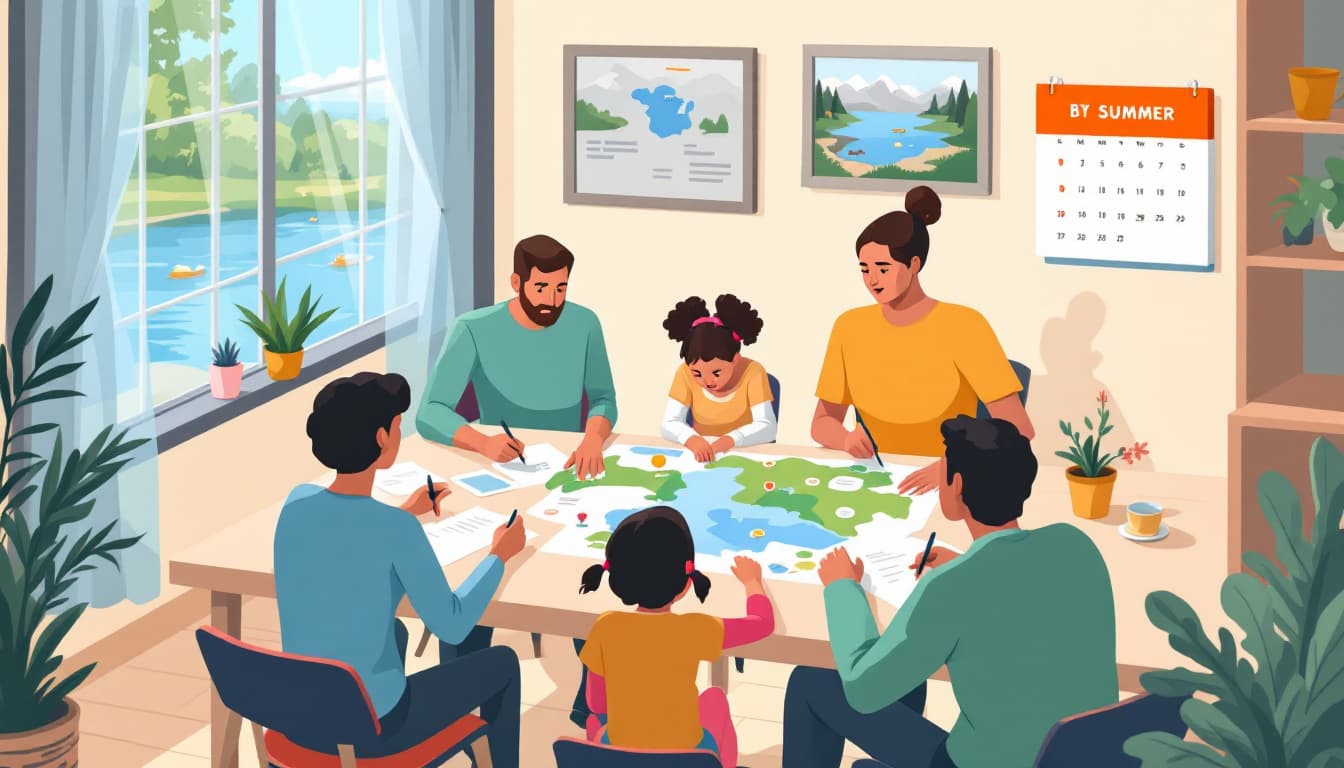
A closed beach is a small thing. It's also a precise illustration of how environmental conditions translate into reduced access to public infrastructure — quietly, through administrative channels, with little warning. Families who've mapped their local resources in advance and identified alternatives are better positioned than those who haven't, not because catastrophe is coming, but because minor disruptions are routine.
Durability doesn't require a bunker. It requires knowing your backup before the first one goes offline.