A report this week from the Oskaloosa Herald put a number to what anyone watching Oregon's fire map already knew: firefighters across the state are managing dozens of active blazes simultaneously, and they are about to face a stretch of hot temperatures and elevated winds that can push a fire across containment lines in hours.
Wind is the variable that turns a manageable fire into an evacuation emergency. It dries fuel, carries embers well ahead of the main fire front, and compresses the window between "watch" and "go" from hours to minutes. When crews are already spread thin across multiple fires, wind events are the moment the math stops working in communities' favor.
Oregon's Level 1, 2, and 3 evacuation system — managed county by county through the Oregon Office of Emergency Management — is good, but it assumes you have time to act once a level changes. Wind makes that assumption wrong.
What's actually changing right now
Multi-fire seasons in Oregon are not new, but the combination of drought-stressed timber, record-low snowpack in some basins this past winter, and back-to-back warm summers has left fuel loads across the Cascades and eastern Oregon exceptionally dry by late July. When several fires are burning at once, air tankers and hotshot crews rotate between them. Resources that would concentrate on a single fire get diluted.
The risk for households is not just the fire itself. It is the lag between an evacuation level change and the moment they actually hear about it. Cell networks around rural Oregon communities degrade fast when thousands of people are suddenly on their phones. If your notification system is only your phone, you have a single point of failure.
What we'd actually do
Sign up for your county's emergency alert system — today, not this weekend. Oregon relies on county-administered systems, most running on Nixle or Everbridge, not a single statewide platform. Lane County, Jackson County, Douglas County, and Deschutes County each have separate opt-in portals. If you moved in the last two years, your old registration may point to a different address. Confirm your registration at your county's OEM page and add a landline or secondary number if you have one.
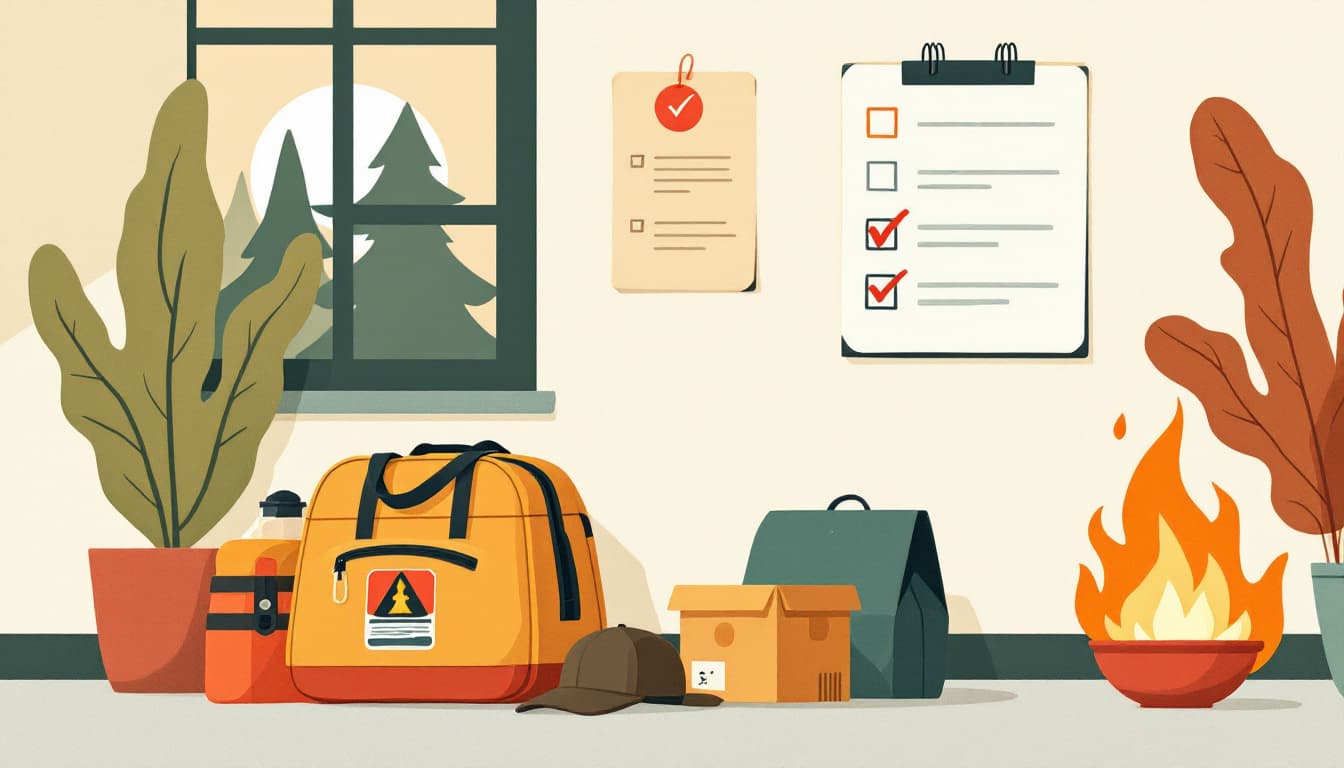
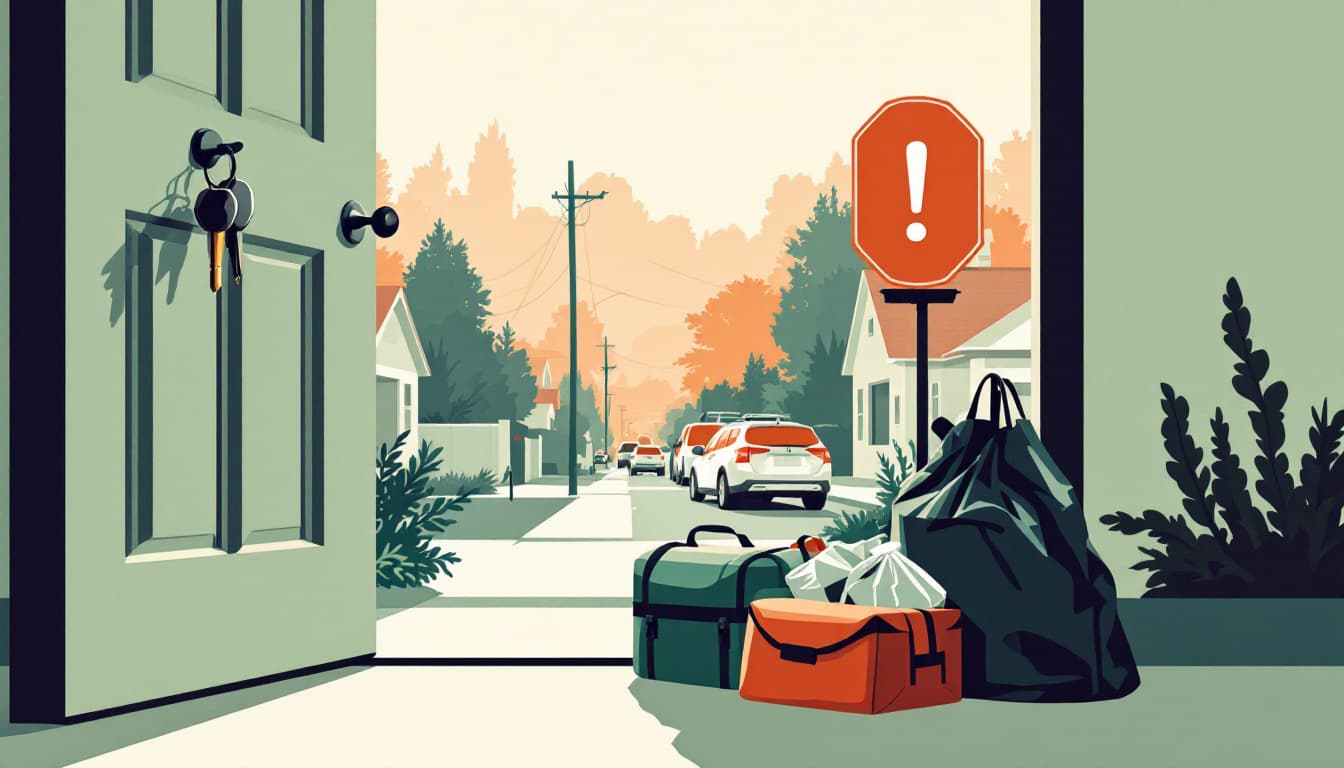
Build a 15-minute go-bag that actually lives by the door. Most evacuation guides tell you to pack for 72 hours. That advice is correct for the bag you store in the closet and never touch. The bag that matters in a wind-driven fire event is the one you can grab in 15 minutes at 2 a.m. It should hold medication for seven days, copies of identification and insurance documents (or a thumb drive with scans), a phone charger, and at least one change of clothes per person. The 72-hour bag can go in the car once you have the first bag handled.
Pre-load an offline map of your county with two exit routes marked. When a fire crosses a road, Google Maps will not reroute you in real time if the cell network is overwhelmed. Download your county offline in a mapping app that supports it (Gaia GPS and Maps.me both work), and mark two exit routes in opposite directions from your neighborhood. Note which routes pass through forested corridors — those are the ones that may close first.
Check your N95 supply now, before smoke makes hardware stores sell out. AQI readings above 150 — common in the Willamette Valley and Rogue Valley during active fire weeks — make outdoor air genuinely harmful for children, older adults, and anyone with respiratory conditions. A box of NIOSH-approved N95 respirators costs under $20 and takes up almost no space. An air purifier with a HEPA filter running in one room of your house gives your household a clean-air refuge if evacuation is not yet ordered but smoke is already heavy.
Locate your closest Red Cross shelter and one alternative. The Red Cross maintains a shelter locator at redcross.org. Find the one nearest your home, and note one backup in a different direction. If you have pets, call ahead — pet-friendly shelter availability in Oregon varies by county and storm, and knowing this in advance saves a chaotic phone call from a smoky parking lot.
The bigger picture
Oregon has been running multi-fire summers long enough that most residents treat smoke as seasonal inconvenience rather than operational signal. That is a reasonable default in low-wind, high-humidity conditions. It is not a reasonable default in the stretch the state is entering right now.
Durability is the goal here — not a bunker, not a year of freeze-dried food. It is the ability to leave quickly if you need to, breathe safely if you stay, and know where you are going in either case. Most of that work takes less than an afternoon and costs less than a tank of gas.