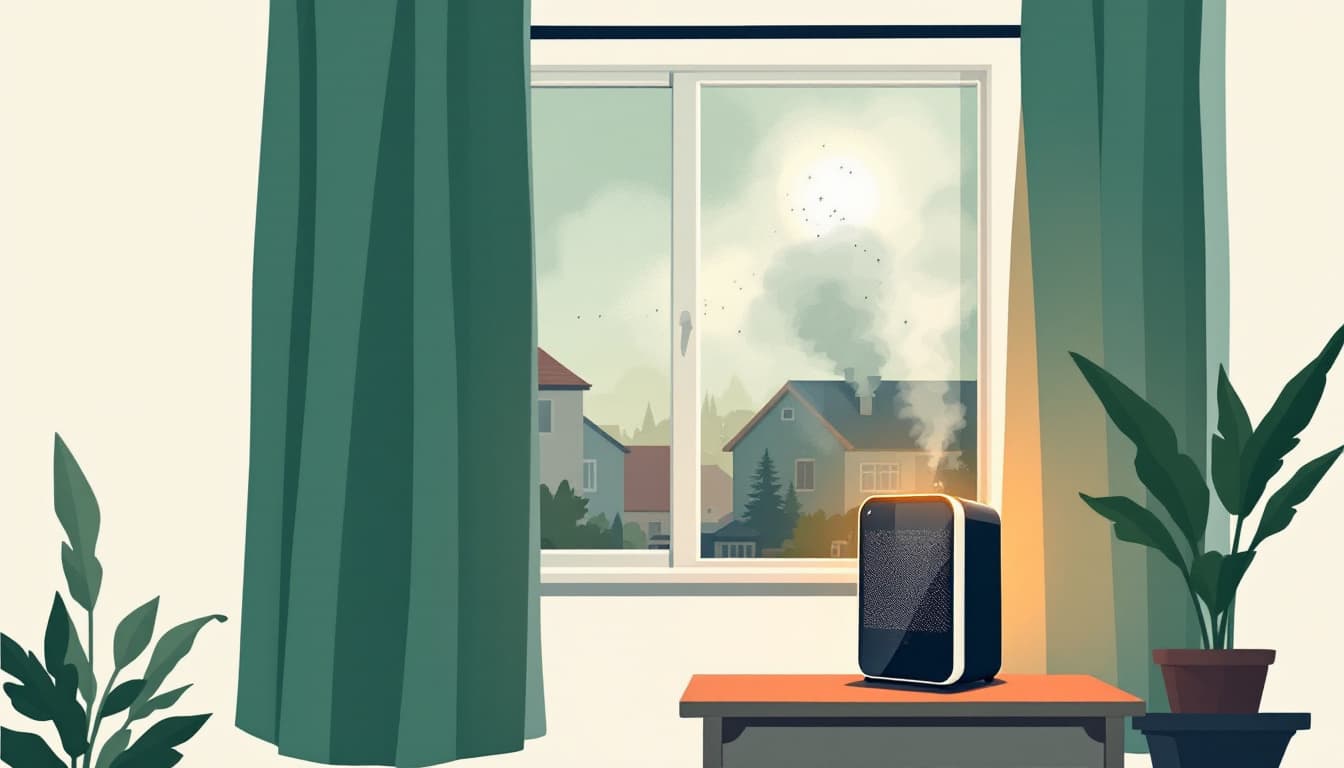
The Willamette Valley floor is a bowl. On a clear July day, that geography is beautiful. During a wildfire smoke event, it becomes a trap — particulates settle in, wind slows, and the AQI number that read 50 at noon can climb past 150 by evening without a single fire burning in the county. A report this week from The Washington Post identified Oregon cities among those expected to see smoke linger and spread through this weekend, with no significant frontal system forecast to clear the region.
This is not a freak event. Oregon's fire season has been arriving earlier in the calendar and running longer, and smoke transport from fires in eastern Oregon, northern California, and British Columbia has become a routine midsummer condition for Portland, the Medford basin, Eugene, and Bend. What changes is the concentration and duration. This weekend's setup — stagnant air, existing smoke load — puts several of those cities in a range where sensitive-group health guidance stops being a footnote and starts being a practical household question.
What the AQI numbers actually mean at home
The Air Quality Index is useful but abstract. Here is the translation that matters for daily decisions:
- 0–50 (Good): No action needed.
- 51–100 (Moderate): If someone in your household has asthma or a heart condition, limit their time outdoors.
- 101–150 (Unhealthy for Sensitive Groups): Children, the elderly, and anyone with lung or cardiovascular conditions should stay indoors. Healthy adults doing yard work or running outside are accumulating real exposure.
- 151–200 (Unhealthy): Everyone reduces outdoor time. This is the threshold where a house without any filtration becomes a meaningful risk, not just a comfort issue.
- 200+ (Very Unhealthy): Shelter-in-place logic applies. This is the range that sent Portland-area emergency rooms more pediatric asthma cases during the 2020 Labor Day smoke event.
Oregon DEQ publishes real-time county-by-county readings at oregonair.deq.state.or.us. The EPA's AirNow app pulls the same federal monitoring network. Check the reading for your specific county — smoke plumes are uneven, and a "statewide" alert can mean AQI 80 in Corvallis and AQI 180 in Medford on the same afternoon.
What we'd actually do
Check your filter, not just the forecast. Pull your HVAC filter right now and look at it. A clogged filter recirculates particulates rather than capturing them. During smoke events, MERV-13 is the practical household standard — it captures fine particulate matter (PM2.5) at a meaningful rate. Most standard blue-fiberglass filters do not. If you run a forced-air system, a MERV-13 swap costs roughly $25–40 at any home improvement store and takes five minutes. If you rent and don't control the HVAC, a box fan with a MERV-13 filter taped to the intake face — sometimes called a Corsi-Rosenthal configuration — runs on about $50 of materials and meaningfully improves a single room's air.
Know your household's actual vulnerability before the smoke arrives. Asthma, COPD, pregnancy, age over 65, age under five — these are the factors that turn a moderate smoke day into a medical event. If anyone in your household fits those categories, locate their rescue inhaler or medication now, not during a symptom onset. Oregon Health Authority maintains a smoke preparedness guide at oregon.gov/oha that lists county-level clean air shelter locations.
Close the house strategically, not completely. Sealing a house during smoke sounds simple, but homes without mechanical ventilation can build up CO2 and other indoor pollutants over 12–16 hours in a fully closed state. The goal is filtration, not lockdown. Run the HVAC fan continuously on recirculate (not fresh-air intake), keep windows closed, and if you have a whole-house air exchanger, switch it to recirculate mode. If the indoor AQI on a consumer monitor drops below outdoor readings, your setup is working.
Pick up N95s while they're still on shelves. Surgical masks and cloth masks provide minimal protection against PM2.5. N95s — specifically those rated by NIOSH — filter at 95% efficiency for fine particles when properly fitted. A four-pack runs $15–20 at most pharmacies. These are useful for moving between your car and a building, for outdoor tasks that can't wait, or for households whose clean air shelter is the bedroom while the rest of the house is occupied. Stock a box before this weekend's conditions peak.
Identify a clean-air room in your home. Pick the room with the fewest windows, the best sealing, and access to a filtered air source. For most Oregon houses, that's an interior bedroom. A portable air purifier with a HEPA filter — or the box-fan-and-filter setup — concentrated in one room gives you a refuge when the rest of the house degrades. This matters especially for sleeping hours, when cumulative overnight PM2.5 exposure is highest.
The bigger picture
Oregon households that live through one serious smoke weekend tend to build better habits than those who read about it in advance. The problem is that the first bad weekend usually catches people without filters, without N95s, and without a plan. The infrastructure for smoke resilience — a MERV-13 filter, a box of respirators, a portable air purifier — costs under $150 and lasts multiple seasons. That is not catastrophe preparation. That is basic household maintenance for a state that now reliably gets smoke from July through September. Build the system once, maintain it, and the next smoke forecast becomes a nuisance instead of a scramble.