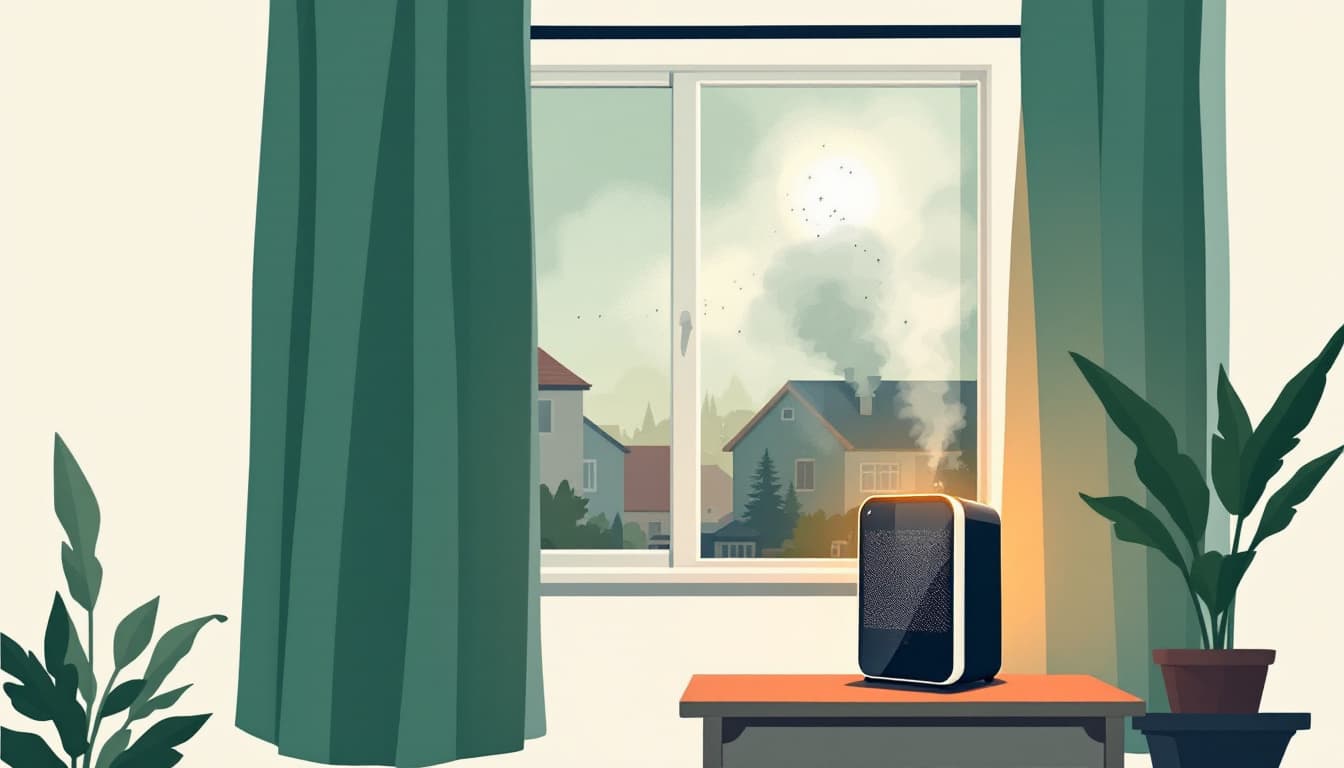
Smoke from active wildfires is sitting over the Cascades again this week. AOL.com flagged the event as skies across Oregon's mountain spine filled with haze, but "filled with haze" undersells what that means at the household level. Fine particulate matter — PM2.5, the particle small enough to pass through lung tissue — doesn't stop at the treeline. It rides east into Bend, west toward Eugene and Salem, and settles into river valleys where terrain and overnight temperature inversions trap it close to the ground.
Oregon has been through this enough times that residents have developed a kind of smoke fatigue. That's the real danger right now. When a smoke event feels normal, households stop acting on it.
What's actually changing
Oregon's wildfire season has compressed and intensified over the past decade. The Oregon Department of Forestry tracks fire activity in real time, and the pattern is consistent: July ignitions in the western Cascades and southern Oregon now arrive earlier and burn hotter than historical averages suggest they should.
The practical result for households isn't dramatic. It's cumulative. A week of AQI readings above 150 — the "Unhealthy" threshold — adds up to meaningful respiratory exposure, especially for children, adults over 65, and anyone with asthma or cardiovascular conditions. The Oregon Health Authority issues advisories when sustained smoke events hit that range, but those advisories rarely reach the people who most need to act on them.
There's also a home-sealing misconception worth naming. Closing windows helps, but most Oregon homes — particularly the older craftsman and ranch-style housing stock common in the Willamette Valley — leak enough air that indoor PM2.5 can reach 60–70% of outdoor levels within a few hours. An air purifier running in a living room that nobody sleeps in provides far less benefit than one concentrated in the room where the family actually spends eight hours unconscious.
What we'd actually do
Check the Oregon DEQ air quality map before the morning and before the evening. The Oregon Department of Environmental Quality runs AirNow monitors at stations across the state, including Medford, Bend, Eugene, and Portland. Readings swing significantly between noon and midnight during smoke inversions. Knowing the AQI at 6 a.m. versus 6 p.m. tells you when to open windows and when to seal up — which matters for households trying to avoid both smoke and heat.
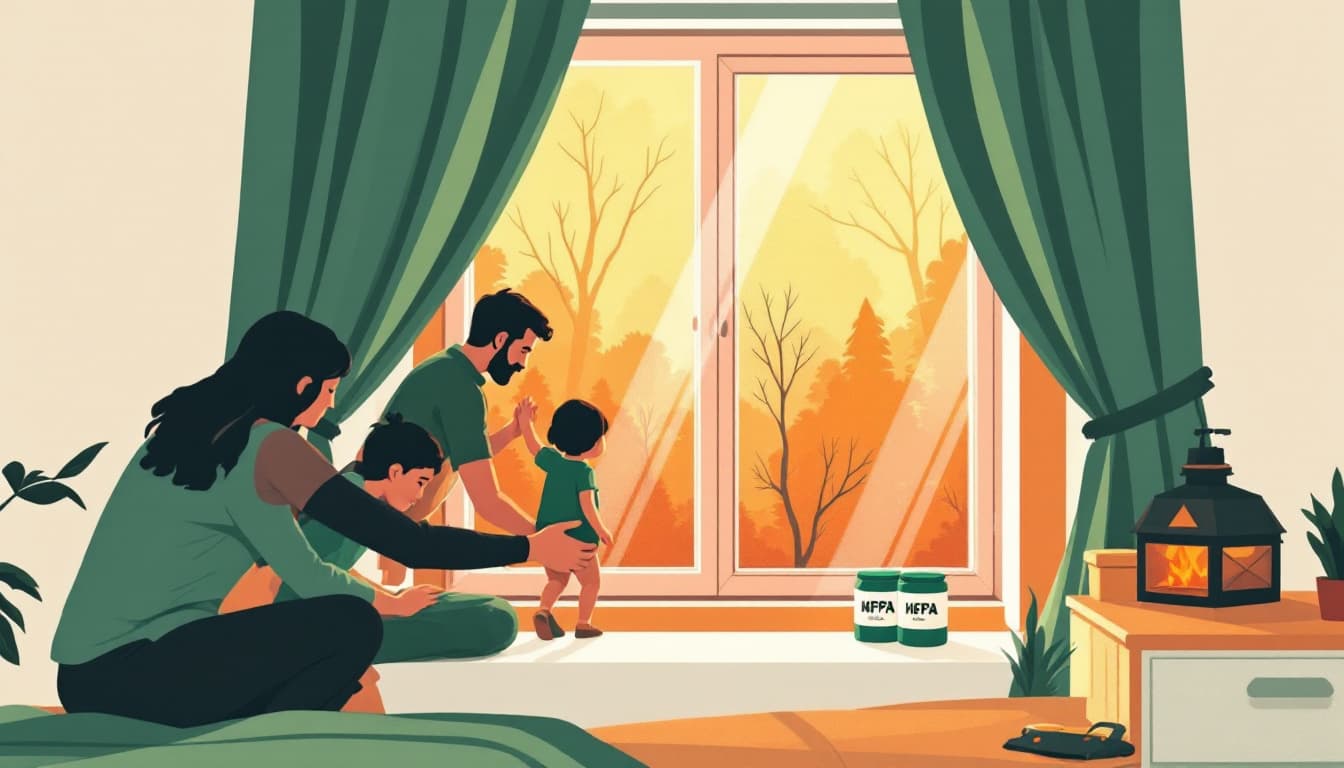
Designate one room as your clean-air room and set it up now, not during the next event. Pick the bedroom with the fewest windows and exterior walls. Get a HEPA-rated purifier sized to that room's square footage — the CADR rating on the box should match or exceed the room size. Seal the door threshold with a rolled towel if needed. This isn't bunker behavior; it's the same logic as having one room with a working space heater.
Make a DIY box-fan filter as a backup or secondary unit. A 20x20 inch MERV-13 furnace filter taped to the back of a box fan costs under $20 total and delivers meaningful PM2.5 reduction in a room. The Corsi-Rosenthal box design, which uses four filters and a box fan, costs roughly $50 in parts. Oregon State University's extension resources have covered this design. It's not a permanent solution, but it works when you need it.
Check on neighbors without central HVAC. Oregon's older housing stock is concentrated in the same communities — rural Josephine and Jackson counties, parts of the mid-Willamette Valley — that face the worst smoke exposure and the least access to cooling and filtration. A 20-minute check-in costs nothing. OHA's smoke guidance specifically flags this population.
Stock a two-week supply of any respiratory medications your household uses. Smoke events spike demand for albuterol inhalers and antihistamines at pharmacies, and Oregon's rural pharmacy deserts mean a stockout can mean a 60-mile round trip. Refilling before the prescription lapses is the unsexy but correct move.
The bigger picture
Oregon will have more smoke seasons. That's not alarmism — it's the output of documented forest fuel loads, drought cycles, and the ignition patterns ODF has recorded. The question isn't whether to prepare for smoke but whether your household's preparation is honest about where the exposure actually happens: inside, at night, in the room where you sleep.
Durability here means building a few low-cost habits that work across multiple events rather than scrambling for sold-out N95s on the fourth day of a red-flag warning. The Cascades will clear eventually. The next event will come on its own schedule.