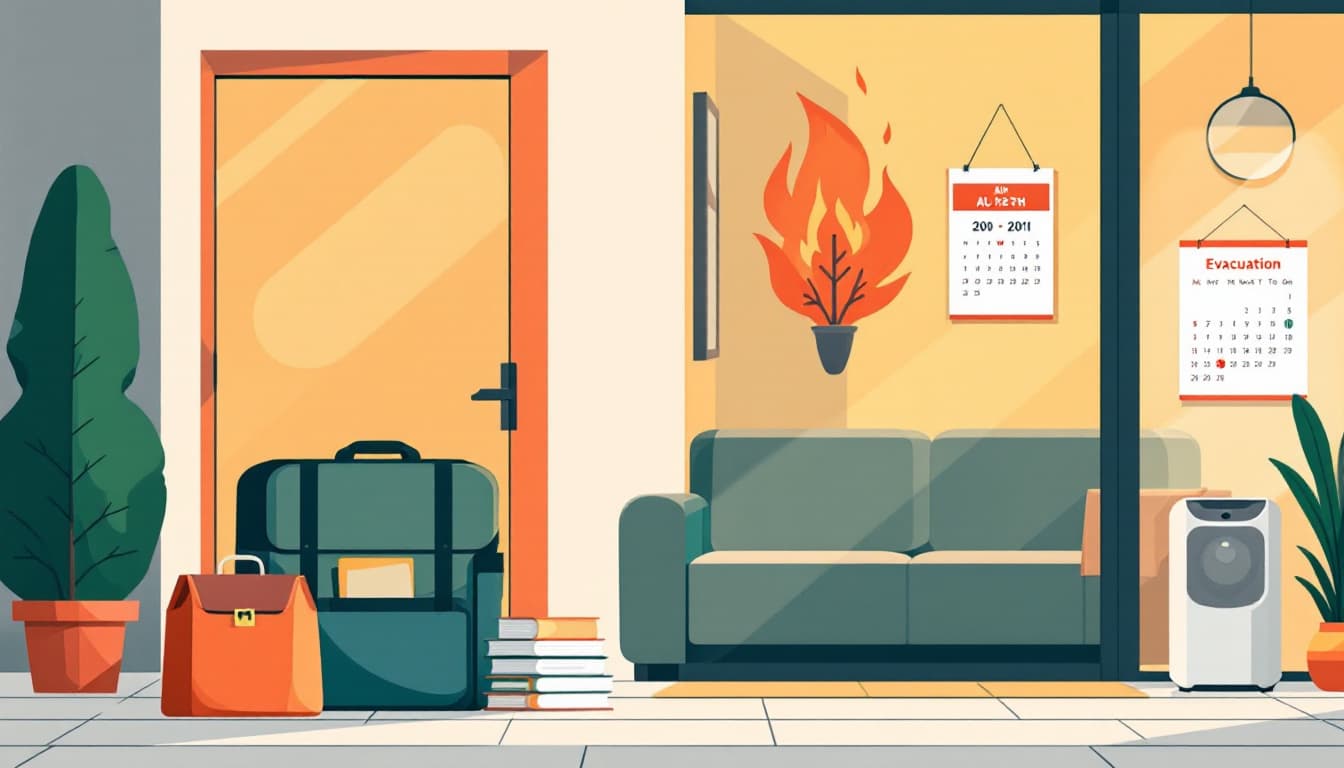
On a bad smoke day in the Willamette Valley, you can taste the air before you open your eyes. This summer that sensation arrived earlier and stayed longer. A recent report from powder.com framed what's accumulating into a hard fact: roughly a million acres have burned across the region, and access to clean air is increasingly a function of income, not geography.
That framing is worth sitting with. But powder.com is a ski and outdoor publication. What it doesn't cover is what Oregon households should actually do between now and September when fire season historically peaks west of the Cascades.
What's actually changing for Oregon homes
The smoke problem is not primarily an outdoor problem. Studies from the EPA and state health agencies consistently show that indoor PM2.5 concentrations — the fine particulate matter that penetrates lung tissue — can reach 70–80% of outdoor levels in a typical home with windows closed and no filtration. Older Oregon housing stock, common in Portland, Eugene, and Medford, is leaky. Leaky houses don't protect you.
Oregon's Department of Environmental Quality publishes real-time Air Quality Index readings through its own portal and through AirNow. The AQI scale matters because the health threshold changes depending on who's in your house. For healthy adults, concern starts at 101 (Unhealthy for Sensitive Groups). For children, older adults, or anyone with asthma or COPD, that number drops to 51. A lot of Oregon households have someone in one of those categories and don't know where they land on the scale.
The powder.com piece implicitly names a real equity gap: people with central HVAC systems, newer construction, or money to spend on air purifiers get cleaner indoor air. Everyone else improvises. That gap is bridgeable at the household level, without spending a lot.
What we'd actually do
Run a box fan and a furnace filter before the next smoke event, not during it. A 20x20 box fan duct-taped to a MERV-13 furnace filter (the filter facing inward) creates a crude but measurable air cleaner known in public health circles as a Corsi-Rosenthal box. University of California Davis researchers documented its effectiveness during California fire events. Materials run about $30–40 at any Oregon hardware store. Build one this week and store it. When the AQI hits 100 in your county, you want this ready, not on order.
Know your county's DEQ monitoring station, not just statewide maps. Oregon DEQ has sensors in Medford, Grants Pass, Bend, Eugene, Salem, Portland, and smaller communities. Smoke behaves differently across the Cascades and in valley drainages. Southern Oregon, particularly Jackson and Josephine counties, consistently sees the state's worst PM2.5 events because valley geography traps smoke. If you live there, your threshold for action should be lower than what a Portland-centric news cycle suggests.
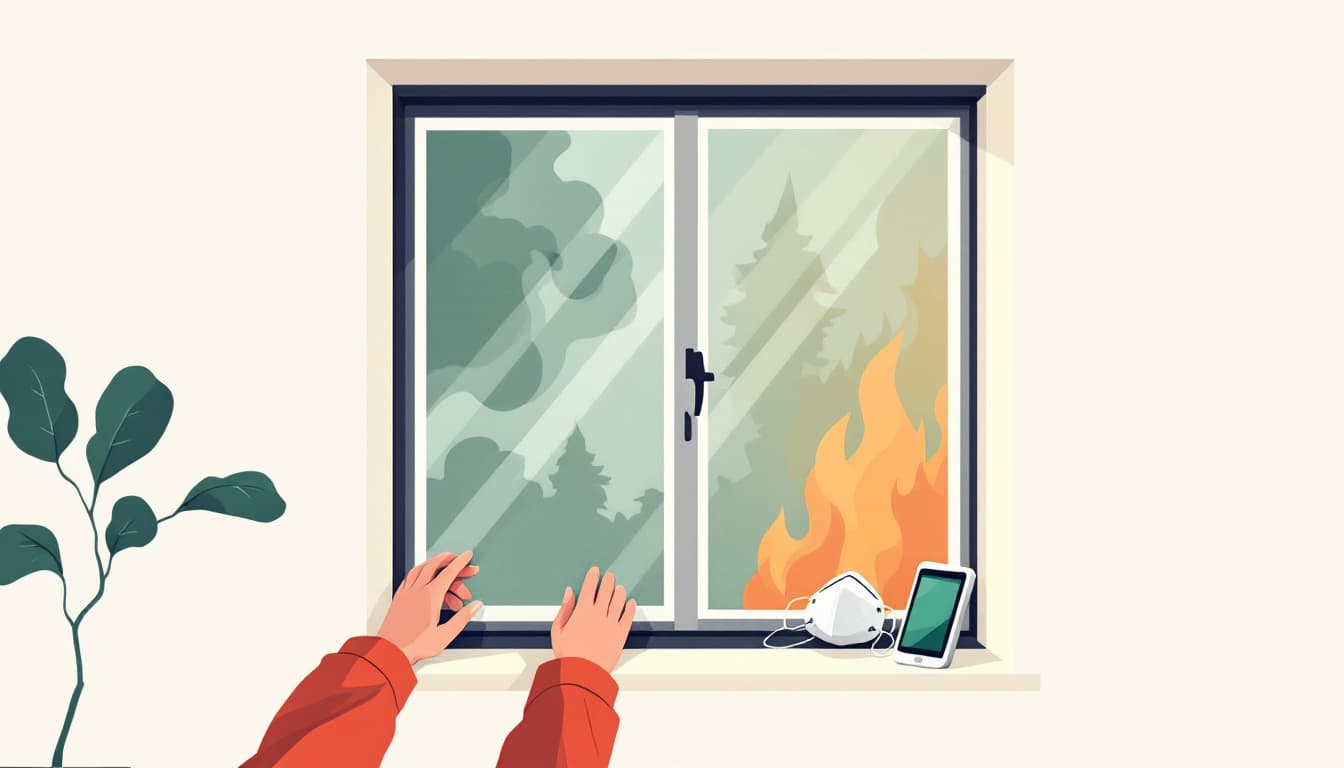
Audit your home's air leakage points before September. Smoke enters through gaps around windows, electrical outlets on exterior walls, dryer vents, and recessed lighting. A hardware-store roll of foam weatherstripping and a tube of non-toxic caulk can meaningfully reduce infiltration. This is a weekend afternoon project, not a renovation. It also cuts your heating bill in winter, so the cost-benefit holds regardless of fire season.
Keep a two-week supply of any respiratory medication your household uses. Oregon pharmacies ran short of albuterol inhalers during the 2020 fire season as demand spiked and supply chains were already stressed. That's not a prediction about this season — it's a pattern worth insuring against. A two-week buffer is the minimum; a 30-day supply is better. Most Oregon insurance plans allow a 90-day fill. Call your pharmacy this week and ask.
Set a clear household trigger for indoor shelter decisions. Decide now, not during a smoky morning, at what AQI level your household stops outdoor exercise, closes all windows, and runs filtration continuously. For households with kids or respiratory conditions: 100. For healthy adults: 150. Having a number prevents the daily negotiation about whether it's "bad enough" to change behavior.
The bigger picture
Oregon is not experiencing an anomaly. It's experiencing a new baseline. The state's fire seasons have lengthened by roughly two to three weeks over the past three decades, according to data from the National Interagency Fire Center. That trend doesn't require catastrophizing — it requires calibration. The households that fare best aren't the ones with the most gear. They're the ones that made a few specific, low-cost decisions before the smoke arrived.
Durability here looks like a $35 fan filter, a known AQI threshold, and a full inhaler in the medicine cabinet. That's achievable this weekend.