A WTOL report this week documented Oregon fire crews working through a punishing stretch — not just managing active fire lines, but doing it in extreme heat that strains personnel, equipment, and logistics. That's not a story about firefighters alone. It's a signal about what Oregon's fire season looks like when two stressors hit at once, and what that means for the households sitting downwind, downstream, or in the evacuation path.
What's actually changing
Oregon's wildfire season has compressed and intensified. The state's fire agencies — Oregon Department of Forestry and the various rural protection districts — now regularly face conditions that were once considered exceptional. When air temperatures exceed 100°F across interior and eastern Oregon, fire behavior becomes harder to predict, air tankers are grounded during peak heat hours, and crew rotation cycles shorten. The fires don't pause. The people fighting them have to.
For households, the double-burden dynamic — simultaneous heat event and active fire — creates a specific set of risks that most preparedness checklists skip over:
- Air quality collapses fast. Heat inversions trap smoke. AQI can move from moderate to hazardous in hours, not days. The Oregon DEQ air quality monitoring network (available at oregon.gov) publishes real-time readings by county, but households that wait to check often wait too long.
- Power grids are stressed. High-load air conditioning demand during a heat event, combined with the risk of transmission lines running through fire-adjacent terrain, makes outages more likely. Not certain — more likely. That's the honest framing.
- Evacuation routes can close without warning. When fire and heat overlap, Oregon Emergency Management and county sheriffs have issued Level 1-2-3 notices (Ready-Set-Go) on compressed timelines. Families who hadn't thought through their route assumptions found themselves improvising.
This is not a prediction about what will happen. It is a description of what the current combination of conditions makes more plausible than it was two weeks ago.
What we'd actually do
Check your evacuation level right now, before anything else. Oregon's county sheriffs publish evacuation zone maps tied to the Ready-Set-Go system. Find your zone at your county's emergency management page — most link directly from the Oregon Office of Emergency Management site. If you don't know your zone level, you're not ready to go. This takes ten minutes.
Set up air quality alerts, not just fire alerts. The Oregon DEQ AirNow notification system lets you register an address and receive alerts when AQI crosses a threshold you choose. Set it at 100 (USG, Unhealthy for Sensitive Groups), not 150. By the time it hits 150, households with kids, elderly members, or anyone with respiratory issues are already in a bad position. The alert gives you lead time to close windows, switch HVAC to recirculate, and deploy whatever air filtration you have.
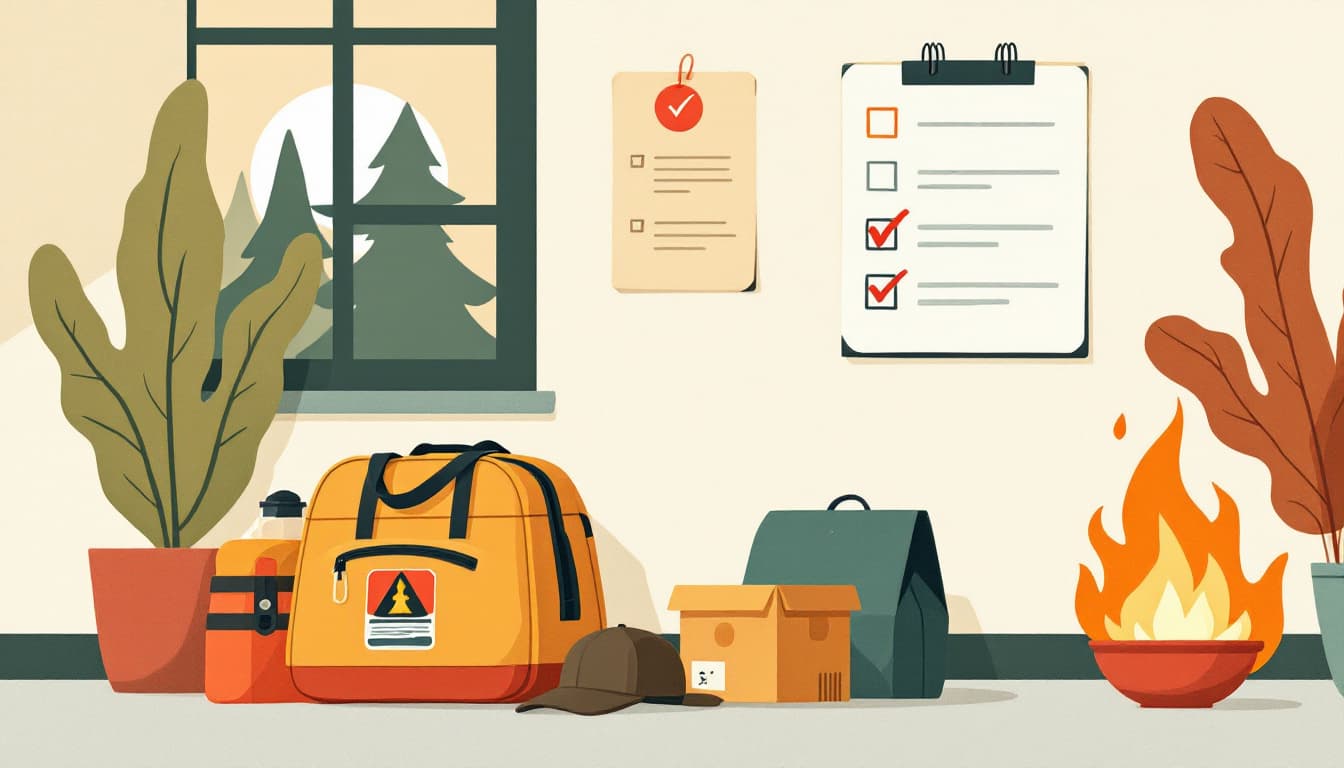
Run a 30-minute bag audit this week. Go bags and evacuation kits lose their relevance through slow drift — medications expire, kids outgrow clothes, phone chargers go missing. Pull the bags out, check medications against current prescriptions, confirm you have copies of critical documents (insurance policy numbers, IDs, prescriptions), and charge any battery banks. If you don't have a bag at all, build a simple one this week using what's already in your house. You don't need a $300 kit.
Figure out where you'd actually go. Not in theory — specifically. If you live in the Cascade foothills, the Rogue Valley, or anywhere east of the Cascades, identify a destination (friend, family, specific motel) that's at least 60 miles out of your typical fire risk corridor. Know the primary route and one alternate. Oregon wildfires have closed Highway 58, Highway 138, and segments of Highway 62 in recent years. Having a paper backup of your alternate route — not just GPS — is not paranoid. It's practical.
If you don't have a portable air filter, make a simple one. A box fan with a MERV-13 furnace filter taped to the intake side costs around $40 total and meaningfully reduces indoor particulate during smoke events. It won't substitute for a real purifier indefinitely, but it buys time and comfort during a multi-day smoke event when stores are sold out of everything else.
The bigger picture
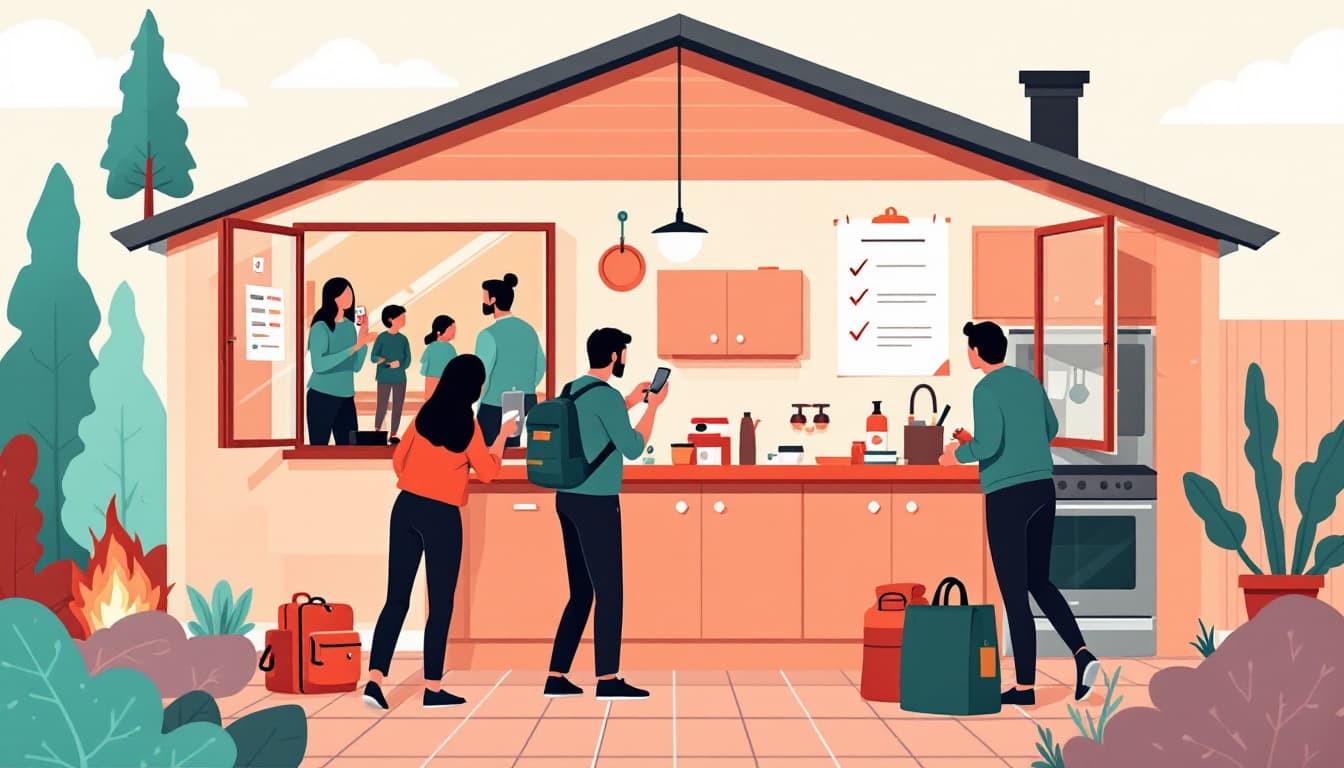
Oregon's fire situation is not a catastrophe to survive — it's a recurring seasonal condition to manage. The households that do this well aren't the ones with the most gear. They're the ones who've thought through the specific scenarios their geography creates and filled the gaps in advance, before any particular week turns into a hard one.
Durability looks like knowing your evacuation zone, having clean air inside your house, and having a plan your whole family has actually discussed. Everything else is secondary.