A First Alert weather report published this week by MSN flags extreme heat and high winds bearing down on eastern Oregon and southern Idaho. The Cascades don't stop the consequences from spreading west.
What's actually happening
Eastern Oregon — the high desert from Pendleton down through Burns and into the Treasure Valley corridor — runs hot in May, but this week's combination of heat and elevated winds is the specific pairing that fire weather forecasters watch most carefully. Heat alone is survivable with water and shade. Wind alone is manageable. Together, they dry out vegetation that's still transitioning from a wet spring, push any ignition source into a running fire within minutes, and force utilities to weigh the risk of leaving lines energized against the political cost of preemptive shutoffs.
Oregon Public Utilities Commission data from recent fire seasons shows that the utilities serving eastern Oregon — primarily Pacific Power — have protocols for de-energizing distribution lines during Red Flag conditions. That means outages can be deliberate, not just storm damage. Households that haven't thought through a planned multi-day shutoff in May, when temperatures can spike past 95°F in Umatilla and Malheur counties, are in a different situation than households bracing for a winter ice storm.
The wildfire risk also doesn't stay east of the mountains. The Gorge is a wind tunnel. Fire weather in the Tri-Cities or Boise area puts spot fires at the eastern edge of the Columbia River Gorge within reach of communities in Hood River and Wasco counties. Smoke blankets the Willamette Valley within 24 hours of a major eastern Oregon fire start. If you're in Portland, Eugene, or Medford and dismissing this week's forecast as someone else's problem, check your air quality plans.
What we'd actually do
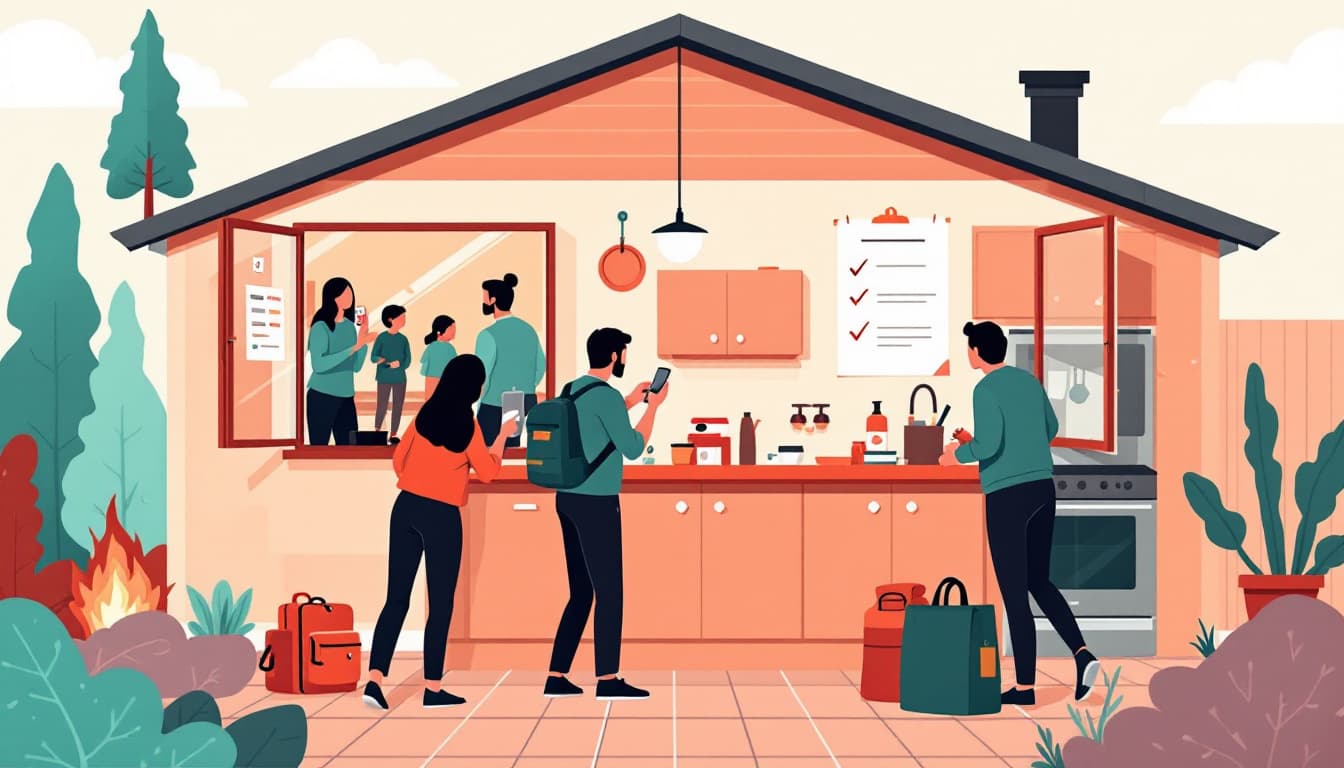
Fill a dedicated water reserve before Wednesday. Don't wait for a "water emergency" notice. In a power outage during high heat, municipal water pressure can drop if pumping stations lose electricity. Seven gallons per person for a 72-hour window is the Oregon Health Authority's household baseline — fill it in clean, food-grade containers this week, not when the forecast arrives.
Tap water is fine; you don't need to buy anything. A case of water jugs from the garage shelf or a clean 5-gallon bucket with a lid works. The point is having it before the grid becomes unreliable, not after.
Identify your cooling location and its backup. Oregon has cooling centers, but in a heat event, they fill. Locate your county's cooling center list through your county emergency management office (Umatilla, Malheur, Harney, and Grant counties each maintain these separately from ODOT or state-level resources). Then identify a second option: a family member's house with a basement, a library, a hospital lobby.
Families in eastern Oregon with no air conditioning and no backup cooling plan are genuinely at risk in 100°F weather with no power. This is not a hypothetical.
Charge every battery device tonight. Power banks, flashlights, weather radios. Pacific Power's outage map is accessible on mobile data even when the home internet goes down, but your phone needs to be charged to use it.
A hand-crank or battery weather radio tuned to NOAA's continuous broadcast remains the most reliable source of updated Red Flag warnings when cell towers are congested. The cost is under $30, and it doesn't require Wi-Fi.
Move your medications to a cool, accessible spot. Heat degrades insulin, some antibiotics, and certain cardiac medications faster than most people realize. If anyone in your household depends on temperature-sensitive medication, check the storage requirements on the label and have a plan — a small cooler with a frozen water bottle — for a 24-hour outage.
This is the step preparedness content almost never mentions. It's also the one with the most direct health consequences.
The bigger picture
Heat events in Oregon are arriving earlier in the season and stacking onto years of drought stress in eastern counties. That doesn't mean every forecast is catastrophic, and this week's event may pass without a major fire or widespread outages. But the cost of spending two hours on water, cooling plans, and charged devices before Wednesday is low, and the asymmetry is obvious.
Durable households aren't built on disaster fantasies. They're built on small, boring preparations made before the week the forecast turns red.