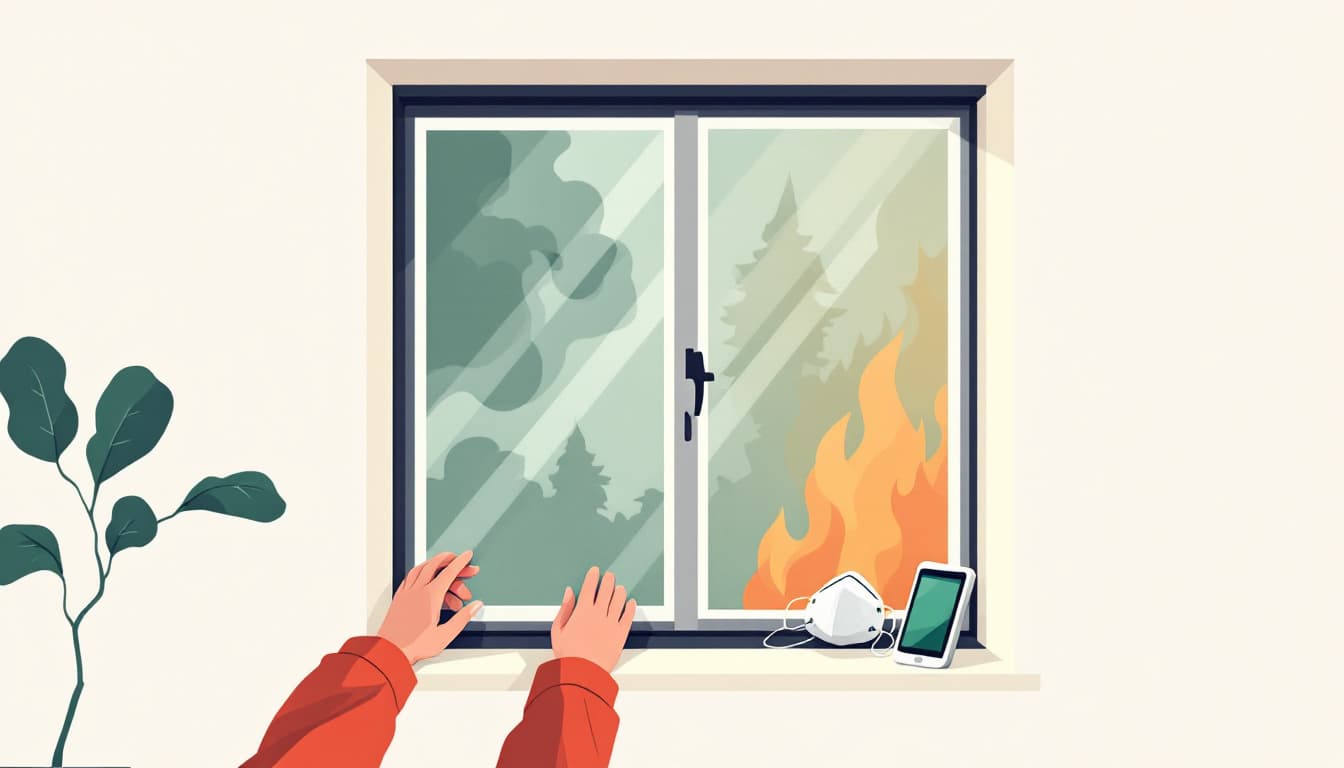
The change in guidance is small. What it signals is not.
A report this week from bendbulletin.com covers Oregon health officials issuing tougher air quality thresholds specifically for youth sports and outdoor activities — lowering the AQI level at which organized outdoor exertion should be curtailed. For most summers, this kind of update would be a footnote. After several consecutive years of early, intense wildfire seasons across the Cascades, the Willamette Valley corridor, and Eastern Oregon, it reads like a planning document.
The practical meaning for families: the margin of safe outdoor time for children during smoke events is now officially narrower than what coaches, teachers, and parents were using last year.
What's actually changing
Oregon's previous guidance leaned on AQI thresholds developed for a general adult population. The updated rules acknowledge what pediatric pulmonologists have argued for years — children breathe more air per unit of body weight than adults, spend more time at higher exertion levels during sports, and have airways still in development. Damage from fine particulate matter (PM2.5) during childhood has long-term respiratory implications that don't show up until years later.
The revision matters most in Central Oregon and the southern Willamette Valley, where smoke from Eastern Cascade and Siskiyou-area fires tends to pool in valleys and persist. Bend, Medford, Eugene, and Roseburg residents are the most directly affected, but Portland metro households saw prolonged smoke events in recent summers too, and the Columbia Gorge funnels smoke from both sides of the Cascades.
What the new guidance does not do: it doesn't tell you how to actually manage a household when your kid has a tournament weekend, your windows are shut, your portable air filter is undersized for the room, and AQI is sitting at 102. That gap is what we're here to fill.
What we'd actually do
Check AQIandU.com or the EPA's AirNow app before any outdoor commitment, not the night before — the morning of. AQI readings in Oregon shift fast, especially in river valleys. A reading of 45 at 7 a.m. in Bend can be 110 by 2 p.m. when wind patterns change and smoke drops. Build the habit of checking two hours before any outdoor activity, not at dinner the night before. AirNow pulls from Oregon DEQ's monitoring network; PurpleAir shows you hyperlocal sensor data that often catches neighborhood-level smoke pockets the DEQ network misses.
Identify your household's designated clean-air room now, before you need it. Pick the most interior, best-sealed room in your home and outfit it with a filter rated for PM2.5. A HEPA air purifier sized for the room's square footage matters more than the brand. A common error is running an undersized unit in an open floor plan — a 200-square-foot-rated purifier in a 900-square-foot open kitchen/living area does almost nothing during a smoke event. Close doors, run it on high, and if you have a forced-air HVAC system, verify you're using a MERV-13 or higher filter.
Get masks that actually fit your children, and practice wearing them before smoke season. N95s sized for adults don't seal on children's faces. KN95s marketed for kids vary in fit. The only way to know if a mask seals is to have the child wear it and run two fingers around the edge. Oregon DEQ has periodically run mask distribution programs during declared smoke events — watch for those, but don't depend on them. Have three to five fitted masks per child stored now.
Know your school district's outdoor activity policy and how it communicates changes. Oregon school districts are required to follow ODE guidance on outdoor activity during smoke events, but the communication chain — from state air quality alert to district office to coach to your phone — has real lag time. Find out whether your district pushes alerts via app, email, or website, and subscribe to Oregon DEQ's free AQI alert system for your ZIP code directly. Don't assume the school will reach you first.
Build a one-week indoor activity buffer into your summer schedule. This isn't gear advice. It's calendar advice. If you have a child in summer sports, assume one week of their schedule will be disrupted by smoke. Identify the indoor alternatives now — not during a red-flag event when everyone else is scrambling for gym time. Having that plan reduces the pressure to make bad decisions about AQI thresholds.
Oregon's updated guidance isn't alarmism. It's calibration — agencies adjusting standards to match what fire seasons in the interior West have actually become. Families who treat it as a one-time news item will be caught flat-footed in August. Families who use it as a planning prompt in June will have less stressful summers, healthier kids, and one fewer emergency decision to make under pressure.
The goal isn't to keep your children indoors all summer. It's to know, in advance, exactly when the air says to come inside — and be ready when it does.