A CBS News report this week flagged a possible extreme heat warning developing across North Texas, with temperatures already cresting triple digits. That language — "possible," "tracking," "warning" — matters. It means forecasters are watching a threshold, not just reporting the weather. For households in the region, the practical question is not whether 103°F is dangerous. It is whether your home, your people, and your plan can hold up on day three of it.
What actually breaks down in a sustained heat event
A single hot afternoon is an inconvenience. Three or more consecutive days of extreme heat is a different kind of problem, because it compounds. Here is what that looks like at the household level:
The grid gets stressed, not just warm. Demand spikes as every air conditioner in the region runs continuously. Texas's ERCOT grid has added significant generation capacity since the February 2021 freeze, but peak summer demand records have continued to climb alongside population growth. When the grid tightens, rolling conservation notices or localized outages become plausible — not certain, but plausible enough to plan for.
Your home's thermal mass works against you after dark. A house that absorbs heat all day does not return to a comfortable temperature at night when the AC is working. When the AC stops, that stored heat becomes a health hazard within hours, particularly for the elderly, children under five, and anyone on diuretics, antihistamines, or beta-blockers — all of which impair the body's cooling response.
Emergency cooling centers get overwhelmed. Public cooling centers are a real resource, but they run on the same grid and have limited capacity. Knowing where yours is before you need it is the difference between a difficult afternoon and a dangerous one. Most Texas counties list these through their emergency management office websites; search your county name plus "cooling center."
What we'd actually do
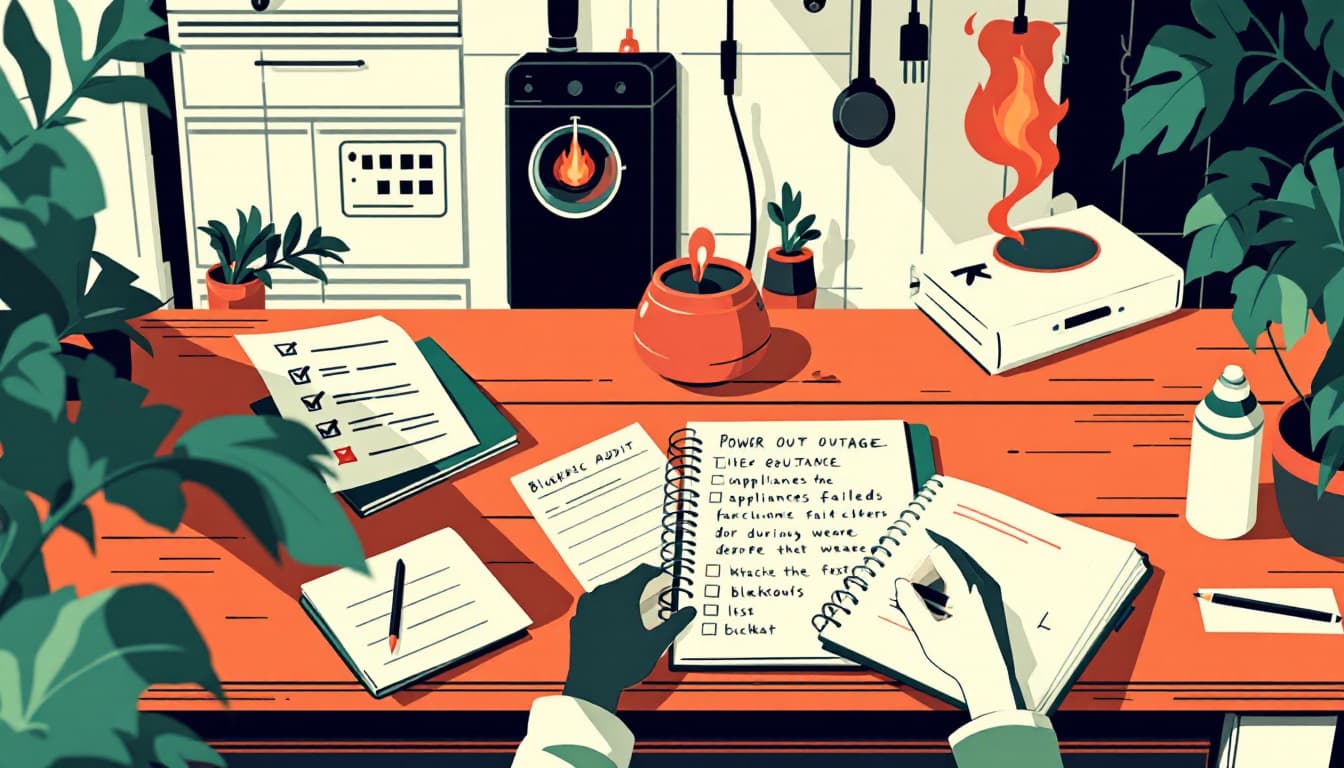
Audit who in your household is genuinely vulnerable, and make a specific plan for them today. Age over 65, infants, anyone on medications that affect sweating or circulation, and people doing physical work outdoors are not in the same risk category as a healthy adult sitting in an air-conditioned house. Write down their names. Write down who checks on them if power goes out at 2 a.m. This sounds obvious; most households have not actually done it.
Set your AC to pre-cool the house before peak hours, not during them. Grid stress peaks roughly between 3 p.m. and 8 p.m. on extreme heat days. Running your system hard in the morning — dropping indoor temps two or three degrees below your normal comfort point — gives you thermal buffer if you need to reduce load or lose power later. This costs almost nothing extra on your bill and buys meaningful time.
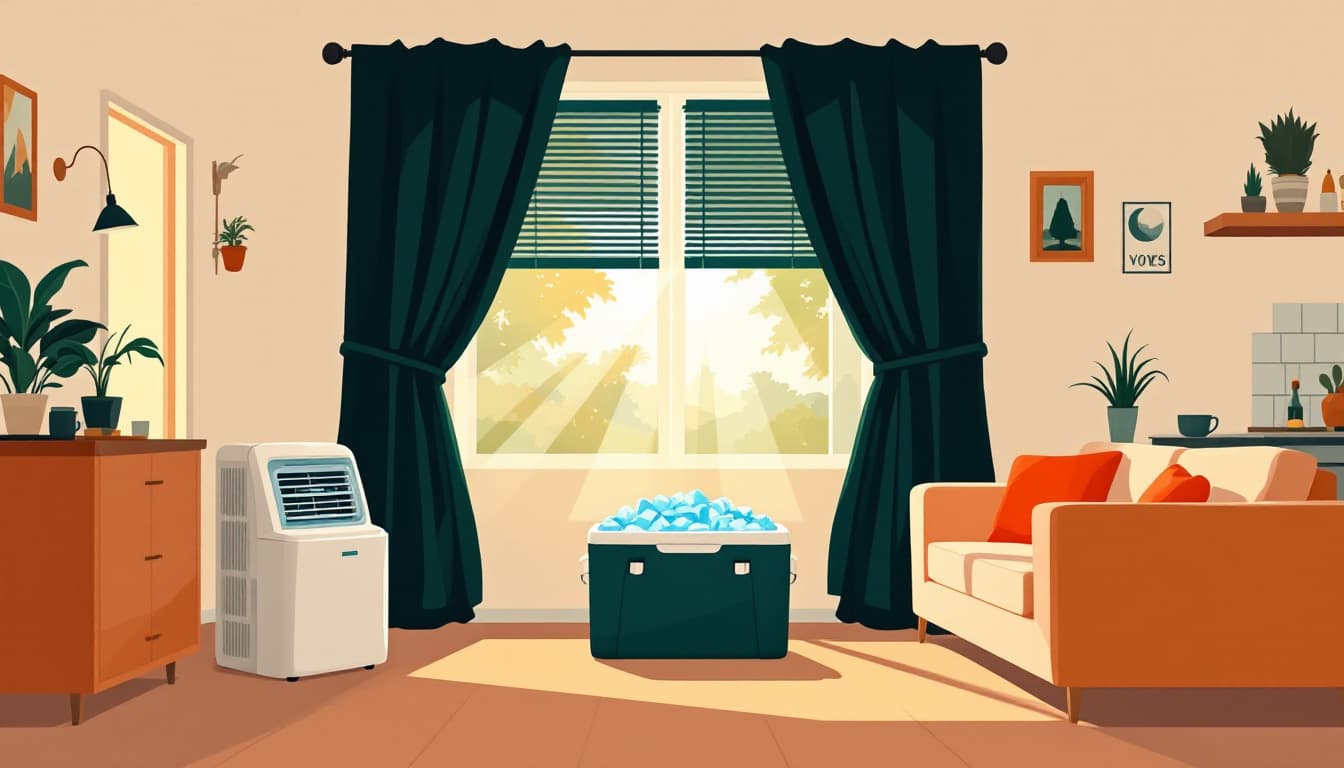
Identify one room that can serve as a cool refuge if the whole-house system fails. A small window unit on a dedicated circuit, a room with northern exposure and good insulation, a basement — any of these can keep one space survivable while the rest of the house climbs. If you don't have a window unit and your household includes a vulnerable person, a $150 portable unit is a reasonable one-time purchase, not a luxury. It is cheaper than one ER visit.
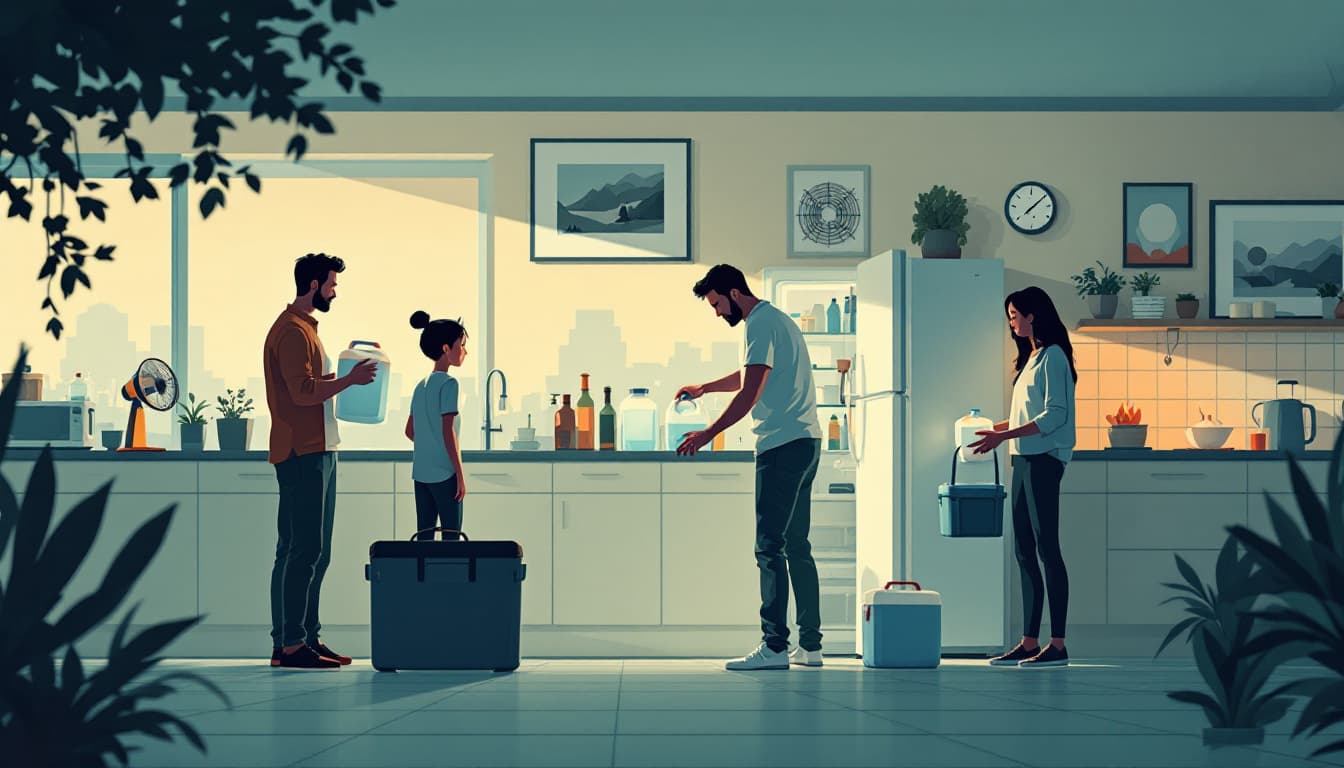
Stock water as if the tap will still work — because it probably will, but pressure and quality can degrade during a grid event. A realistic minimum is one gallon per person per day; two gallons is more comfortable once you account for basic hygiene. A family of four needs eight gallons to cover two days. That fits in four standard one-gallon jugs stored under a sink. Rotate them every six months.
Check your vehicle. If power goes out at home, your car becomes your cooling option of last resort. A functioning AC, a quarter tank of gas minimum, and a charged phone are your bridge to a cooling center, a family member's house, or a hotel. Many households treat their car as an afterthought in a heat event. It is often the most accessible resource they have.
The bigger picture
North Texas is not unique. The Southwest, the Gulf Coast, and increasingly the mid-Atlantic are seeing heat events that exceed what regional infrastructure was designed for. The useful framing for a household is not "will this be the big one?" It is: can we stay safe for 72 hours without outside help? That is a solvable problem for most families with an afternoon of preparation, not a thousand dollars of gear.
Durability is the goal. Not a bunker. Not a generator the size of a riding mower. A household that has thought through the specific failure modes of a summer heat event is dramatically more resilient than one that hasn't — regardless of what either household owns.