A report this week from Treasure Coast News flagged what Florida's National Weather Service offices have been signaling for days: heat index values climbing past 110°F across the peninsula, with overnight lows that don't drop far enough to let buildings — or bodies — recover.
That second part is what most heat coverage misses.
What's actually happening when the heat index hits 110°F
The heat index is a combination of air temperature and relative humidity. Florida's coastal and inland humidity doesn't just make it feel worse — it shuts down the body's primary cooling system. Sweat doesn't evaporate efficiently when relative humidity is above 60%, and Florida in July routinely posts 70–80% humidity by late morning.
At a sustained heat index above 103°F, the National Weather Service categorizes conditions as "danger." Above 125°F, it's "extreme danger." The range Treasure Coast News is reporting — roughly 108–113°F — sits firmly in the danger band, and it's been there for consecutive days, not a one-afternoon spike.
Consecutive days matter because structures absorb heat. A concrete-block home in Port St. Lucie or a second-floor apartment near Tampa Bay that doesn't cool below 80°F overnight is already starting the next day compromised. The household's thermal buffer is gone.
Grid stress follows the same pattern. When nighttime temps stay high, air conditioners run through the night, then run hard again by 8 a.m. Florida's utility cooperatives and FPL's distribution infrastructure handle peak demand well in normal conditions — but sustained multi-day heat events, especially alongside afternoon thunderstorm outages, are where short rolling brownouts or localized failures occur. Recent summers have produced both.
What we'd actually do
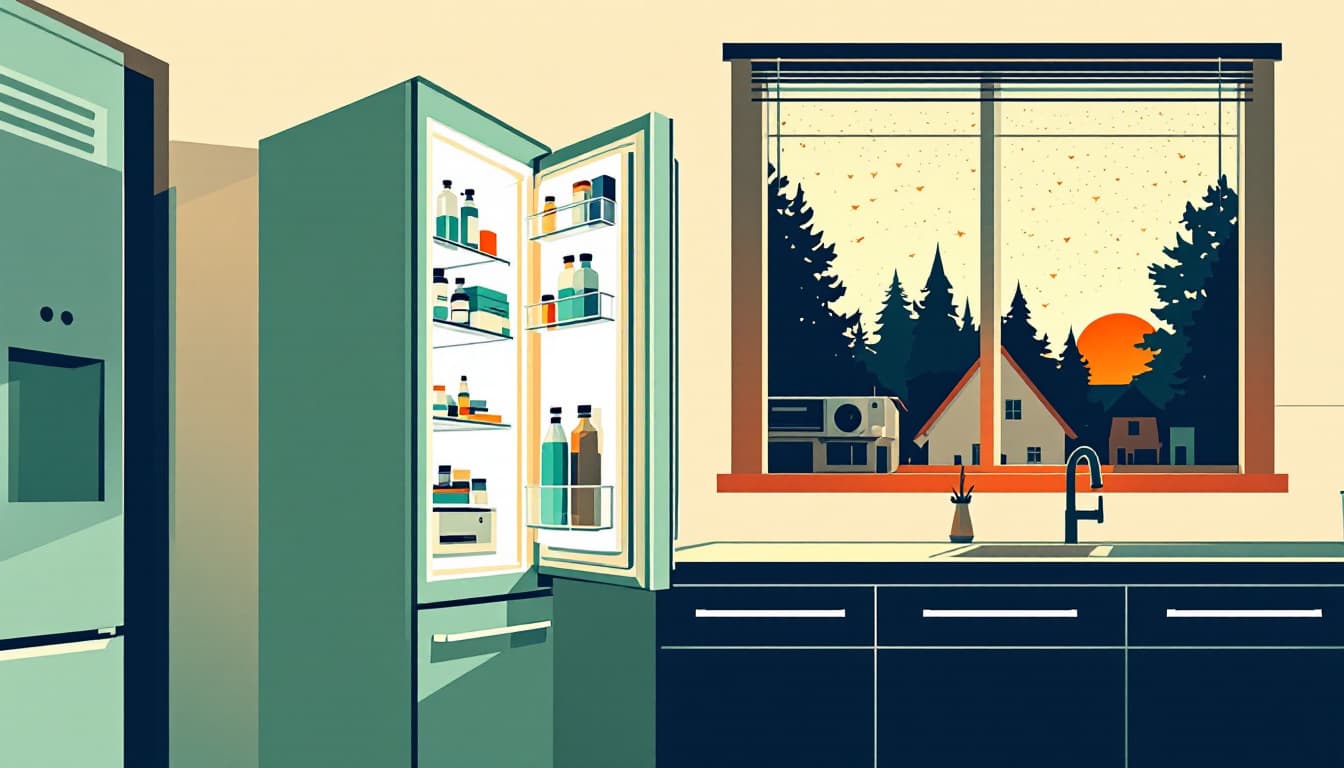
Fill your freezer now, before any outage. A full freezer holds temperature for roughly 48 hours after power loss; a half-empty one, about 24. Freeze water in quart-sized bags or repurposed containers to fill air gaps. This costs nothing and buys time.
Most Florida households stock the freezer casually. A deliberate fill-up — water containers, extra ice, even frozen bread — changes your outage calculus significantly. If power drops during peak heat and you have 36–48 hours of frozen buffer, you're managing; if you have 18, you're making triage calls fast.
Audit where your household sleeps, not just where it lives. Identify the coolest room in your home by checking the temperature at 2 p.m. and again at 11 p.m. with a cheap indoor thermometer. In Florida's wood-frame and stucco construction, the coolest room is almost always the interior bathroom or a ground-floor north-facing bedroom.
This sounds minor until someone in your household is elderly, pregnant, or manages a condition like multiple sclerosis that is directly worsened by heat. Knowing your cool room before you need it means you've made a decision once, not in a panic at midnight.
Know your county's cooling shelter locations before you need one. Florida counties are required to maintain publicly listed cooling shelters during heat emergencies. Broward, Miami-Dade, Palm Beach, and most Treasure Coast counties post these on their emergency management websites. Pull up that page, save the address of the nearest site to your phone contacts. This takes four minutes.
This isn't advice for people without AC. It's for anyone whose AC fails during a multi-day event — a refrigerant leak, a blown capacitor, a unit that simply can't keep up with 98°F ambient temps. Capacitors fail more in heat. It happens.
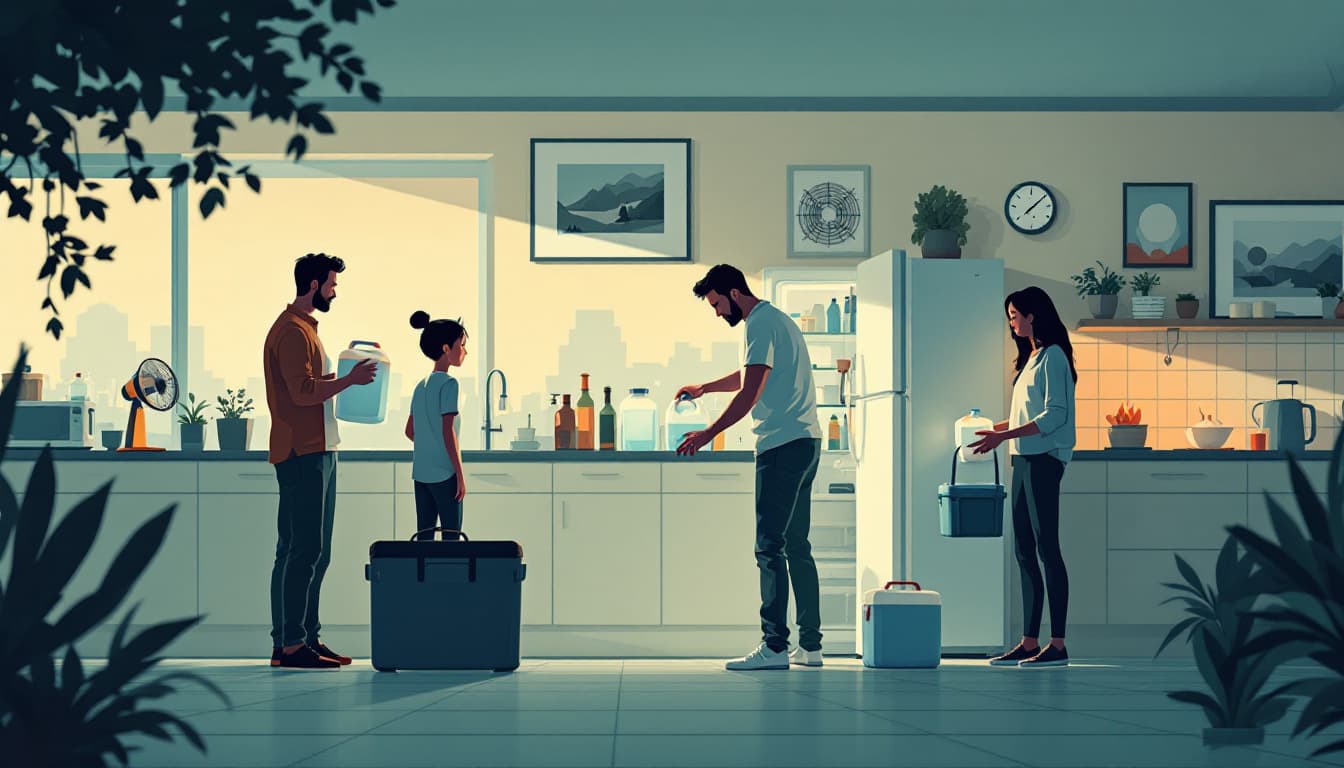
Build a 72-hour hydration stock that isn't just bottled water. Heat illness is accelerated by electrolyte loss, not just dehydration. Store oral rehydration salts — or the ingredients to make them — alongside your water supply. A basic formula is one liter of water, six teaspoons of sugar, and half a teaspoon of salt.
Generic electrolyte packets cost roughly $10 for 30 servings and last years. They're more useful in a Florida heat event than most of what's sold in the "emergency prep" aisle.
Check on your neighbors by Wednesday, not when you hear an ambulance. Florida's heat fatality data consistently shows that deaths cluster among people living alone, often in homes with inadequate cooling, and they're typically found days after the fact. A two-minute knock or text to an elderly neighbor isn't charity — it's neighborhood infrastructure.
The bigger picture
Florida has always been hot in July. What's shifted is the duration and the overnight floor. Buildings, bodies, and the grid all have recovery thresholds, and multi-day events push against all three simultaneously.
The goal isn't to treat every heat advisory as a survival scenario. It's to make sure your household has already made the low-effort decisions — the full freezer, the cool room, the shelter address — so that a five-day heat dome is uncomfortable, not dangerous.
Durability is built in the quiet days before the forecast turns red.