A Dallas News report this week flagged an extreme heat warning for North Texas, with conditions expected to push heat index values well past the point where the human body stops compensating on its own. This is not a typical July hot day. It's the kind of event that hospitalizes people — specifically older adults, outdoor workers, and anyone whose home cooling fails during peak grid demand hours.
So let's talk about what actually breaks during a North Texas extreme heat event, and what a prepared household does about it before the temperature peaks.
What's actually at risk
The obvious answer is human health. Heat stroke can develop in under an hour of unprotected exposure when the heat index climbs high enough, and it kills. That part most people understand.
What's less discussed at the household level:
The grid tightens fast. ERCOT, which manages the Texas interconnected grid, issues conservation appeals when demand approaches generation capacity. That typically happens between 3 p.m. and 9 p.m. on extreme heat days. A rolling outage during those hours — even a brief one — turns a hot house into a dangerous one for vulnerable people within two to three hours.
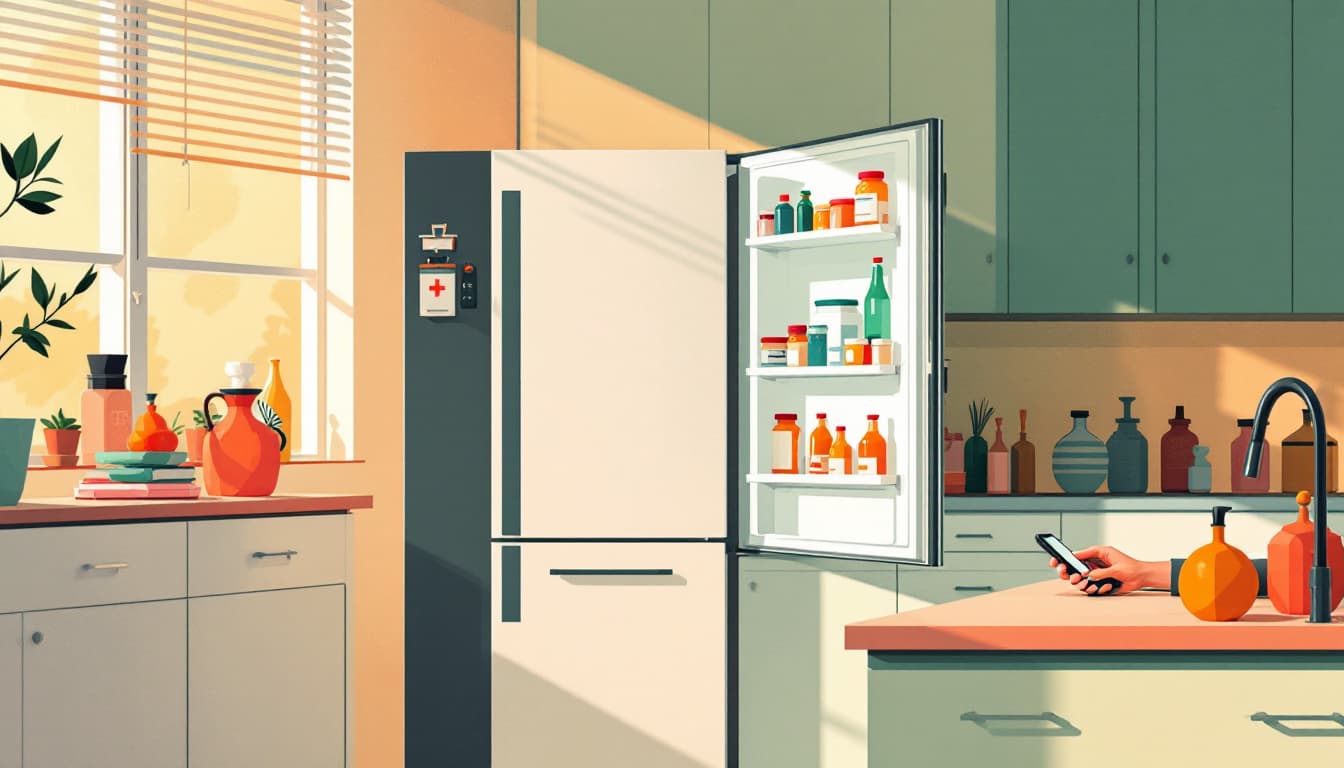
Medications degrade. Insulin, certain biologics, some psychiatric medications, and several common heart drugs have storage temperature ceilings. Refrigerators lose their safe temperature range faster than most people expect when power goes out in summer. If anyone in your household depends on temperature-sensitive medication, this is the specific failure mode that deserves your attention today, not after an outage starts.
Older and cheaper window units can't keep up. Central AC is more resilient under sustained high ambient temperatures, but even central systems struggle when outdoor temperatures don't drop below 85°F overnight — which happens in Dallas during extended heat events. A system running continuously without a nighttime recovery window is a system that may fail before the week ends.
What we'd actually do
Check ERCOT's demand dashboard before 2 p.m. on any extreme heat day. ERCOT publishes real-time grid status at ercot.com. When the operating condition notice level rises, you have 30 to 60 minutes of warning before things get serious. Use that window to pre-cool your home, charge devices, and get ice into a cooler. Don't wait for the local news to tell you the grid is strained.
Identify your one or two most heat-vulnerable neighbors and make a specific plan. Not a vague "check on elderly neighbors" gesture — an actual plan. Knock on a specific door before noon. Know whether they have functioning AC. Know whether they have a car to get to a cooling center if needed. The City of Dallas and surrounding municipalities open cooling centers during extreme heat warnings; the addresses are posted on city websites and updated during events. Know the nearest one.
Audit your medication storage situation right now. If anyone in your household uses insulin or another temperature-sensitive drug, know your backup plan: a quality insulated medical-grade case, a second refrigerator on a different circuit, or — at minimum — a bag of ice and a cooler you can stage within minutes of an outage. The FDA's guidance on insulin storage is publicly available and specific; pull it up before you need it.
Set your thermostat to 76°F before peak hours, not during them. Pre-cooling your home before 3 p.m. means your AC does its heavy lifting when the grid isn't under maximum strain, and your home has a thermal buffer built up before the hottest part of the afternoon. It costs roughly the same energy but distributes grid load better and keeps your indoor temperature more stable during any brief outage.
Have 72 hours of water staged, even if you never use it. North Texas municipal water systems are generally robust, but pump stations depend on electricity. Extended grid disruption during an extreme heat event is exactly the scenario where municipal water pressure can drop. A case of bottled water and two filled gallon jugs per person is a 15-minute errand that removes one variable from a bad situation.
The bigger picture
Texas heat events are a recurring feature of living here, not anomalies. The question isn't whether your household will face another extreme heat warning — it's whether your routines are durable enough to handle one without scrambling. A household that has pre-cooled, audited its medications, and knows its neighbors' phone numbers handles a 108°F heat index day as an inconvenience. One that hasn't may spend that afternoon in a real emergency.
The goal is boring preparedness: the kind where nothing dramatic happens because you thought ahead.