The thermometer outside a Houston bungalow doesn't care what the calendar says. A report this week from CW39 Houston confirms extreme heat continuing across southeast Texas through the weekend, with the kind of sustained overnight lows that prevent houses from shedding heat before the next day's cycle begins. That second detail — the overnight low — is the one most coverage skips, and it's the one that determines whether your household actually recovers between days or just accumulates heat debt.
What's actually happening in southeast Texas right now
Southeast Texas, from the Houston metro through Beaumont and into the Golden Triangle, sits in a geographic trap during heat events: high humidity amplifies the apparent temperature, the Gulf provides no meaningful sea breeze during stagnant high-pressure ridges, and the urban heat island effect in Harris County adds measurable degrees above surrounding rural areas. None of that is new. What strains households is duration — not one afternoon at 105°F, but five or six consecutive days where the overnight low stays above 80°F and the AC never fully resets the indoor environment.
ERCOT, which manages the Texas grid independently of the national interconnection, has been calling for conservation notices during afternoon peaks. That's not a blackout warning — it's a signal that reserve margins are thin. Recent ERCOT operational data has consistently shown summer afternoon peaks as the system's stress point. A rolling outage during a heat event is not the same as a winter storm outage: the danger timeline compresses because heat illness in an 85°F indoor environment can develop in hours rather than days.
This is also the season when Houston-area residents on variable-rate electricity plans absorb brutal pricing spikes. If your TDU pass-through charges or indexed rate hasn't already surprised you this month, check your plan terms before Friday afternoon.
What we'd actually do
Move your thermal schedule earlier in the day. Start cooling your home to 72°F by 6 a.m., then let it drift upward as outdoor temps climb. Running the AC hardest during off-peak morning hours — before noon — costs significantly less per kilowatt-hour on most variable-rate plans and reduces strain during the 3–7 p.m. ERCOT stress window. A programmable or smart thermostat makes this automatic; if yours needs a settings update, do it tonight.
Identify your nearest cooling center now, not during an outage. Harris County and Jefferson County both operate networks of cooling centers that open when heat advisories are issued. The Houston Office of Emergency Management maintains a real-time map. Knowing the address, hours, and whether it's pet-friendly before you need it means you make a rational decision rather than a panicked one. If you have elderly neighbors or family without reliable transportation, this is the week to check in — heat mortality in Texas is disproportionately concentrated among people over 65 living alone.
Audit your window treatment situation. Blackout curtains or cellular shades on west- and south-facing windows reduce solar heat gain enough to cut midday AC load materially. This isn't gear-shopping for its own sake — it's a one-time investment that pays back across every summer. If you rent and can't install curtains, reflective window film costs under $20 per window at most hardware stores and requires no drilling.
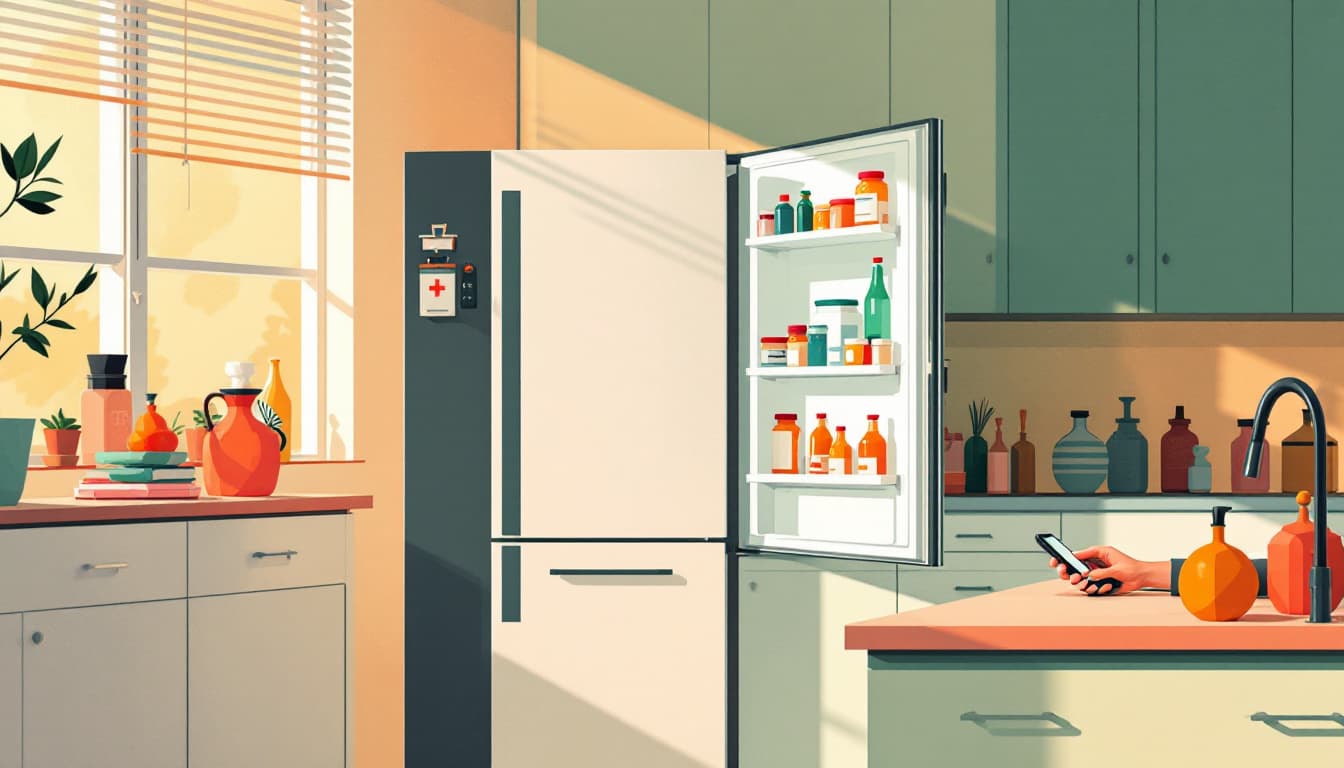
Build a 72-hour no-power heat plan before you need it. This means knowing which family members are most heat-vulnerable, owning at least one battery-powered or hand-crank fan, having ice or a cooler plan, and understanding what medications in your household require refrigeration. Some insulin formulations can tolerate 77°F for a defined number of hours before potency degrades — know what that window is for anything critical in your home. Texas pharmacies are required to provide medication storage guidance; call yours if you're uncertain.
Check your AC filter and condenser coils this weekend. A clogged filter forces your unit to run longer to move the same air, raising your bill and shortening equipment life. A dirty condenser coil — the outdoor unit — is worse. Rinsing the fins with a garden hose (unit off, circuit breaker off) takes fifteen minutes and can recover meaningful efficiency. During a sustained heat event, an AC unit running at 70% efficiency is a real household budget problem.
The bigger picture
Southeast Texas summers are not a surprise. What is a manageable annual stress becomes a household emergency when families are one outage or one equipment failure away from having no margin. The goal of everything above isn't to prepare for collapse — it's to widen the gap between a bad week and a crisis. A household that can maintain a habitable indoor temperature for 48 hours without grid power, knows where to go if they can't, and isn't absorbing $400 electric bills on a variable rate is simply more durable than one that hasn't thought it through.
That's the whole point.