The Piedmont Triad had measurable rain on fewer than half of its expected summer rain days through mid-July, and the western mountain counties are tracking even drier. A report this week from ABC11 News shows gardeners and farmers across North Carolina describing soil conditions and crop stress that typically signal multi-week drought — not a routine dry patch.
That distinction matters for households. A dry week is an irrigation problem. A dry month starts affecting well recharge rates, municipal reservoir drawdown, and the cost of food grown in-state.
What's actually changing
North Carolina's drought stress right now is concentrated in two separate but related systems: private wells and residential gardens on one side, and the agricultural supply chain on the other.
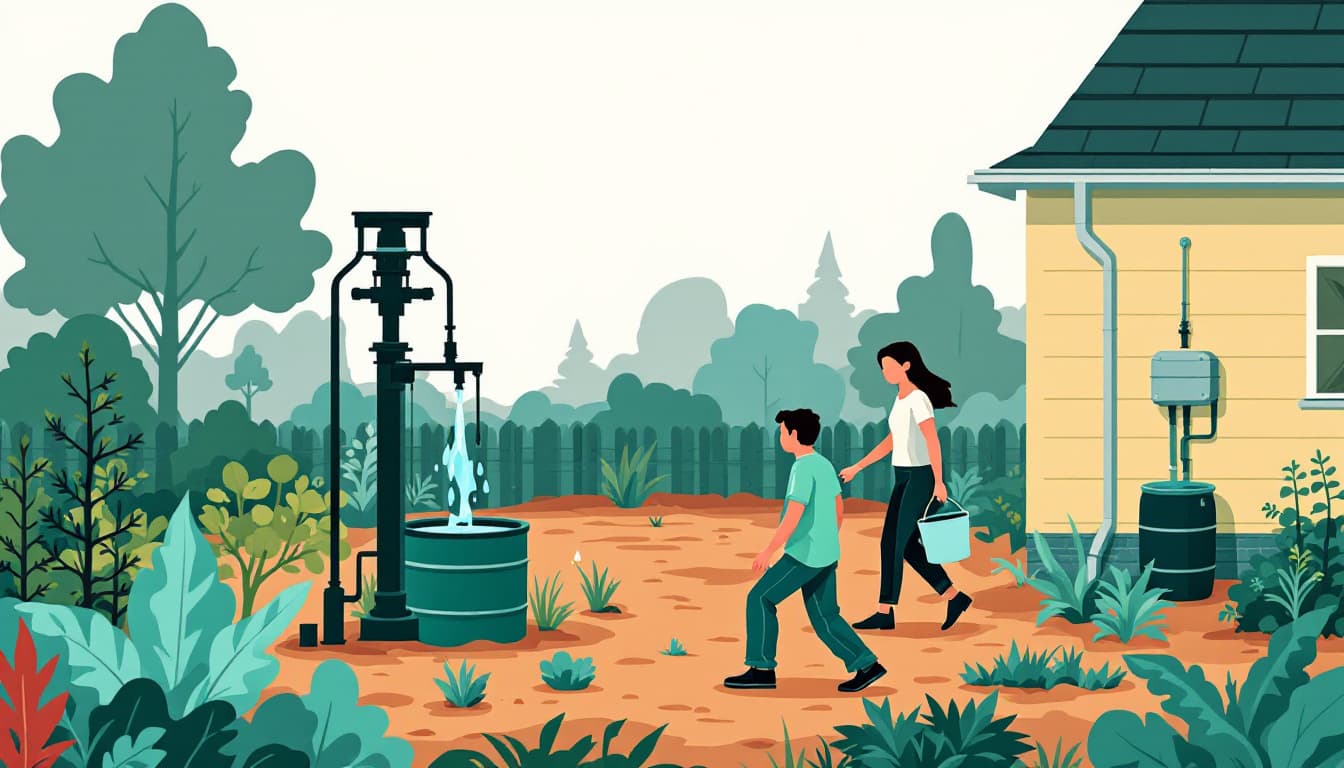
For the roughly one million North Carolina households on private wells, a prolonged dry stretch means the water table drops. Shallow wells — common in older rural properties across the Sandhills and western Piedmont — lose pressure and can temporarily go dry before deeper aquifers catch up. This isn't catastrophic, but it's disruptive and expensive if you're unprepared.
Municipal systems are more buffered, but not immune. Utilities across central and eastern North Carolina draw from surface reservoirs that respond directly to rainfall deficits. When a drought extends into late summer — when demand peaks — utilities sometimes impose outdoor watering restrictions. Check your municipality's current status at the NC Division of Water Resources drought monitor before you assume you're fine.
For households that buy local produce — at farmers markets in Raleigh, Asheville, Charlotte, or anywhere in between — the stress on NC growers is already translating to tighter supply and higher prices on summer crops like tomatoes, peppers, and sweet corn. That effect compounds if the dry weather holds through August.
The NC Department of Agriculture and Consumer Services has not issued emergency declarations as of this writing, but the U.S. Drought Monitor shows portions of the state in moderate-to-severe drought. These categories aren't alarm bells; they're useful planning inputs.
What we'd actually do
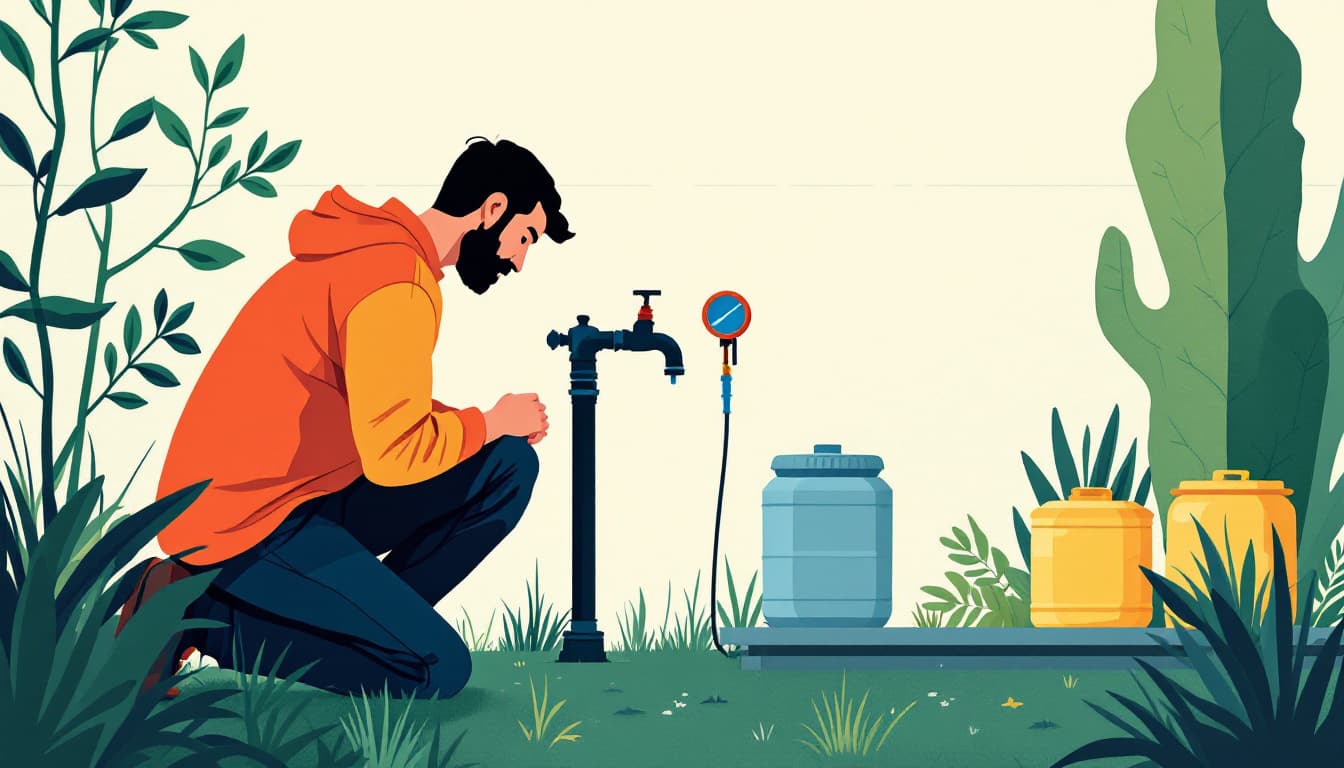
Check your well's recent behavior and document a baseline. If you're on a private well, run water for a few minutes and note pressure, clarity, and any sediment. Shallow wells under drought stress sometimes pull silt before they go dry — that's your early warning. If you've never had your well professionally inspected, this is a reasonable time to schedule one; backlogs at well service companies grow as drought extends.
Store at least two weeks of drinking water now, not later. The standard guidance from FEMA and the NC Emergency Management division is one gallon per person per day for drinking and sanitation. Two weeks for a family of four is 56 gallons — achievable with a few stackable water containers and a corner of a garage. The time to fill them is before a restriction, not during one when everyone else has the same idea.
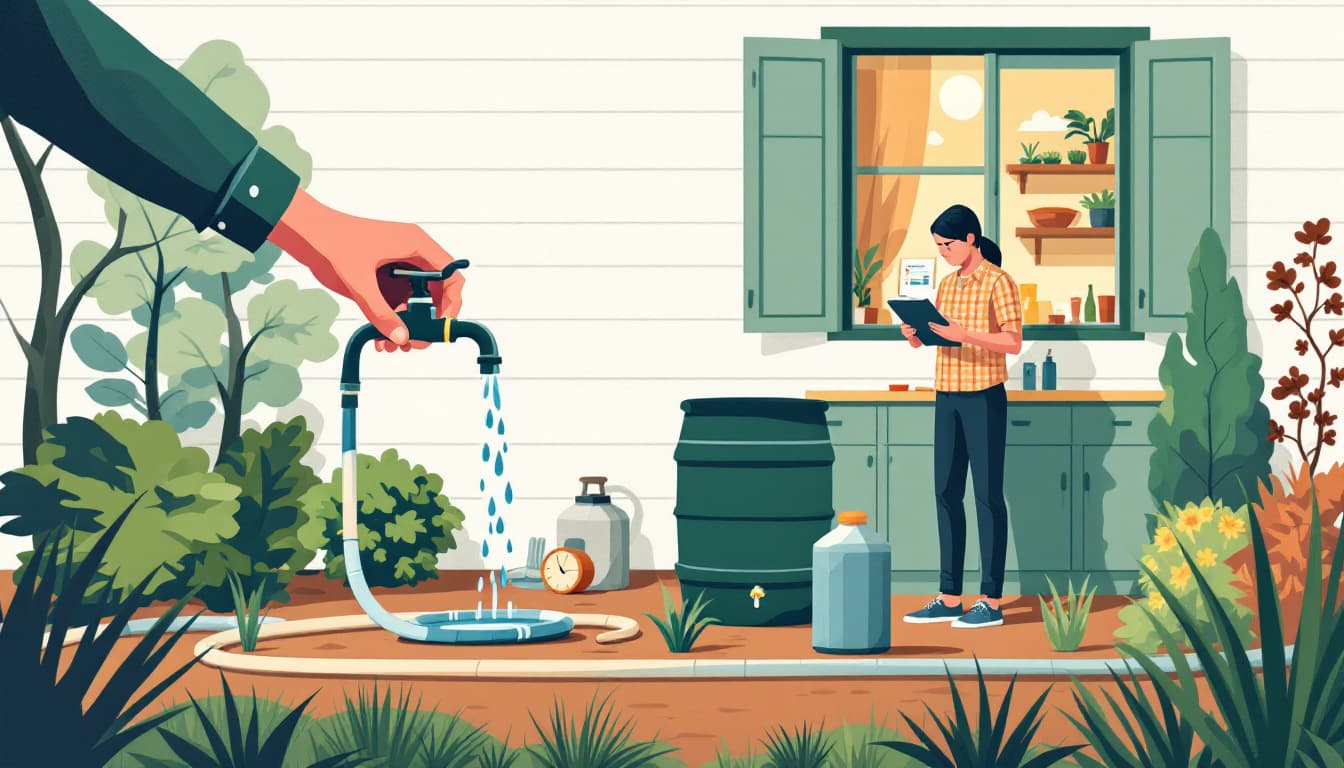
Audit your outdoor water use and cut anything discretionary this week. Lawn grass in North Carolina goes dormant in drought and recovers; established trees and shrubs are a different story. Shift any irrigation toward trees, foundation plantings, and food gardens. Let the lawn brown. Grass loss in a one-season drought is almost always cosmetic and reversible.
If you grow food, mulch aggressively and water by root zone, not by sprinkler. Three to four inches of straw or wood-chip mulch around vegetables can cut soil moisture loss by a meaningful fraction compared to bare soil. Soaker hoses or drip lines deliver water where it matters and lose almost nothing to evaporation. Overhead sprinklers in summer heat waste a significant share of water before it reaches roots.
For mountain and rural households, know your nearest alternate water source. If your well fails, what's the plan? Identify the nearest water-fill station (many county emergency management offices and some fire departments have them), know whether your local hardware store stocks water transfer pumps, and keep a few clean 5-gallon jugs on hand. This isn't about panic — it's about a two-hour inconvenience not becoming a three-day crisis.
The bigger picture
Drought cycles in North Carolina are not new. The state has moved in and out of multi-year dry periods throughout recorded history. What's changed is household exposure: more people on shallow wells in fast-growing exurban counties, more dependence on just-in-time food supply chains, and less familiarity with the visible signals — cracked clay in the garden, sediment in the tap — that rural families used to read automatically.
The goal here isn't to stockpile against collapse. It's to build the kind of household durability that makes a three-week water restriction a minor inconvenience rather than a genuine emergency. That's a much lower bar than most preparedness content suggests, and you can clear most of it this weekend.