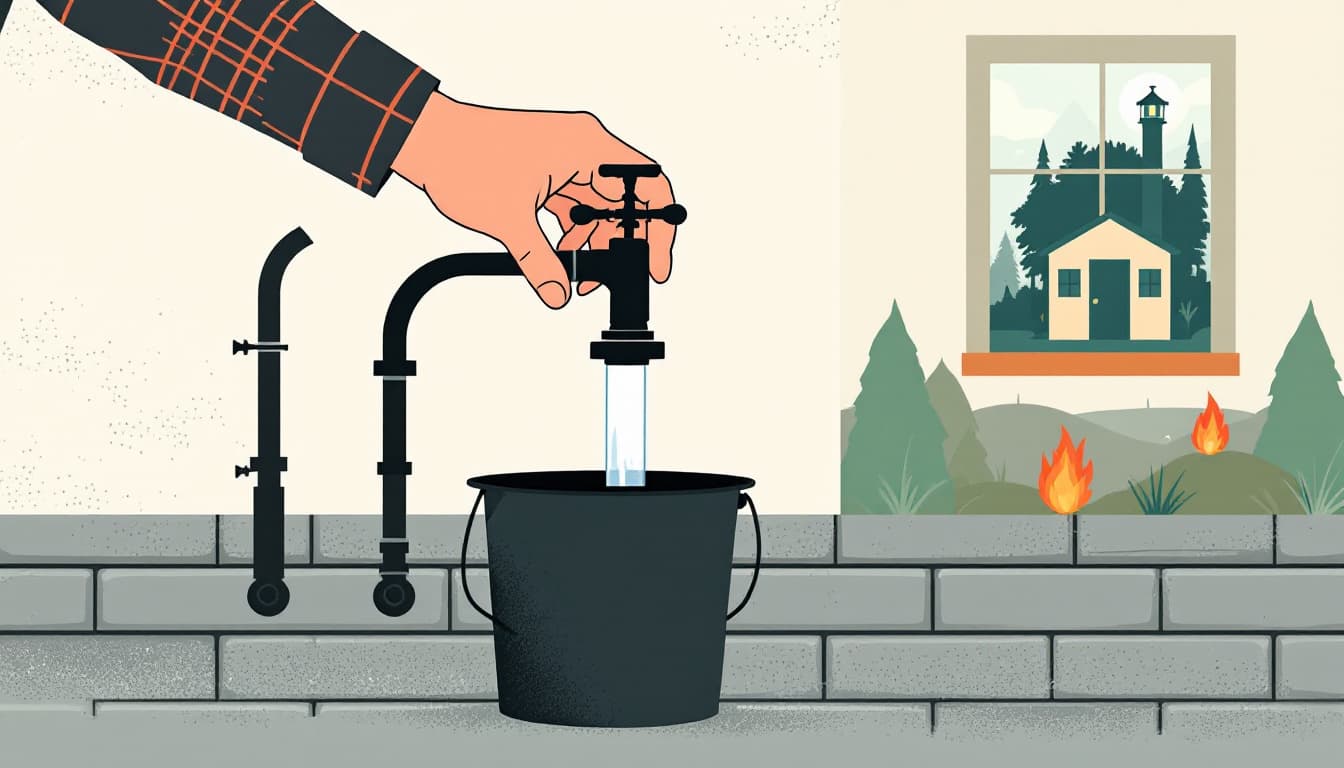
A report this week from the Charlotte Observer confirms what utility managers know but rarely say plainly: drought indices improving does not mean water restrictions are over. Charlotte-Mecklenburg Utilities is holding its current restrictions in place, and the reasoning is sound — reservoir levels and aquifer recovery lag behind rainfall totals by weeks or months. The rain that fell last week won't show up in a reservoir gauge the way it shows up on a weather app.
That lag is the part most households don't account for.
What's actually changing
Western and Piedmont North Carolina remain in drought watch or drought warning conditions across large portions of the state, according to the U.S. Drought Monitor's most recent weekly map. Charlotte sits in a region where summer heat accelerates evaporation faster than moderate rainfall can replenish reservoir capacity. Catawba River system reservoirs — the backbone of Charlotte's water supply — respond slowly to precipitation recovery after extended dry stretches.
The city's decision to maintain restrictions while conditions nominally improve reflects a management posture that every household should understand: the utility is protecting buffer capacity, not current consumption levels. When that buffer is thin, a second dry stretch or a pipe failure anywhere in the distribution system creates cascading problems fast.
For households in the Charlotte metro, Gaston County, Union County, and communities served by smaller municipal systems that draw from the same Piedmont watersheds, this is a moment to take stock before the next restriction tier arrives — not after.
What we'd actually do
Audit your actual daily water use before any restriction forces you to. Most households have no real idea how much water they use on a given Tuesday in August. Pull up your last two utility bills and divide by the days in the billing period. That number is your baseline. Charlotte-Mecklenburg Utilities and most NC municipal providers publish their current restriction tiers online — compare your number against what each tier allows. You want to know, before you're told to cut 20%, where that 20% would actually come from.
Store a short-term emergency supply now, before restrictions tighten. The FEMA standard of one gallon per person per day for three days is a floor, not a goal. A more useful target for a household of four is 15–20 gallons of potable water in food-grade containers, rotated every six months. This isn't about surviving a collapse — it's about the three-day window between a boil-water advisory and a utility fix, which NC communities have experienced repeatedly after storm events. Fill those containers this week while filling them is unrestricted and uncontroversial.
Fix the water waste you already know about. A running toilet can waste 200 or more gallons per day. A dripping outdoor faucet you've been ignoring since April is real consumption under a restriction order — and under some tiered pricing structures, it's expensive. Walk the house this weekend: check toilet flappers, look at every outdoor connection, and check the water meter before and after a two-hour window when nothing is running. If the meter moves, you have a leak.
Know your specific restriction tier and what triggers the next one. Charlotte's restrictions are tiered, and the trigger thresholds are public. Other NC municipalities — Concord, Kannapolis, Gastonia, Monroe — each have their own systems. Look up yours. The trigger is usually a reservoir percentage or a rolling-average rainfall deficit, and utilities publish that number. Knowing it turns an abstract "drought" into a concrete household planning variable.
Think about your outdoor water use as optional, not habitual. Lawn irrigation typically accounts for 30–50% of residential water use during summer months in the Southeast, according to EPA WaterSense data. Under current Charlotte restrictions, outdoor watering is already curtailed. But the habit of treating irrigation as automatic is the bigger issue. Letting grass go dormant during a Piedmont summer is not a landscaping failure — it's how native turf grasses survive dry seasons. Annual flowers in containers are a harder question; a 5-gallon bucket and gray water from rinsing vegetables is a practical substitute for a hose.
The bigger picture
Charlotte is not alone in this. The western Piedmont and foothills of North Carolina have absorbed a difficult stretch of summer heat over multiple recent years, and municipal water managers are operating with less cushion than their reservoir maps suggest at first glance. That's not alarmism — it's the operational reality that the Charlotte Observer report points toward without spelling out completely.
The goal for a household isn't to prepare for the worst-case scenario where taps run dry. That outcome is extremely unlikely for any large NC municipal system. The goal is to be the household that doesn't panic-fill bathtubs the night a Stage 3 restriction is announced, that already knows its daily consumption number, and that has a two-week window of flexibility without changing much about daily life.
Durability looks boring. It almost always is.