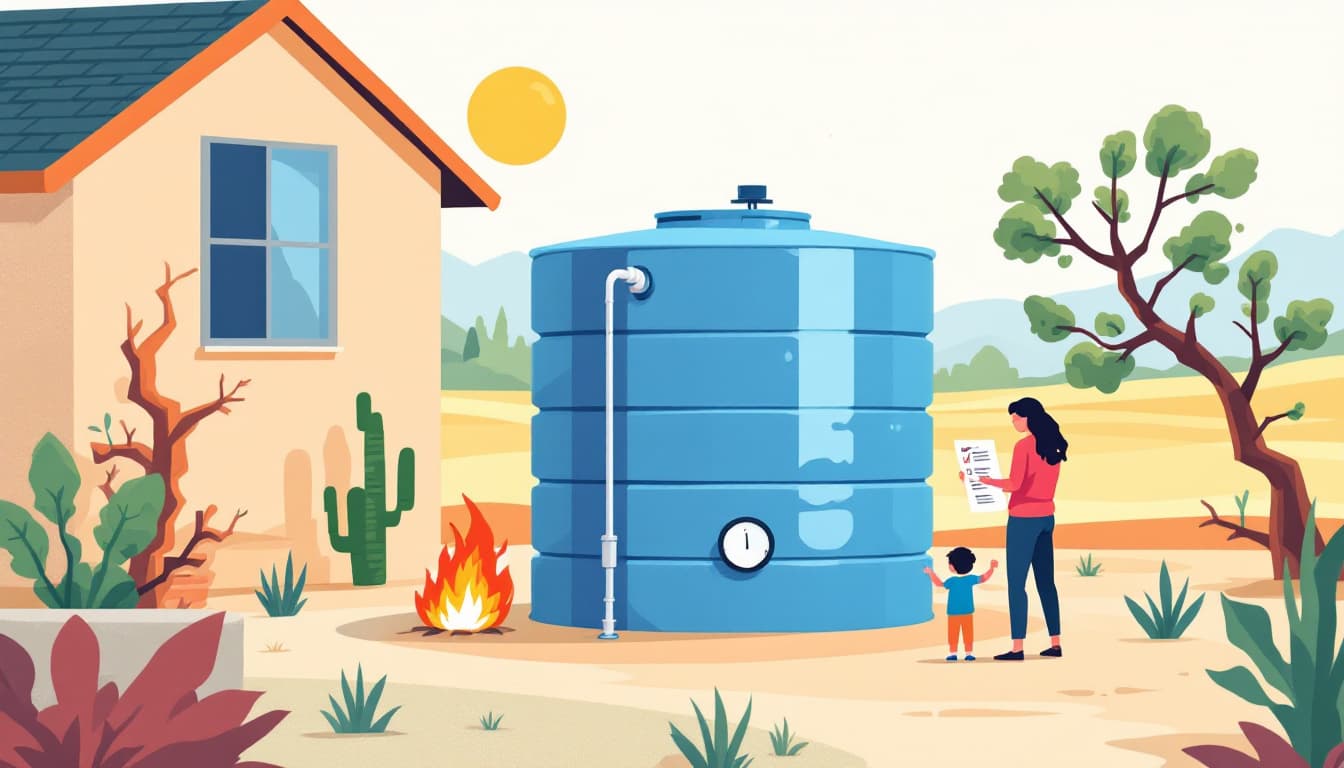
A report this week from WSMV found that at least one Middle Tennessee city has asked its residents to voluntarily conserve water as drought conditions strain local water supplies. The request signals the kind of operational pressure that municipal water utilities face when precipitation deficits compound over weeks and months — a pattern that has increasingly touched communities across the Cumberland Plateau and the Central Basin sub-region of Tennessee in recent years.
The specific city was not identified in full detail in the WSMV report, but the call for conservation is consistent with what happens when reservoir levels or groundwater-fed treatment capacity drops toward operational thresholds. Tennessee's municipal water systems are regulated and monitored through the Tennessee Department of Environment and Conservation (TDEC), which requires utilities to maintain minimum pressure and supply standards. When those margins shrink, utilities issue conservation advisories before triggering mandatory restrictions.
Drought in Middle Tennessee is tracked through the U.S. Drought Monitor, which categorizes conditions from D0 (Abnormally Dry) through D4 (Exceptional Drought). Late-season drought in the region — which includes the Nashville metropolitan area and surrounding counties — is particularly consequential because autumn typically marks a period of reduced agricultural demand, meaning any stress lingering into fall reflects a significant precipitation shortfall from the preceding summer months.
For preparedness-minded readers in Tennessee, this situation is a concrete illustration of a vulnerability that state infrastructure planners have long acknowledged: Tennessee's water treatment and distribution systems, particularly in smaller municipalities outside the Nashville Water Services footprint, often have limited redundancy and reservoir storage capacity. The Tennessee Emergency Management Agency (TEMA) identifies water system disruption as one of the core scenarios in its hazard mitigation planning, and events like this one — where a legally operating system still needs to ask its customers to use less — represent the pre-failure zone that precedes more serious supply interruptions. Households that already maintain stored water know firsthand how quickly that capacity becomes relevant when municipal systems are already stressed before any secondary event occurs.