A report this week from the Chattanooga Times Free Press describes TVA declaring its lake and reservoir system ready for summer recreational and operational demand, while acknowledging that water levels came into the season low after a stretch of regional drought. TVA manages 49 dams across seven states, and "ready for summer" at that scale means the system can handle hydropower load, downstream flow requirements, and cooling water for nuclear plants. It does not mean your county's drought stress has resolved.
Those are two different things, and the gap between them is where households get caught.
What's actually changing
Tennessee recorded drought conditions across portions of East and Middle Tennessee through late spring 2026, with some areas still classified under moderate to severe drought on the U.S. Drought Monitor at the start of this month. TVA's reservoirs act as buffers — they can be drawn down strategically to manage flow — but that buffering ability works against the assumption that lake levels equal groundwater levels. They don't.
Private wells in rural Tennessee pull from aquifers and shallow water tables, not TVA reservoirs. When the surface stays dry for months, those tables drop. The Tennessee Department of Environment and Conservation has documented well failures and reduced yield in drought years across the Cumberland Plateau and parts of West Tennessee. Municipal systems fed by smaller surface intakes — not the big TVA lakes — are also vulnerable when tributaries run low.
And there's a timing issue: the TVA system looks stable now, in mid-May, before peak summer draw. July and August are the actual test. If a dry spring becomes a dry summer, reservoir levels that are "ready" in May can look different by August.
What we'd actually do
Get your well tested now, before summer. If your home uses a private well, call a licensed Tennessee well contractor or your county health department for a basic yield and water quality test. A yield test tells you how fast the well recharges — a number that matters when summer demand spikes and the water table is already suppressed. The Tennessee Department of Health offers guidance on licensed testers by county. This costs roughly $150–$300 and tells you something a lake-level report never will.
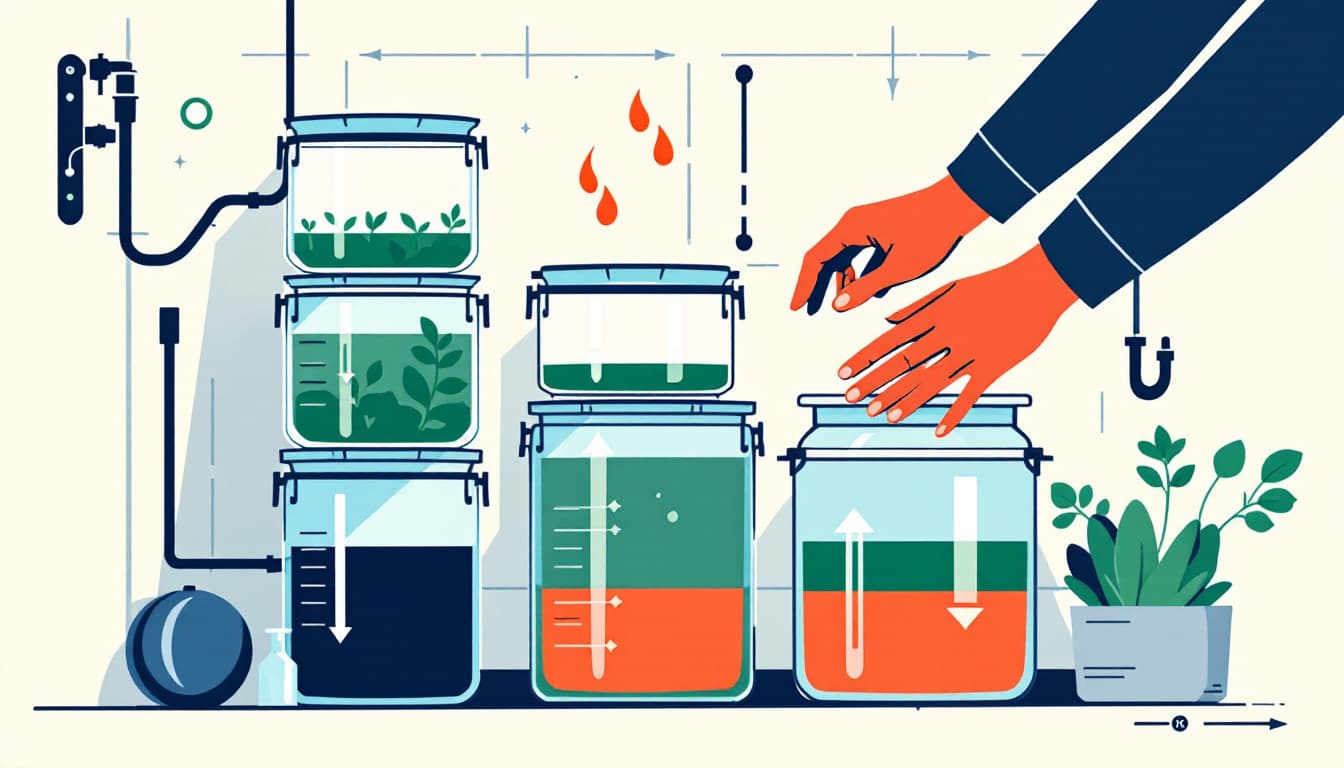
Store a minimum three-day water supply per person, and be honest about what you actually have. FEMA's baseline is one gallon per person per day. For a family of four, that's 12 gallons for three days — about two filled WaterBOB-style containers or a case of 1-gallon jugs rotated every six months. Most households in Tennessee don't have this. It's not a doomsday measure; it's what you need if a pump fails or a boil-water notice goes out during a heat event.
Know your county's drought status and who to call. The U.S. Drought Monitor updates every Thursday. Bookmark it and check it once a month this summer. If your county moves to severe (D2) or extreme (D3) drought, that's when to get proactive about conservation — and when to verify your utility or well contractor's emergency contact. Tennessee utilities are required to have drought contingency plans; your water provider will post them on their website or provide them on request.
Talk to your neighbors with wells if you're on a shared or adjacent aquifer. In rural East Tennessee and the Highland Rim, multiple properties often draw from the same formation. If a neighbor's well ran low last summer, yours is probably next. This kind of local knowledge doesn't show up in any agency report, and it's free to ask.
The bigger picture
TVA is a genuinely impressive piece of infrastructure, and "the system is ready" is real news worth knowing. It means the lights stay on and the lakes stay navigable. It doesn't mean Tennessee has solved its drought exposure. The household scale and the grid scale respond to different inputs, on different timelines, with different buffers.
The families that come through a dry summer without drama aren't the ones who panic-bought a truckload of water in June. They're the ones who already knew what their well yields, had a few weeks of water stored, and checked the drought map when it mattered. That's not a prepper identity — it's just a well-run household.