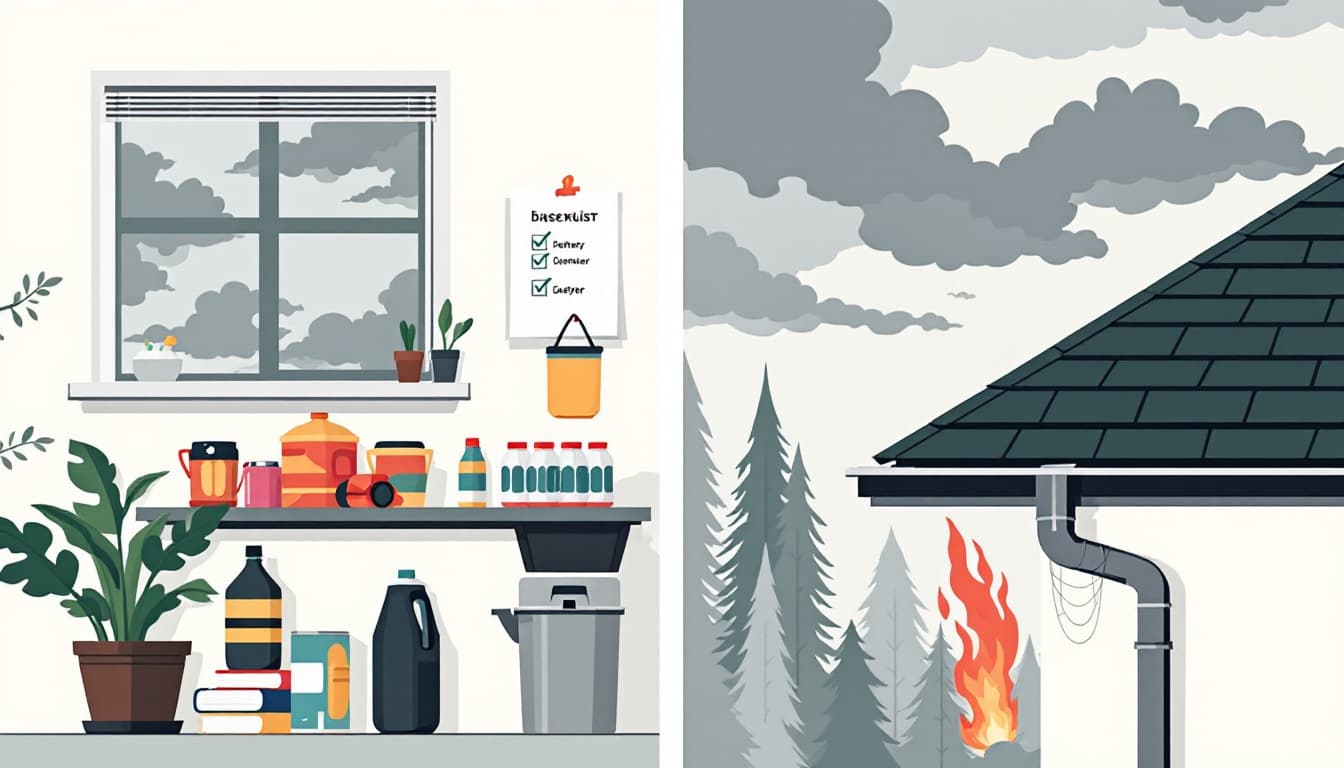
A Flood Warning along the Pearl River, covering parts of southeastern Louisiana and southern Mississippi, was reported this week by WWLTV.com. The Pearl doesn't move like a coastal surge — it rises over hours and days, which sounds reassuring until you realize most households treat that lead time as a reason to wait rather than act.
That gap between "warning issued" and "water at the doorstep" is the window that separates a manageable disruption from a costly one. Most families don't use it well.
What's actually happening with Pearl River flooding
The Pearl River forms the eastern border between Louisiana and Mississippi before draining into Lake Borgne near the coast. Communities like Bogalusa, Slidell, and the low-lying subdivisions east of New Orleans have seen it flood repeatedly — sometimes from sustained rain in central Mississippi that takes two or three days to work downstream before it shows up in Louisiana backyards.
That upstream-lag dynamic is important. By the time a Flood Warning is issued by the National Weather Service, the crest is already moving. The NWS Slidell office posts river-stage forecasts with crest predictions; those numbers tell you roughly how much time you have and how high the water may get. That page is more useful than any news alert.
This is not a one-off event. Recent Louisiana state records show Pearl River flood warnings issued multiple times per year in wet seasons. Summer flooding is less discussed than spring floods, but Gulf moisture loading in June and July can produce the same multi-day rainfall totals upstream that generate dangerous crests downstream.
What we'd actually do
Check the NWS Advanced Hydrologic Prediction Service page for your specific gauge, not just the warning headline. The AHPS site (water.noaa.gov) lets you look up the Pearl River at Bogalusa or at Pearl River (the town near Slidell) and see a forecast crest with a timeline. If the forecast puts the gauge two feet below flood stage, you have time to monitor. If it's projecting a major flood crest in 36 hours, that's an "act now" signal — not a "watch the news" signal.
Move anything on the floor to counter or shelf height before you go to sleep. This sounds obvious. Almost no one does it preemptively. A six-inch intrusion — common in Pearl River floodplain homes — destroys appliances, furniture, and irreplaceable documents that could have been moved in 20 minutes. Prioritize: insurance documents, medications, passports, hard drives, and anything with a motor sitting on the floor.
Know your parish's voluntary evacuation trigger, not just mandatory. St. Tammany and Washington parishes both use tiered evacuation systems. Voluntary evacuation notices are issued earlier than mandatory ones, and families who leave during voluntary windows face shorter traffic, open shelters, and available gas. Louisiana's emergency management portal and parish-specific social media accounts are the fastest sources. Don't wait for a mandatory order if you have vulnerable family members, a one-exit road, or no flood insurance.
Locate your flood insurance declaration page and photograph your home's contents today. Louisiana participates in the National Flood Insurance Program. If you have a policy, the declaration page tells you your coverage limits and your adjuster contact. If you don't have it handy, call your insurer now — not after the water recedes. Photograph or video every room as-is; claims without pre-flood documentation are harder and slower to resolve. This takes 15 minutes.
Fill your gas tank and withdraw $200 in cash before the crest arrives. After any significant Pearl River flood warning, gas stations in Slidell, Pearl River, and Bogalusa see lines. ATMs run low. Card readers go offline when power is interrupted. Cash and a full tank are not panic moves — they are the two most boring, consistently useful items in any short-term disruption.
The bigger picture
Louisiana households near the Pearl River already know the drill on hurricanes. River flooding gets less attention, partly because it doesn't have a name, doesn't generate the same dramatic satellite imagery, and often arrives quietly. But the property damage arithmetic is the same, and the behavioral errors are the same: waiting too long, not knowing the specific gauge forecast, and assuming a warning that isn't yet mandatory means nothing needs to change.
Durability here means building a household that responds to a Flood Warning with a checklist rather than paralysis. The warning is not a signal to panic. It is a signal that the window is open, and the goal is to use it.