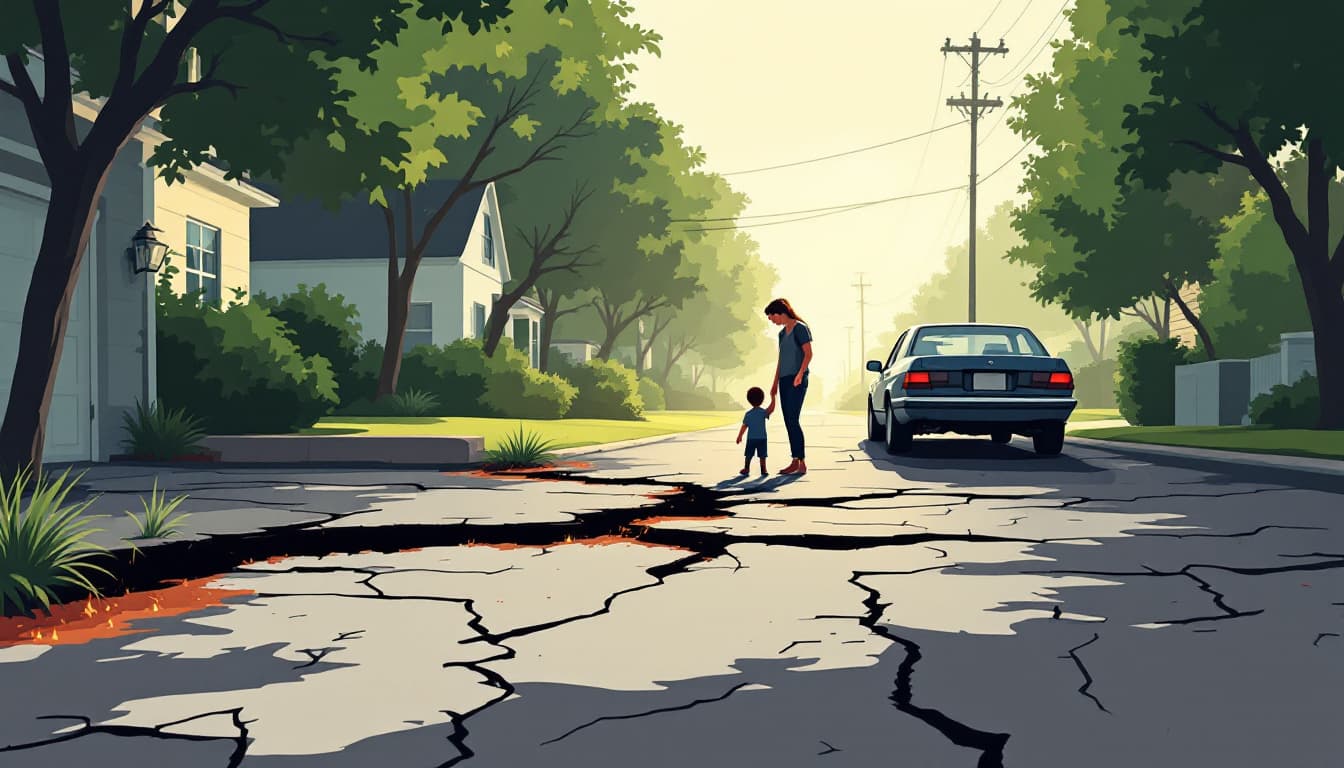
Germany's autobahns are buckling. A report this week from Louisiana First News covered a Central European heat event severe enough to deform major highway surfaces — roads engineered for German winters but not, apparently, for the temperatures arriving now. The images look dramatic. For Louisiana readers, they should also look familiar.
Louisiana asphalt has been doing a version of this for years. The state sits in USDA hardiness zone 9, endures routine summer temperatures above 95°F, and packs heat with humidity that makes pavement expansion worse — concrete and asphalt expand as they absorb heat, and when the expansion has nowhere to go, surfaces crack, heave, or buckle. LADOTD crews repair heat-related road damage every summer. What's shifting is the duration and intensity of the heat events causing it.
What's actually changing
The Germany story matters here not because Louisiana is about to look like Munich, but because it illustrates something supply-chain analysts have tracked quietly: extreme heat is no longer a regional anomaly. It's disrupting infrastructure on multiple continents in the same calendar month. That affects Louisiana households in two ways most preparedness writing ignores.
First, road damage slows freight. When major highway segments require emergency repair or speed reductions, truck delivery windows lengthen. Louisiana is a major freight corridor — I-10, I-12, and the Port of New Orleans move an enormous share of the country's goods. A bad heat summer that degrades road surfaces statewide doesn't just make your commute worse; it adds friction to the distribution networks that stock your grocery store.
Second, the workers fixing those roads are in real danger. Louisiana's Occupational Safety and Health regulations provide guidance on heat exposure, but enforcement is uneven. When a heat event is widespread enough to damage infrastructure, the repair crews working on it face compounding risk. Slower repairs mean longer disruptions.
None of this is catastrophe. It's friction. And friction compounds quietly until something breaks at a bad moment — a storm, a price spike, a power outage.
What we'd actually do
Map your most heat-vulnerable routes before you need them. Take 20 minutes this week and identify one alternate route to your workplace, your kids' school, and your nearest grocery store that avoids major state highway segments. Google Maps and the LADOTD 511 system both show real-time road conditions. Knowing your alternates before a closure beats figuring it out in traffic.
Louisiana's parish roads vary enormously in quality. Rural roads in low-lying parishes — particularly in the Atchafalaya Basin corridor and coastal parishes — are already contending with subsidence. Heat-related damage layers on top. If your household depends on a stretch of road that regularly floods or sinks, check its current condition rating through your parish public works office. They will tell you if you call.
Add two weeks of shelf-stable groceries to your rotation. This is not about bunkers. It's about absorbing supply friction without panic-buying. If a heat event slows freight regionally for five to ten days, households with a two-week buffer don't notice. Choose foods your family already eats: canned beans, rice, pasta, shelf-stable protein. Rotate them. This costs roughly $80-$120 for a family of four done incrementally over a month.
Check your vehicle's cooling system before July. Your car's radiator, coolant level, and belt condition are heat-vulnerable too. A car breakdown on a Louisiana interstate in July is not just inconvenient — it's dangerous. A basic coolant check at any auto shop runs $20 or less. If your car is older than eight years, ask about the thermostat and water pump while you're there.
Prepare your home for a multi-day power outage during peak heat. Louisiana summers produce power outages from both storms and simple grid overload. Identify now which two rooms in your home hold heat best, whether you have a neighbor or family member with a generator or cool space, and whether your household has anyone — elderly, infant, medically vulnerable — who cannot safely tolerate 90°F indoors for 48 hours. Make the plan before the outage, not during.
The bigger picture
Roads buckling in Germany is not a story about Germany. It's a signal that infrastructure designed for one climate envelope is operating in another. Louisiana's infrastructure was built for a climate that is already at the edge of its tolerances. That's not a reason to panic. It's a reason to build personal durability — better routes, fuller pantries, maintained vehicles, a household heat plan — so that when the friction arrives, it stays friction and doesn't become a crisis.
The goal here is not to survive catastrophe. It's to not be caught flat-footed by the ordinary failures of a hotter summer.