A heat advisory is not a heat wave. It's the step before one — the point at which the National Weather Service determines conditions are dangerous enough to warn you, but not yet catastrophic enough to issue a more severe alert. For Louisiana households in late July, that distinction rarely offers much comfort. When WDSU reported this week that a heat advisory is in effect alongside a weekend storm threat, the combination is exactly the scenario that most household prep plans handle worst.
Here's why that matters in concrete terms: heat kills quietly. Power outages from storms make heat deadly. Louisiana sits in a climate band where both pressures arrive together, routinely, every summer. The question isn't whether your household is ready for heat or ready for outages. It's whether you're ready for both at the same time, with no guarantee of which hits harder or how long either lasts.
What's Actually Changing
The advisory-plus-storm sequence is not unusual for south Louisiana, but a few things make this moment worth pausing on.
First, the grid. Entergy Louisiana and DEMCO have both faced scrutiny in recent years over restoration timelines after storm damage. Recent Louisiana Public Service Commission filings and local reporting have documented that some parishes — particularly rural ones in the Florida Parishes and along the I-10 corridor west of Baton Rouge — can wait 48 to 96 hours or longer for restoration after a significant convective event. When that outage happens during a heat advisory, a 72-hour wait without cooling isn't just uncomfortable; it's a medical emergency for anyone elderly, young, or managing chronic illness.
Second, humidity. Heat index readings in coastal Louisiana parishes routinely exceed 110°F in late July even when air temperature is in the low 90s. The NWS heat advisory threshold for Louisiana is lower than for drier states precisely because the Gulf moisture makes ambient temperatures more physiologically dangerous. Your body cannot cool itself through sweating when relative humidity is above 90%.
Third, storm timing. Weekend storms in Louisiana's summer pattern often develop quickly from Gulf disturbances. If a line of severe weather takes out your power Friday night and your window A/C unit is your only cooling source, Saturday and Sunday become dangerous by noon.
What We'd Actually Do
Identify your household's most heat-vulnerable person and make a specific plan for them, not a general one. This means knowing exactly where you'd take a bedridden parent, an infant, or someone on medications that affect heat tolerance if your home reaches 95°F indoors. The answer should be a specific address — a neighbor with a generator, a cooling center location, a family member's house — not "we'd figure something out." Louisiana's Office of Elderly Affairs maintains a list of parish-level cooling centers. Find the one nearest you before Friday.
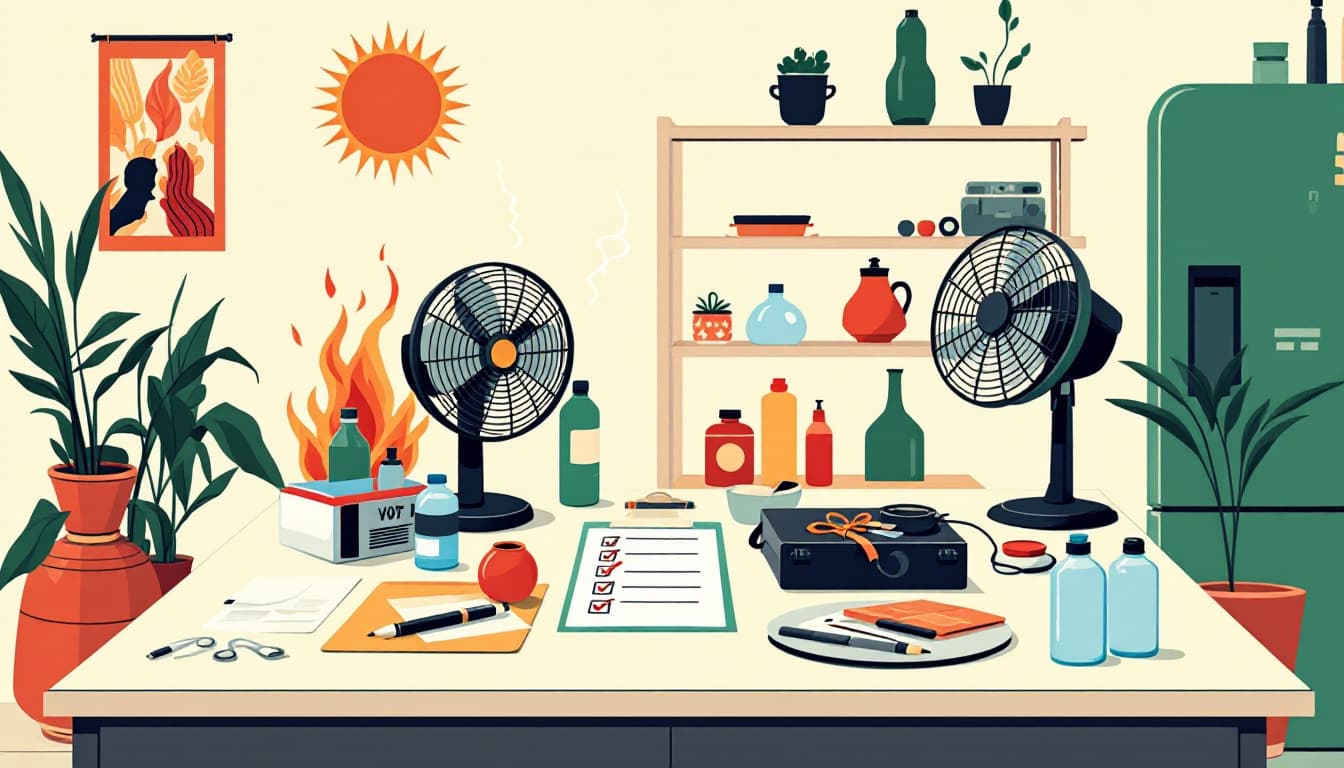
Fill your freezer with water bottles before the weekend. A full freezer maintains its temperature roughly twice as long as a half-empty one. Freeze gallon jugs now. If you lose power, they extend your food-safe window by 12 to 24 hours, and as they melt, they become your drinking water reserve. This costs nothing if you have the containers.
Put a battery-powered or USB fan somewhere you can find it in the dark. Not a whole-house generator — just a small fan. In a power outage during high humidity, moving air can reduce perceived temperature by 4 to 7 degrees, which is enough to keep most healthy adults out of heat exhaustion territory while you make a longer-term decision. Check that it works, and put it with your flashlights tonight.
Check your window unit's filter before storm season peaks. A clogged filter reduces efficiency by 5 to 15 percent, according to Department of Energy guidance. In Louisiana heat, that's the difference between a unit that keeps pace and one that runs constantly and still can't drop your bedroom below 80°F. Takes four minutes to check.
Write down Entergy's outage reporting number and your parish's emergency management line on paper. Cell towers can congest or lose power in the same storm that takes out your home. A screenshot in your phone is worthless if your phone is dead. GOHSEP (Louisiana Governor's Office of Homeland Security and Emergency Preparedness) publishes parish emergency contacts at gohsep.la.gov. Print the page that covers your parish.
The Bigger Picture
Louisiana households deal with this pressure every summer, and most of them manage it. The goal here isn't to install a whole-house generator or build a bunker against the heat. It's to close the specific gap this particular week exposes: the 48 hours between a storm's arrival and the grid's recovery, when heat is already dangerous and your normal coping systems are offline.
Durability, not catastrophe. Know where you'd go. Have water. Have airflow. Know who's most vulnerable. That's the whole checklist, and you can finish it before the weekend storm arrives.