A report this week from Travel And Tour World placed Louisiana on a list of ten states under simultaneous travel warnings for flash floods, tornadoes, and dangerous heat. That kind of stacked-hazard bulletin is easy to scroll past. It shouldn't be.
Late June in Louisiana is already the calendar's most unforgiving stretch — the Gulf is warm enough to juice tropical moisture, the jet stream is far enough north to leave the state baking, and afternoon thunderstorm cells can drop two inches of rain in forty minutes on a parish that was under a heat advisory at noon. When all three threats arrive in the same week, the decisions you make in the first thirty minutes of a warning matter more than any gear you own.
What's actually changing this week
The hazard here isn't unusual for Louisiana. What's notable is the simultaneity. Flash flood watches and excessive heat warnings have historically alternated in the forecast cycle. When they overlap, the practical danger compounds in specific ways most preparedness advice ignores.
Cooling centers become a flood-evacuation conflict. If a flash flood warning hits and your home is in a low-lying area — anywhere along Bayou Teche, in the Tangipahoa River basin, in the streets that drain toward Lake Borgne — you may need to leave. But if the heat index is 108°F and you don't have a destination with air conditioning locked in, you've traded one risk for another.
Flooded roads mask heat exhaustion risk. People who shelter in place through flash flooding and lose power in the same event face heat illness within hours in a Louisiana June. The Louisiana Governor's Office of Homeland Security and Emergency Preparedness (GOHSEP) maintains parish-level shelter information, but that network depends on you knowing where to go before the roads close.
Power outages in heat events kill. This is well-documented by the CDC and Louisiana Department of Health after multiple Gulf Coast heat events. Extended outages during a heat index above 105°F are a medical emergency for households with elderly residents, infants, or anyone on medications that impair heat response.
What we'd actually do
Locate your parish's cooling centers and flood shelters now, before the next warning. Most parishes publish these through their Office of Emergency Preparedness websites and through the Louisiana 211 helpline. Write down two addresses. Assume your phone may be dead or the website may be slow when you actually need it.
The gap most households have isn't gear — it's a list of places to go. If you have family members who can't drive or can't self-evacuate, identify who calls them and how, today.
Set your weather alert threshold lower than you think you need to. The National Weather Service New Orleans and Lake Charles offices both push wireless emergency alerts, but those arrive at the warning stage, which often leaves fifteen to thirty minutes of decision time. Downloading the NWS app and enabling watch-level alerts gives you an earlier window. A flash flood watch means conditions are favorable. A warning means it's happening.
Check your vehicle's ground clearance assumption. Turn around, don't drown is the right rule, but Louisiana households often underestimate how fast water rises on familiar roads. Six inches of moving water can knock a person down. Two feet will carry most passenger cars. If your regular route to a shelter or a family member's home crosses any low-water crossing, identify an alternate now.
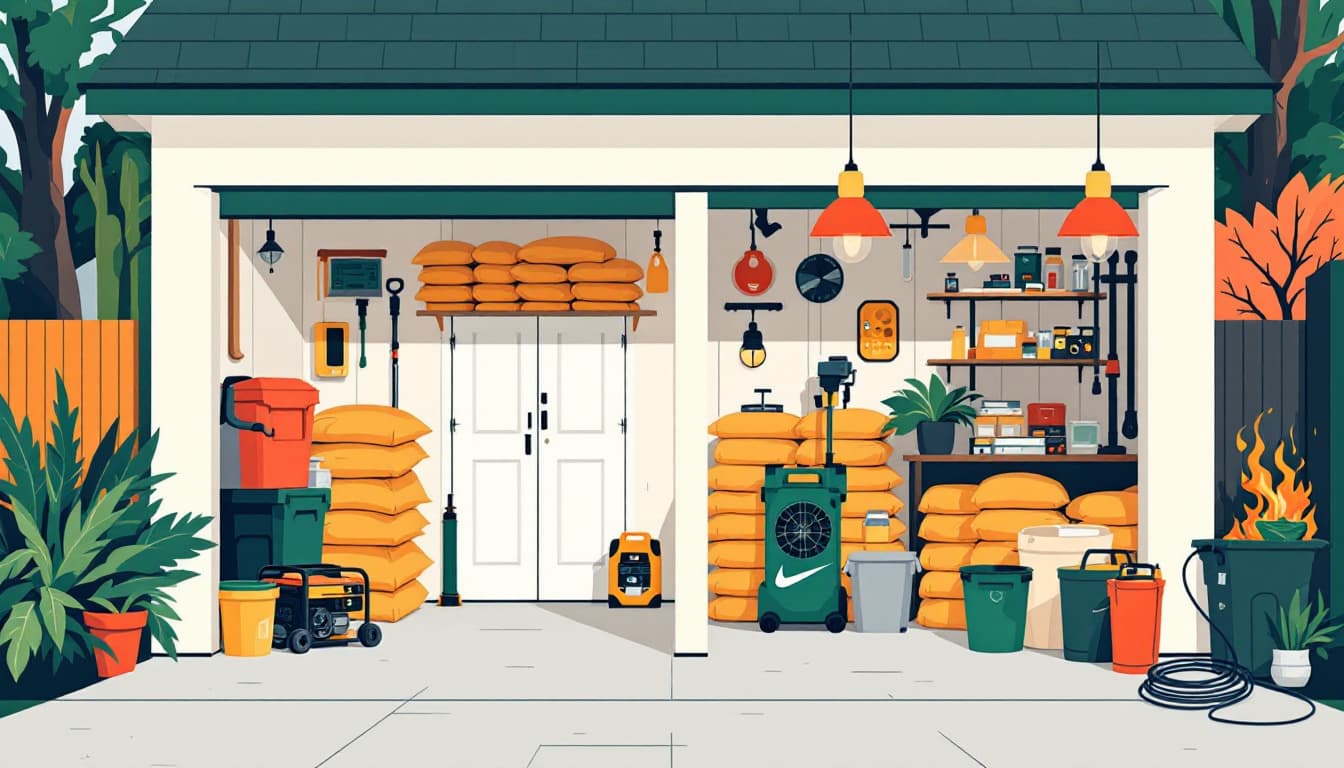
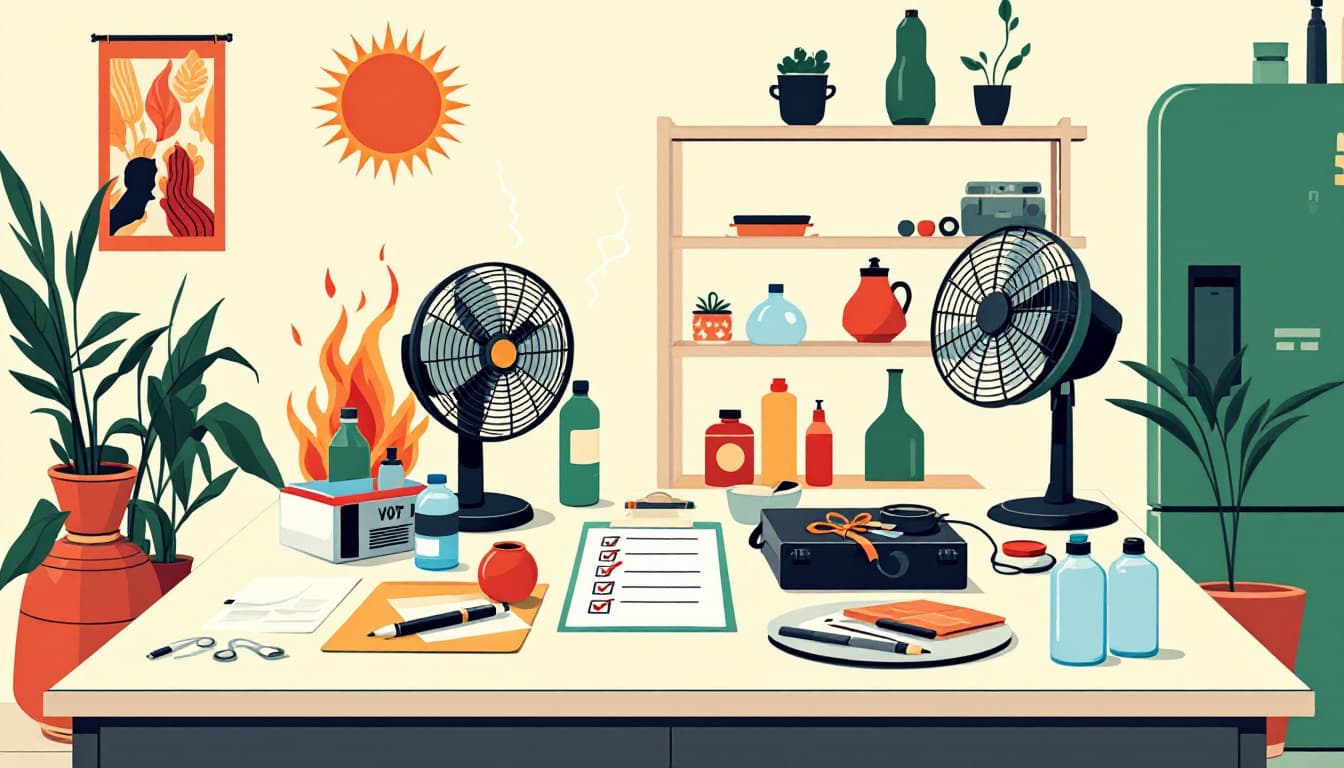
Keep a 72-hour cold kit staged, not just a go-bag. A go-bag assumes you're leaving. A cold kit assumes you're sheltering in a house that's lost power in 95°F heat. That means: battery-powered or hand-crank fan, a cooler with reusable ice packs you rotate from the freezer weekly, electrolyte packets, and a list of who in your household needs medication kept cold. A small USB-charged fan costs less than $20 and runs four to six hours on a standard power bank.
Have a communication plan that doesn't depend on cell towers. After major Louisiana storm events, cell networks degrade within hours. A NOAA weather radio with battery backup costs around $30 and works when your phone doesn't. Designate one out-of-state contact as the household's relay point — it's often easier to reach outside the affected region than within it.
The bigger picture
Louisiana households have survived every hurricane season on record. That durability is real. But multi-hazard weeks expose the difference between general resilience and a specific plan. The goal isn't to fear a forecast. It's to make the decisions in the next ten minutes so you don't have to make them in the next ten minutes of a warning.
Heat and flooding are both survivable with preparation that costs almost nothing. The preparation window is right now, while the sun is still up and the roads are still dry.