One hundred and fifty days is not an abstract number. It is roughly the distance between now and late December. La Veta, a town of about 800 people in Huerfano County on the eastern slope of the Culebra Range, is looking at that calendar and it has declared worst-case drought restrictions. A report this week from Colorado Public Radio puts the reserve figure below 150 days — meaning the community's water supply, without significant precipitation or emergency intervention, could reach critical failure before the first hard freeze of winter.
That's a municipal system in genuine crisis, not a precautionary press release.
What's actually happening
La Veta is small, but its situation is not an outlier in Colorado's 2026 drought pattern. The state entered this summer with several river basins already running well below median flow, and the mountain snowpack that normally replenishes smaller municipal systems through late spring came in below average across the southern Rockies. Small water utilities — towns and rural districts that draw from a single reservoir or a limited tributary — have almost no buffer when that recharge cycle underperforms.
The "worst case" designation in La Veta's declaration matters because it typically triggers the steepest restrictions a system is authorized to impose: outdoor irrigation bans, limits on commercial water use, and formal requests for state emergency water-sharing assistance through the Colorado Division of Water Resources. At this stage, a municipality isn't conserving toward a goal; it's rationing toward survival.
What the CPR report doesn't address is what this means for the 300,000-plus Coloradans served by similarly sized or structurally similar systems along the Front Range foothills, the San Luis Valley, and the Western Slope. Those households are not watching La Veta's situation on television. They should be.
What we'd actually do
Pull your utility's most recent Consumer Confidence Report. Every municipal water provider in Colorado is required by the EPA to publish an annual water quality and supply report. Most post it on their website; if yours doesn't, call the utility directly and ask for it. What you're looking for is the source of your water (reservoir, groundwater, river diversion) and any notes about current storage levels or drought contingency status. This takes 20 minutes and tells you more about your actual risk than any news article.
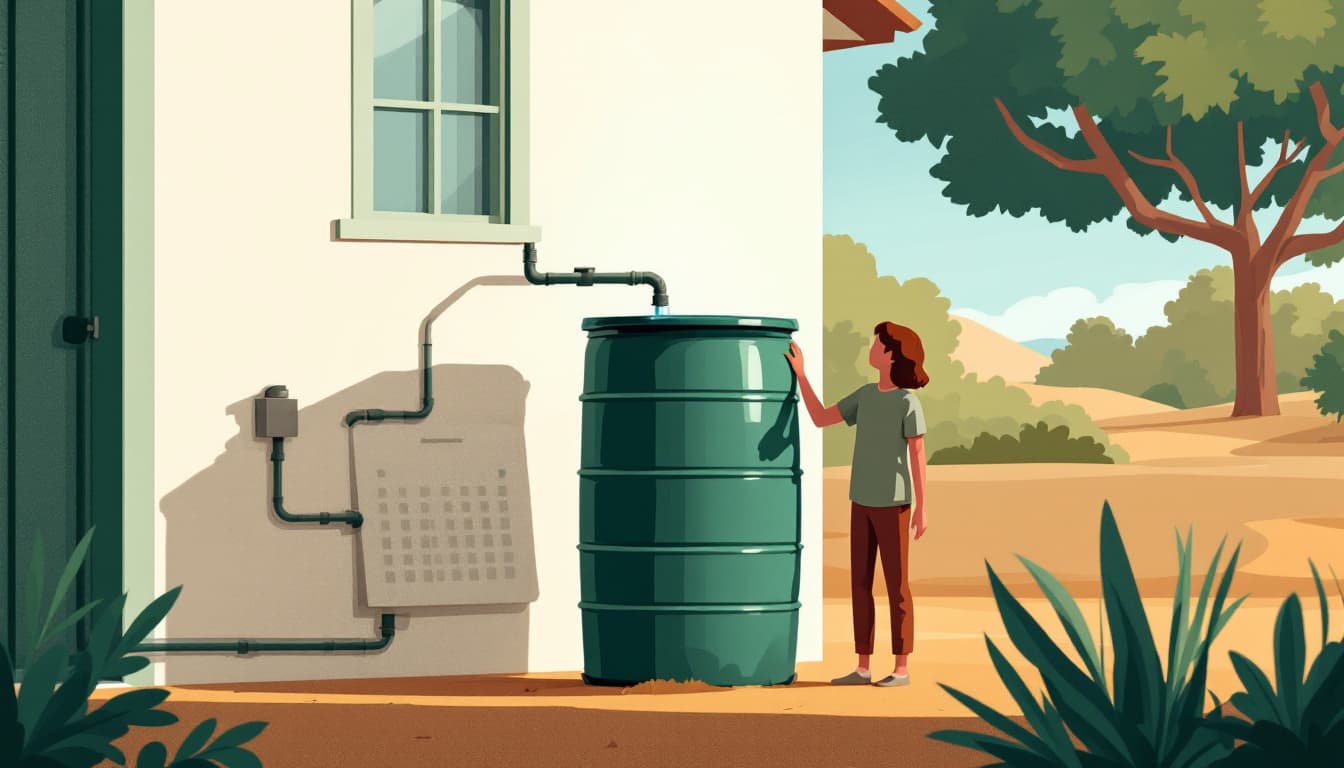
Store a two-week household water supply before August ends. The standard guidance — one gallon per person per day — gets you to 14 gallons per person for two weeks. For a family of four, that's 56 gallons: six standard water bricks or four food-grade 15-gallon containers stored in a cool basement or garage. This is not a doomsday posture. It is the same logic as keeping two weeks of food on hand: restrictions or service interruptions rarely give you lead time to prepare.
Audit your outdoor water use now, before restrictions are imposed. In most Colorado municipalities that have declared drought stages, outdoor irrigation accounts for 50 to 70 percent of residential summer consumption according to recent CWCB data. If your area moves to Stage 2 or 3 restrictions, that use disappears by mandate. Households that have already shifted to drip irrigation, adjusted sprinkler schedules to pre-dawn hours, and let grass go dormant will barely feel the change. Households that haven't will be scrambling.
Learn what your water district's drought stages actually trigger. Most Colorado utilities have tiered drought response plans publicly available. Stage 1 is typically a voluntary 10-20 percent reduction ask. Stage 3 or "worst case" — La Veta's current designation — often means no outdoor watering, no car washing, and possible rate surcharges for above-threshold use. Knowing the triggers in advance means you can make deliberate choices rather than reactive ones when a notice arrives.
If you're on a well, test your static water level before September. Well owners in drought years face a different but related problem: aquifer levels drop, and shallow wells can lose pressure or go dry without warning. Colorado State University Extension recommends annual static level measurements; if yours hasn't been checked recently, hire a licensed well contractor to do it now while you still have lead time to address any problems.
The bigger picture
La Veta's 150-day clock is a reminder that water infrastructure is not an invisible utility that simply works. It is a physical system with real storage limits, real recharge rates, and real failure modes — and in a drought year, those limits become visible fast. Colorado is not facing imminent statewide water collapse. But the households that will handle a municipal restriction most easily are the ones that treated preparedness as routine maintenance, not emergency response.
The goal isn't to hoard water and wait for catastrophe. It's to build enough slack into your household that a Stage 3 drought order feels like an inconvenience instead of a crisis.