A combine harvester that can't be fixed in the field during harvest week isn't a machine — it's a liability. That's been the practical reality for American farmers for more than a decade, and it's the pressure that finally produced a Federal Trade Commission settlement with John Deere, reported by AP News this week, requiring the company to give owners and independent repair shops real access to diagnostic tools, manuals, and parts.
This is not a farm story. It's a story about who controls the things you own.
What actually changed
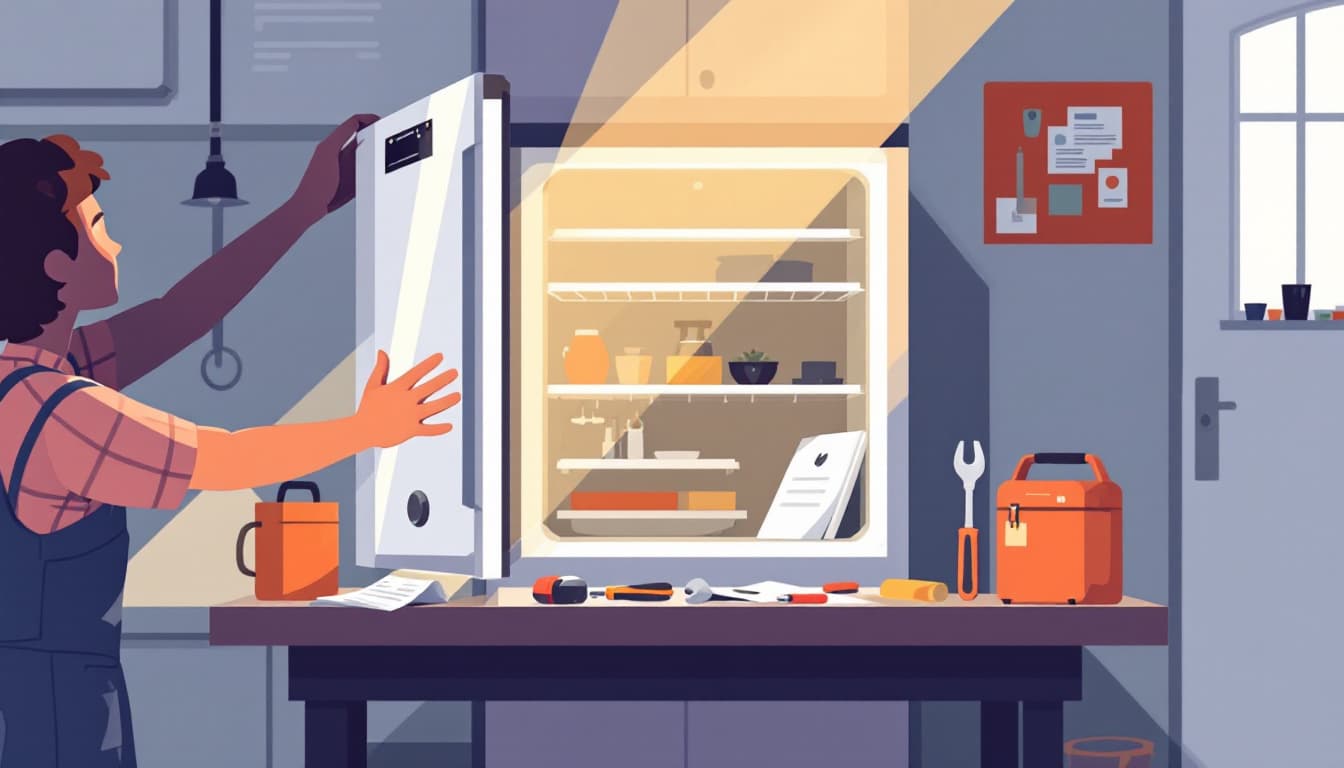
The settlement compels John Deere to provide owners with tools and documentation that were previously locked behind dealer-only systems. Independent mechanics — not just certified John Deere service centers — will be able to diagnose and repair equipment without the manufacturer's software gatekeeping the process.
This matters because John Deere is not an outlier. It is the template. The same lock-in logic runs through medical devices, consumer electronics, HVAC systems, and increasingly, the diesel trucks and farm equipment that move food from fields to distribution centers. When a single software authorization stands between a broken machine and a working one, the repair timeline is no longer governed by skill or parts availability. It's governed by dealer capacity and corporate policy.
The agricultural angle sharpens the stakes. Harvest windows are narrow. A multi-day repair delay during peak season can translate directly into crop losses, which translate into regional supply tightness, which eventually shows up in grocery prices. Recent BLS data on food-at-home price volatility has consistently flagged agricultural production disruptions as an upstream driver — not the only one, but a real one.
What the bigger pattern tells us
The right-to-repair movement has been gaining legal and regulatory traction across several domains simultaneously. States have passed their own statutes. The FTC has now acted at the federal level on agricultural equipment specifically. This is not a sudden reversal; it is a slow, contested negotiation over who controls durable goods after the point of sale.
For preparedness purposes, the pattern that matters is this: the more software-dependent a piece of equipment becomes, the more its repairability depends on the manufacturer's cooperation. That cooperation is not guaranteed. Companies go bankrupt. They sunset product lines. They change their terms of service. A tractor that required a dealer visit to reset a sensor in 2023 may have no authorized dealer within 90 miles by 2030.
The households that weather supply disruptions best are not the ones with the most stockpiles. They are the ones with the most skills and the most repairable equipment.
What we'd actually do
Audit everything you own that requires a proprietary diagnostic tool to repair. Walk through your home and identify appliances, vehicles, and tools that display error codes you cannot read without a dealer visit or a subscription app. That list is your vulnerability map. You don't need to replace everything — you need to know where you're exposed.
This isn't about panic-buying a different brand. It's about understanding that a $4,000 riding mower with a locked ECU has a different risk profile than a $2,000 model whose carburetor a competent teenager can rebuild. Knowing the difference lets you make better purchasing decisions over time.
Download every manual and wiring diagram you can find for equipment you already own, now. Manufacturer support pages come and go. Third-party repositories like iFixit and community forums on sites like Reddit's r/homesteading often host documentation that disappears from official sources. A PDF on your local drive costs nothing and survives a website shutdown.
This is a five-minute task per appliance. Do it this week, not when something breaks.
Learn one repair skill per quarter that you currently outsource entirely. Brake pads. Dryer belt replacement. Basic small-engine carburetor cleaning. None of these require professional training. All of them reduce your dependency on service availability during periods when everyone else is also trying to get things fixed. YouTube has adequate tutorials for most household repairs; a $30 Haynes manual covers most common vehicles.
The goal is not to become a mechanic. It is to move one or two categories from "helpless" to "capable."
Prioritize equipment with available parts ecosystems when you buy. Age of product line, brand reputation for parts availability, and the existence of an active independent repair community are all signals. A 1998 Toyota truck with 200,000 miles has a richer parts ecosystem than many 2024 vehicles with more features. That's not nostalgia — it's durability math.
The bigger picture
The John Deere settlement is a sign that regulators recognize repair access as a systemic issue, not a niche hobbyist concern. But regulatory wins are partial and slow. The underlying incentive — for manufacturers to profit from locked ecosystems — hasn't changed.
Durable households are built on the same logic as durable farms: redundancy, skill, and the ability to fix what breaks without waiting for someone else's permission. That's always been true. The FTC just made it a little more official.