The news cycle likes to tell this story as a map. A strait narrows. A tariff schedule changes. Two governments trade sanctions. The story stays on the map for weeks — ships rerouted, ports congested, diplomats quoted — and then, without much warning, it stops being a map story and starts being a receipt. The price of ground beef ticks up. The pharmacy says your refill is on backorder. The dealership quietly reprices the trim level you wanted. The instability didn't get closer to your house. It arrived through the parts of your house you weren't watching.
This is a piece for the household that wants to watch those parts on purpose. Not by tracking geopolitics like a hobby, and not by building a bunker's worth of supplies against a war that may never touch you directly — but by building the specific, boring slack that makes the arrival of instability an inconvenience instead of an emergency. The instability itself is not predictable. The fact that it keeps arriving, in cycles, through the same handful of household channels, is about as predictable as anything gets.
Here is how global instability actually travels down to your kitchen table, who feels it first, and the six concrete plays a household can make regardless of which headline turns out to be the one that matters this year.
The shape of the transmission
There is no single mechanism by which "geopolitics" becomes "your bill." There are four, and they behave differently enough that it's worth naming them separately.
The first is tariff cycles. Trade policy between major economies moves in waves — tension, negotiation, a truce, then tension again — and each turn of that cycle reprices a slice of what you buy. The tariff truce between the US and its largest trading partner earlier this year lowered the temperature for a while, but the underlying pattern hasn't changed: duties go up faster than they come down, and importers pass the increase through to shelf prices within a quarter or two while passing decreases through much more slowly, if at all. The household experience of a tariff cycle is asymmetric pain — a fast markup, a slow, partial markdown, repeated every few years with a different pair of countries in the headline.
The second is sanctions and export controls. When governments restrict what can be sold to, or bought from, a specific country, the effect is rarely contained to the named industry. Export-control lists aimed at strategic technology ripple into consumer electronics, auto parts, and industrial inputs that never appear in the political announcement. The same is true in the other direction — trade tension between major economic blocs shows up in unrelated consumer categories months later, once the supply contracts that depended on the restricted trade lane have to be rewritten.
The third is shipping chokepoints. A remarkably large share of the household economy passes through four or five narrow stretches of water. When tension flares near the Strait of Hormuz or the Malacca Strait, insurance premiums for that route spike immediately, and container rates follow within weeks. The same logic applies to tension around the Taiwan Strait, which sits astride both a shipping lane and the world's densest concentration of advanced semiconductor manufacturing — meaning a single chokepoint can squeeze two different parts of your household budget at once. Container pricing power concentrated among a small number of shipping alliances means these spikes get amplified rather than competed away, and they land on your grocery bill roughly six to ten weeks after the headline.
The fourth is war and the aid/reconstruction logistics that follow it. Armed conflict pulls shipping capacity, fuel, and industrial output away from ordinary commercial use and toward military and humanitarian logistics. This is true even in wars that never touch your country directly — the diversion of shipping and aid capacity toward an active conflict zone tightens the commercial supply chain everywhere else, the same way a detour on one highway backs up traffic on three others.
None of these four forces requires you to correctly predict which country, which strait, or which conflict comes next. What they have in common is where they land: groceries, fuel, medication, and the semiconductor-dependent appliances and vehicles that now touch nearly everything in a modern household.
Who feels it first
The pattern of exposure here is less about income and more about how "just-in-time" your household's systems are.
Most exposed: households running with little slack in the categories most tied to global trade lanes — a car or two that both need to be replaced soon, a chronic prescription filled a week before it runs out, a pantry that reflects this week's shopping trip rather than any buffer, and a family budget where a 15% grocery-bill increase has nowhere to come from except new debt. Grocery inflation that keeps spreading into aisles it hadn't previously touched hits this household hardest, because there's no shock absorber between the price change and the checking account.
Moderately exposed: households that have some buffer in one category but not others — six months of savings but no prescription runway, or a stocked pantry but a car lease about to reset at a much higher rate because of parts-cost pass-through. The auto sector's exposure to chip and parts supply shocks is a good proxy for this — the household that already owns a reliable car is insulated from a price spike that a household mid-negotiation on a new one is not.
Less exposed but not immune: households with meaningful buffers across pantry, medication, and transportation, plus flexibility in discretionary spending to absorb a bad quarter. This is not a permanent condition — it's a maintained one, and it decays the moment nobody re-checks it for a year.
Genuinely insulated: essentially nobody, at the middle-class level. Even households that grow a portion of their own food and drive paid-off vehicles are still exposed through medication, insurance costs, and the semiconductor-dependent devices — phones, thermostats, cars, medical devices — that now sit inside nearly every home. The right mental model is not "am I exposed" but "which of the four transmission channels above hits my household hardest, and have I built slack there specifically."
What we'd actually do
Six plays. All of them are things a household can act on this month, and none of them require a bunker, a generator farm, or a bet on which country is right.
1. Build pantry depth, not a stockpile
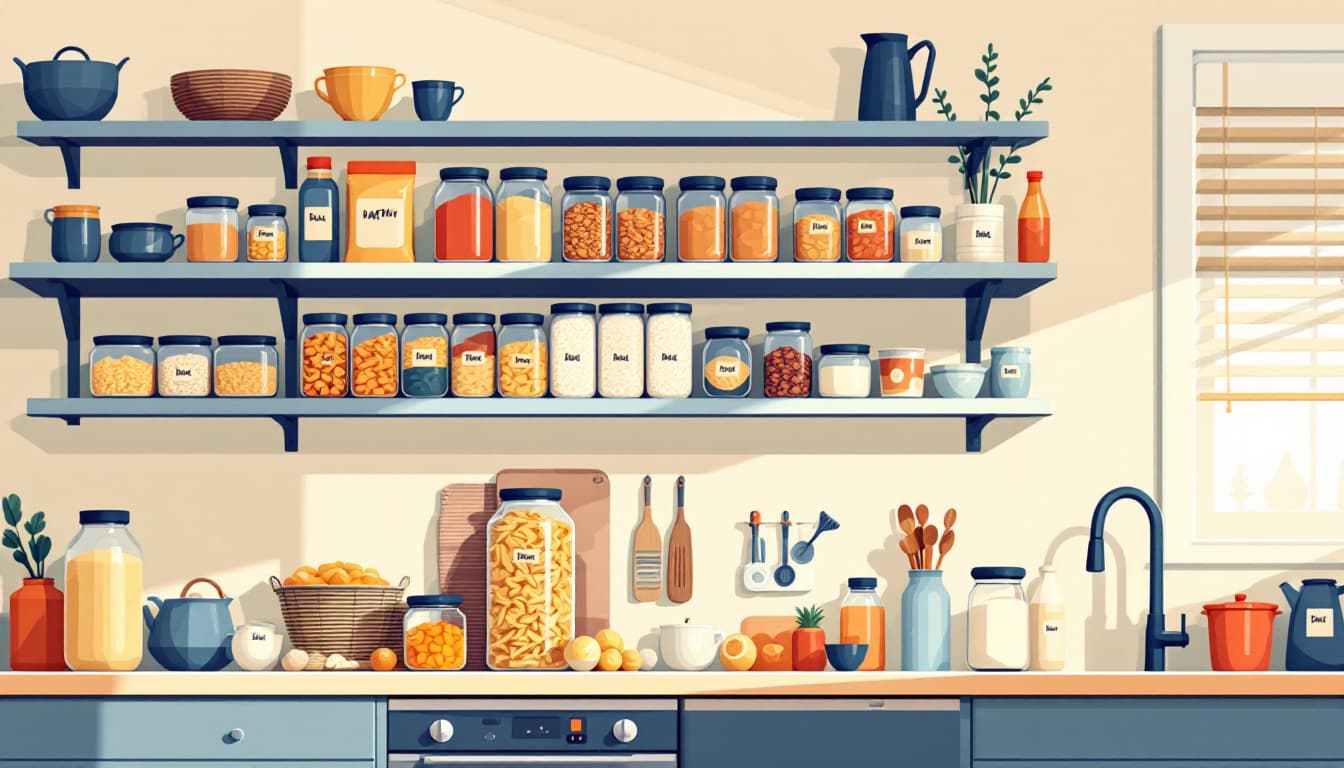
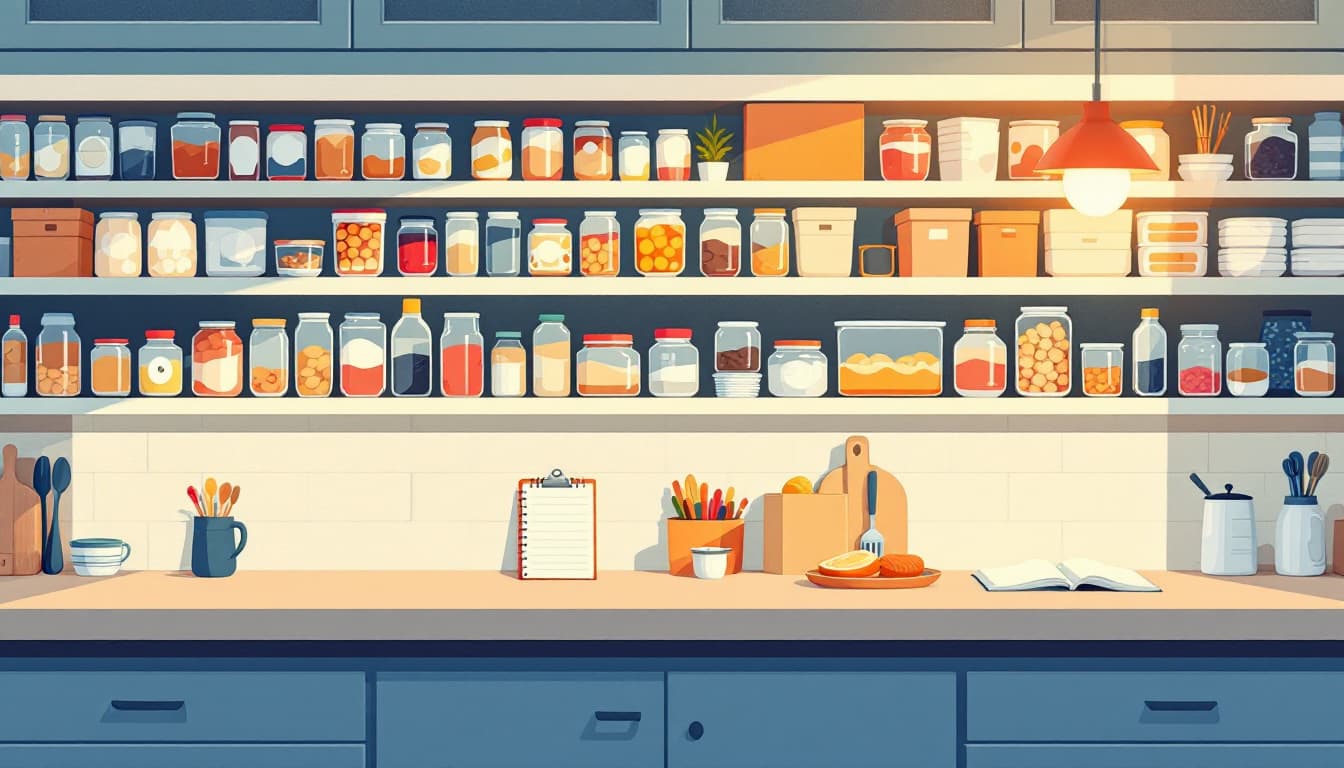
The distinction matters. A stockpile is bought once, in a panic, usually the week prices are already rising, and it sits in a closet decaying in both freshness and financial logic. Pantry depth is a rotating 30-to-45-day buffer of what your household already eats — built gradually, during ordinary shopping trips, at ordinary prices, and used and replaced continuously so nothing goes stale.
The categories to prioritize are the ones most exposed to the transmission channels above: shelf-stable proteins, cooking oils, rice and grains, and anything your household buys regularly that's imported or has an internationally-sourced ingredient list. The freezer is one of the most underused financial instruments in this play — buying meat and bread in bulk during a normal-price week and freezing it is a direct hedge against the next price spike, funded by this month's grocery budget rather than a crisis-week splurge. The goal is never "survive an emergency." The goal is "the next price spike costs us nothing for six weeks while it sorts itself out."
2. Build a prescription and medical-supply buffer
This is the play households skip most often, and the one with the least forgiving failure mode. Pharmaceutical ingredient supply chains route through a small number of countries and manufacturing sites, and the slow-motion risk of running a prescription right up to the refill date means any disruption — a tariff on active pharmaceutical ingredients, an export control, a shipping delay — turns into a household health crisis with almost no warning.
The fix is unglamorous: ask your prescriber and pharmacist about building a two-to-four-week buffer beyond your normal refill cycle, understand your insurance's early-refill rules before you need them, and keep a written list of every household member's medications, dosages, and prescribing doctor somewhere that isn't only on a phone. For OTC staples — pain relievers, allergy medication, basic first aid — the same 30-day-buffer logic from the pantry play applies directly.
3. Right-size your gas and mobility exposure
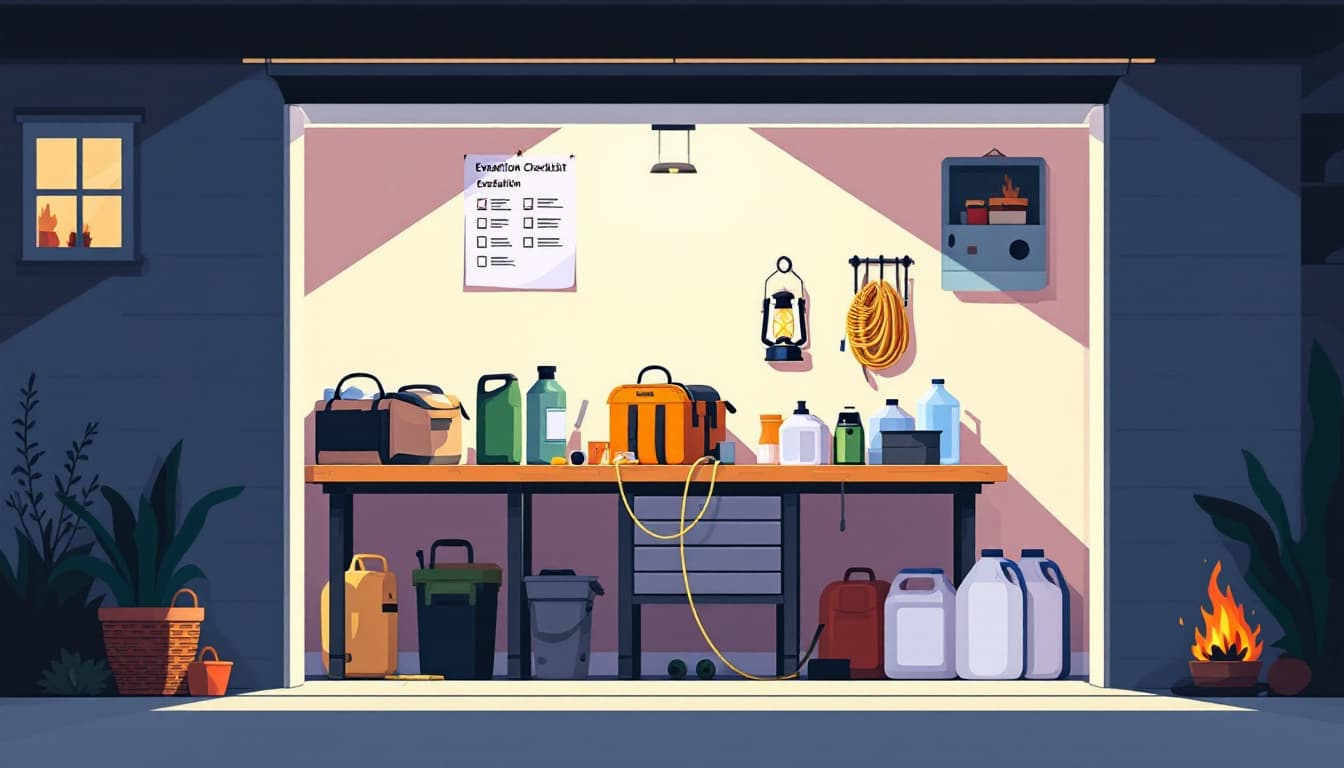
Fuel prices are one of the fastest and most visible channels between geopolitical instability and the household budget, because oil is priced globally and reacts to shipping-lane tension within days. The household play here isn't panic-buying a generator or topping off every tank the moment a headline breaks — it's building structural slack into how your household moves.
Concretely: keep your primary vehicle's tank at least half full as a standing habit rather than a reaction. If your household is deciding between an EV and a gas vehicle, understand that both have geopolitical exposure — EVs through battery-metal supply chains, gas vehicles through fuel pricing — and that the real hedge is having more than one way to get your household to work and to groceries (a second driver, a bike for short trips, a workable remote-work fallback) rather than betting the household's mobility on a single vehicle and a single fuel type.
4. Slow down on semiconductor-dependent purchases
Cars, major appliances, phones, and increasingly HVAC and water-heating systems all depend on chips that are manufactured in a small number of facilities concentrated near some of the world's most contested shipping lanes and export-control fights. Price hikes on laptops and tablets driven by memory-chip costs are an early, visible version of a pattern that will keep recurring across categories.
The household play is not to avoid these purchases — you cannot opt out of chips being in your refrigerator. It's to avoid buying at the top of a shortage cycle. When you don't have to replace an appliance or vehicle immediately, don't. Maintain what you have a little longer than feels exciting. When you do have to buy, buy the version with the longest service and repair history rather than the newest release, since long-supported models are less exposed to the next parts shortage. Right-to-repair wins in categories like farm equipment are a useful signal here — the household that can repair rather than replace has a structural advantage every time a chip shortage hits.
5. Diversify sourcing in your recurring purchases
Most households don't realize how concentrated their regular grocery and household-goods list is until a specific product disappears. If your household has a strong brand loyalty to a handful of products that are single-sourced from one country or one manufacturer, you are more exposed than a household that has two or three acceptable substitutes already in rotation.
This doesn't require becoming a supply-chain analyst. It requires a simple habit: for your household's top fifteen recurring purchases, know at least one substitute brand or source you'd be comfortable switching to without a family debate. Retailer strategies around price gaps between stores are worth knowing for the same reason — the household that already shops two grocery stores has a built-in hedge the household loyal to one does not.
6. Build the local layer under the global one
Every one of the transmission channels above depends on long, thin, international supply lines. The most durable hedge against a long thin line snapping is a short, thick, local one. This means knowing your local farmers' market or CSA, knowing a local butcher or bulk-foods source that isn't dependent on the same national distribution network as the supermarket chain, and staying connected to neighbors who can share surplus, tools, or information when a specific product gets tight.
This is the same mutual-aid logic that shows up in the household money playbook's discussion of local networks, applied to physical goods instead of income. It will not replace your grocery store. It will mean that when one category gets squeezed nationally, your household has a second, local channel that never depended on the strait, the tariff schedule, or the sanctions list in the first place.
What we'd skip
A few instincts the instability headlines tend to trigger that we'd let go past.
Don't bulk-buy the day a headline breaks. By the time a shipping or tariff story is on the news, the price has usually already started moving, and panic-buying at that moment is buying at the top. The pantry-depth play above only works if it's built gradually, during ordinary price weeks — not compressed into a single crisis-driven Costco run.
Don't bet the household's positioning on one prediction. It is tempting to read the geopolitical news and conclude "decoupling from country X is inevitable" or "this particular strait will close." Maybe. Households that positioned entirely around one predicted outcome over the last decade have been wrong about as often as they've been right. The six plays above work regardless of which specific conflict, tariff schedule, or shipping disruption turns out to matter this year — that's the point of building generic slack instead of a bet.
Don't let this replace your financial buffer — build it alongside it. A pantry and a prescription buffer are not a substitute for the emergency-savings and debt-reduction plays covered in the household money playbook. Supply shocks and income shocks often arrive together — the same tariff cycle that raises your grocery bill can also be the one that costs someone in your household a job in an exposed industry. Build both buffers, not one instead of the other.
Don't chase exotic hedges. Gold, foreign currency accounts, and doomsday-adjacent investments get louder every time a shipping lane makes the news. For the middle-class household, a rotating pantry, a medication buffer, and a diversified local network of suppliers do more real protective work than a hedge you'd have to liquidate at a loss under pressure anyway.
The bigger picture
Geopolitical instability is not a solvable problem at the household level, and it's not supposed to be. You are not going to stabilize a shipping lane or resolve a tariff dispute from your kitchen. What you can do — the entire premise of this piece — is build enough slack in the specific channels where instability reliably arrives that its arrival stops being a crisis and becomes a Tuesday.
The pattern holds across every version of this story from the last several decades: the households that treated global instability as weather — recurring, somewhat predictable in shape if not in timing, worth building resilient systems against — came through each cycle steadier than the households that treated every headline as a unique emergency requiring a unique reaction. Every prior chokepoint scare has eventually passed. Another one will arrive. The household that has pantry depth, a medication buffer, mobility flexibility, patient purchasing habits, diversified sourcing, and a local network will barely notice which one it was.
Pick one of the six plays this week. The pantry and prescription plays are the fastest to start and the hardest to regret. The compounding, as with the household's broader resilience work, starts the moment you stop treating the next disruption as a surprise.