The question used to be whether France would have a serious wildfire summer. This year it's whether any part of July will stay calm. A Reuters report this week described thousands of people evacuated from their homes as dry, wind-driven fires spread through vegetation that satellite data has shown is drier earlier in the season than historical baselines. The fires are not just newsworthy. They are a data point in a pattern that households in North America, Australia, and southern Europe now have to plan around rather than react to.
What's actually changing
European fire seasons ran roughly June through September. That window has crept forward in spring and extended into October in recent years, according to tracking from the EU's Copernicus Emergency Management Service. The "tinder box conditions" Reuters describes in France are partly weather and partly structural: decades of rural depopulation left more unmanaged scrubland adjacent to communities, and two consecutive summers with below-average rainfall in southern Europe have left root systems and topsoil moisture at levels that make ignition faster and suppression harder.
None of this is rumor. The contested part is timeline and geography — how quickly these conditions migrate northward, whether they become a reliable multi-week pattern in places like Brittany or the Loire Valley that historically had low fire risk, and how much of the change is reversible. Honest answer: researchers disagree on the pace, not the direction.
For families, the planning implication is simpler than the science: the wildfire threat radius in Europe is no longer limited to Sardinia or the Var coast in August. If you have family there, own property there, or book summer travel there, that changes your calculus.
What we'd actually do
Pull your homeowner's or renter's insurance declarations page and read the wildfire exclusions this week. Most U.S. households with ties to European properties — rental income, inheritance, vacation ownership — assume their coverage travels with them or covers the asset abroad. It does not. European property insurance is structured differently, and wildfire riders have tightened significantly after recent seasons. If you own or co-own property in southern France, Spain, Portugal, or Greece, call the local insurer before September. Waiting until after an event to discover what isn't covered is the most expensive possible lesson.
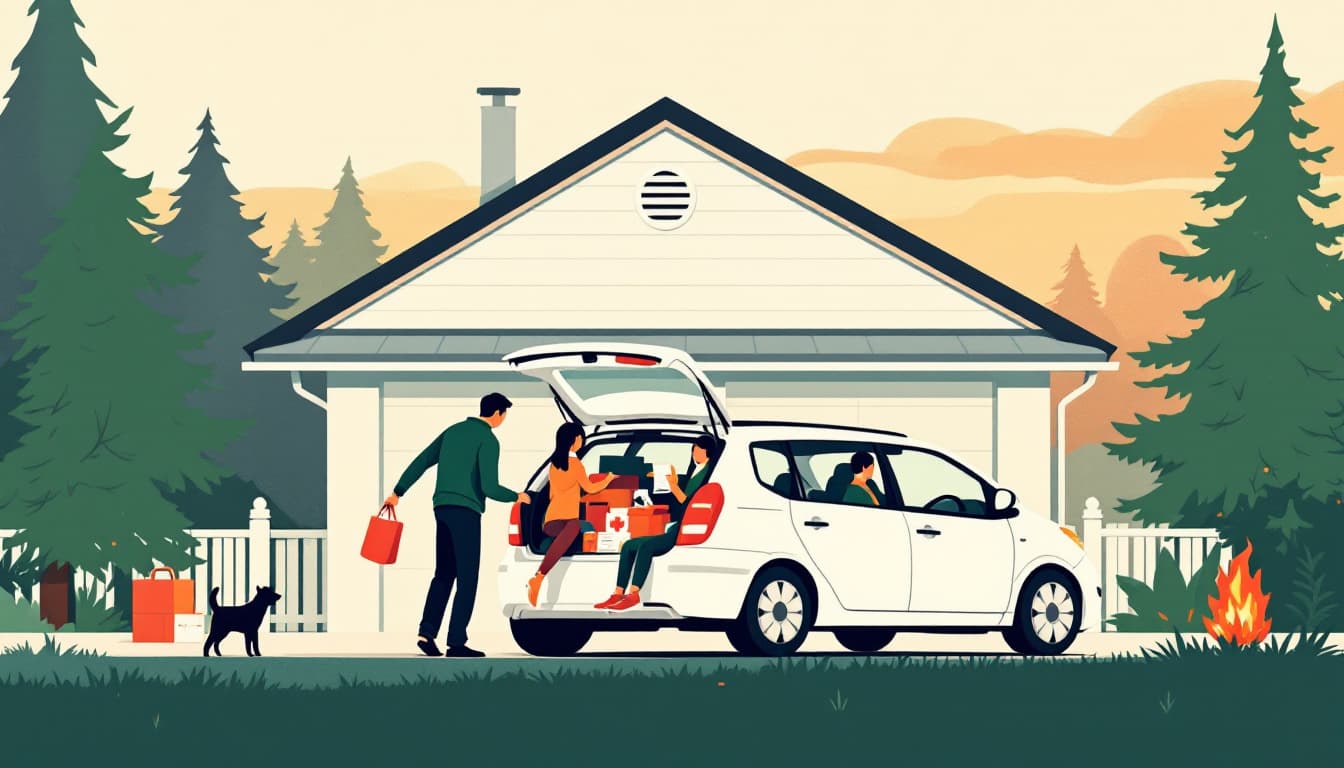
Build a 90-minute evacuation drill into your household now, even if you're nowhere near an active fire zone. Wildfires that reach residential areas move faster than most people have internalized — fire behavior in dry pine and scrub can outrun a car on a narrow road. A drill means everyone in the household knows the two exit routes, knows where the go-bag lives, and knows the family rally point. The drill costs you a Sunday afternoon. The mental load it removes during an actual emergency is significant.
If you're traveling to southern Europe this summer, identify your nearest air quality and evacuation alert system before you arrive. France uses the Météo-France Vigilance system; Spain uses a regional civil protection network. Neither is in English by default, but both have public-facing apps. Downloading one and confirming it sends push alerts takes ten minutes. Tourists caught in wildfire evacuations overwhelmingly report the same problem: they had no idea an alert had been issued because they were watching the wrong channel.
Check the moisture level of any defensible space around your own home, wherever you live. This isn't about France — it's about using the moment. If your gutters have dry leaves, your deck has wood debris underneath it, or your propane tank has dry brush within ten feet of it, those are this-weekend tasks, not someday tasks. The National Fire Protection Association publishes a free home assessment checklist that takes about 20 minutes to walk through.
Reconsider travel insurance with an evacuation clause if you're booking European summer travel. Standard travel insurance covers trip cancellation for your illness or a death in the family. It does not automatically cover mandatory government evacuation orders, especially for events defined as "natural disasters." Policies that include "natural disaster evacuation" as a named covered event exist and typically cost 10–15% more. For a trip to a high-fire-risk region in July or August, that premium is worth pricing.
The bigger picture
France's fires are not an anomaly to file away until next summer. They are part of a longer, harder fire season that is becoming the baseline across southern Europe, the U.S. West, and parts of Australia. Preparedness culture sometimes treats wildfire as a rural problem or a California problem. The geography of that assumption is shrinking fast.
The goal is not to make you afraid to travel or to imply catastrophe is certain. It's to make wildfire a normal line item in how you plan summers — the way sensible people check hurricane forecasts before booking a Gulf Coast vacation in September. Durable households adapt their habits before events force them to.