South Florida in mid-May is already running hot. Add a high-pressure dome parked over the peninsula and you get the kind of heat index readings — think 110°F-plus in spots — that the National Weather Service doesn't issue advisories about lightly. A report this week from AOL.com flagged extreme heat danger and potential record temperatures headed for South Florida this weekend, citing conditions that could stress both people and infrastructure simultaneously.
That combination is the part worth paying attention to.
What's actually happening
Florida kills more people through heat than through hurricanes in most years. That fact doesn't get the wall-to-wall coverage that a named storm gets, partly because heat deaths are diffuse and hard to photograph. The Florida Department of Health tracks heat-related illness data, and the pattern is consistent: the victims are disproportionately older adults, outdoor workers, and people whose air conditioning failed or was unaffordable.
The secondary risk is grid stress. When South Florida's population reaches for the thermostat simultaneously, FPL and other utilities run close to peak load capacity. A sustained heat event over a weekend — when repair crews are on reduced staffing and demand stays high overnight because temperatures don't drop — is exactly the scenario that produces rolling brownouts or localized outages. Lose your AC during a heat emergency and your house becomes a slow-moving health crisis.
That's the household-level exposure most preparedness writing skips over: it's not the heat itself, it's the cascade. Heat spikes demand, demand strains the grid, the grid hiccups, the AC stops, and now you have a medical emergency in your own living room.
What we'd actually do
Identify your household's most heat-vulnerable person before the weekend, not during it. One sentence to start: if someone in your home is over 65, on diuretics or antihistamines, or has a cardiovascular condition, they are in a different risk category than the rest of the family. Heat affects medication efficacy and cognitive function in ways that sneak up on caregivers. Know who needs to be watched, set a check-in schedule, and if your household has no vulnerable members, identify a neighbor who might.
Set your AC to pre-cool the house Friday night. Drop your thermostat 2-3 degrees lower than your normal setting before the peak heat window hits Saturday and Sunday afternoon. Thermal mass matters — a house that starts the afternoon at 72°F holds comfortable longer than one that starts at 76°F when the compressor is struggling. This costs a few dollars in electricity and buys you significant buffer time if the grid gets shaky.
Locate your nearest cooling center now, not when you need it. Miami-Dade, Broward, and Palm Beach counties all maintain cooling center networks that activate during heat emergencies, but the locations shift seasonally. The county emergency management websites list them, and so do the 211 Florida helpline directories. Write down two addresses near you. If your power goes out and your phone battery is dying, you won't want to be searching.
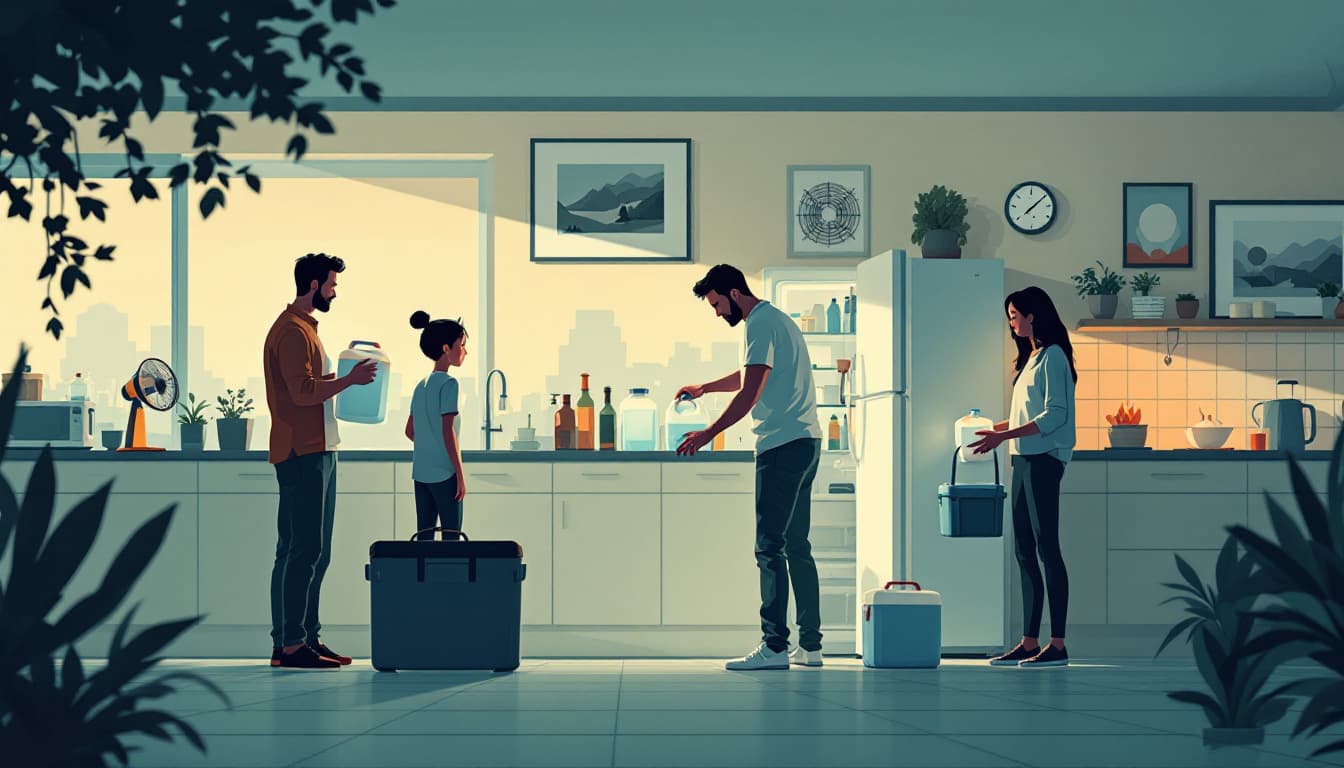
Fill your bathtub and any large containers with cold water Saturday morning. This is not for drinking — it's for cooling. Wet towels on the neck and wrists are clinically effective at dropping core temperature during heat stress. If you lose power and AC mid-afternoon, this supply buys time while you make decisions. A bathtub of cold water costs nothing.
Check your generator's fuel supply and test it before Saturday. If you have a portable generator, run it for ten minutes this week under a small load. Generators that have sat unused since last hurricane season are exactly the generators that fail on the first hot weekend. If you don't have one, that's a longer conversation — but this weekend, your contingency plan is the cooling center, not a last-minute purchase.
The bigger picture
Florida's heat season is extending at both ends — earlier springs, later falls. That's not a prediction about this specific summer; it's what recent NOAA climate monitoring data has been showing for over a decade. The infrastructure built to handle 1990s demand patterns is under different pressure than its designers anticipated.
The goal here isn't to make you afraid of the weekend. Most households in South Florida will get through it fine, particularly those with functioning AC and a power grid that holds. The goal is to make your household one of the ones that handles the exception — the outage, the heat-stressed family member, the car that won't start in a 115°F parking lot — without it becoming an emergency.
Durability looks boring from the outside. That's the point.