A report this week from Central Florida Public Media describes water restrictions tightening across the region as drought conditions grind on. For most households, the story reads as background noise — an inconvenience for lawn schedules. It shouldn't. Florida's water supply system is more fragile than most residents realize, and a sustained drought doesn't just brown your St. Augustine grass. It stresses the aquifer that most of the state drinks from.
What's actually changing
Florida draws the majority of its drinking water from the Floridan Aquifer System, one of the most productive aquifers in the world. It has historically recharged quickly. But it depends on rainfall soaking through the sandy soils of Central and North Florida to refill. When a dry stretch runs long enough — months, not weeks — recharge slows, well yields drop, and water management districts start rationing surface draws and issuing use restrictions.
The five water management districts in Florida (the St. Johns River Water Management District and the Southwest Florida Water Management District together cover most of Central Florida) have tiered restriction systems. A move to Phase II or Phase III restrictions typically limits outdoor irrigation to one or two days per week and bans certain high-volume uses like filling pools or pressure washing. Phase III and above have real financial penalties attached.
That's the headline story. The household story is different: restrictions are a signal that buffer has shrunk. If you're on a private well — common in rural and exurban parts of Orange, Osceola, Polk, and Lake counties — restrictions don't formally apply to you, but your well can still go shallow or drop in yield. That's a worse position, because there's no municipal fallback.
Municipal customers, meanwhile, tend to assume the tap is reliable until it isn't. Water systems can and do impose boil-water notices or pressure drops during extreme stress events. It's not common, but it happens — and Florida households that prepared for hurricanes but not for multi-week water stress are exposed.
What we'd actually do
Map your actual water source this weekend. If you're on municipal water, pull up your utility's current restriction phase and sign up for service alerts. If you're on a private well, find out when it was last tested and whether your pump contractor has flagged any depth or yield issues. The Florida Department of Health maintains well records by county. This takes 30 minutes and costs nothing.
Knowing your source determines every other action. Municipal customers face a different risk profile — short-term disruptions, boil notices, pressure events — than well users who might face a slow decline in yield over weeks. Most households have never thought about this distinction until the water is brown or gone.
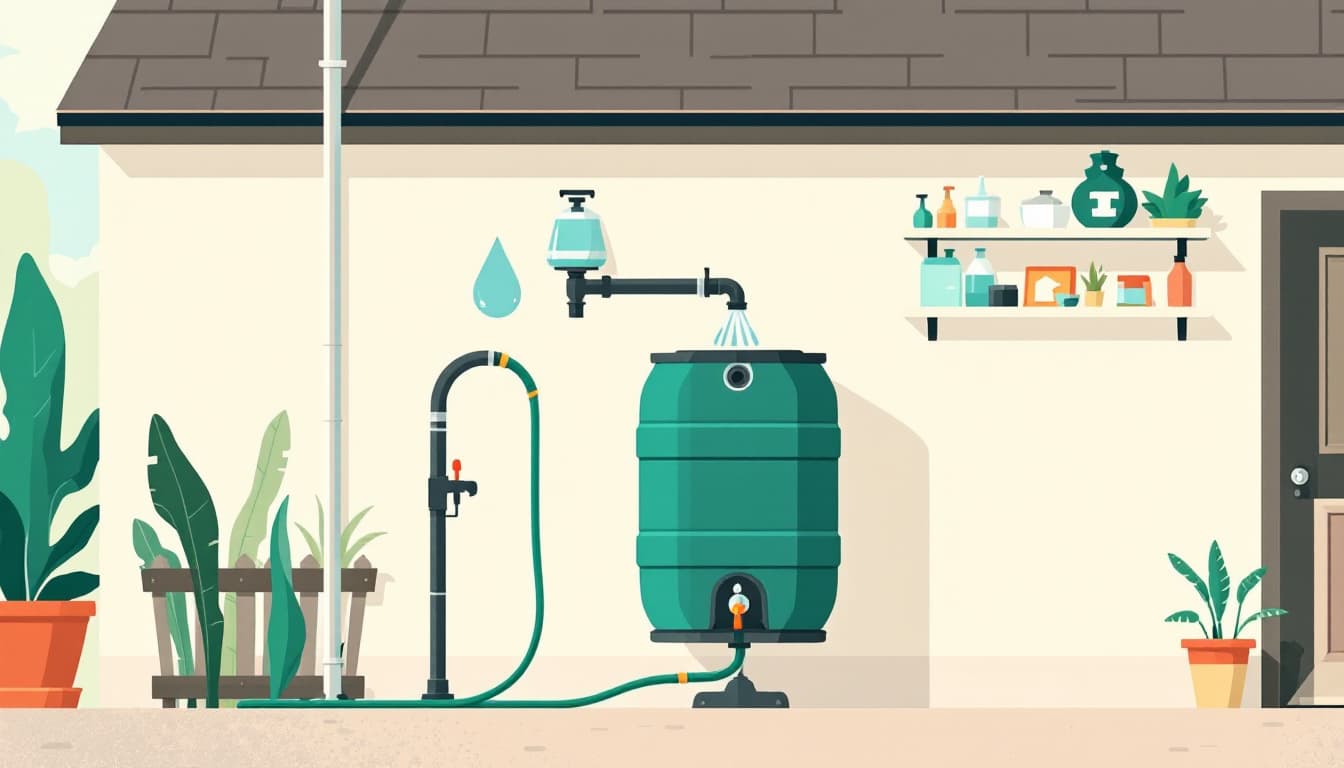
Store a two-week drinking water supply. FEMA's baseline guidance is one gallon per person per day. For a family of four, that's 56 gallons for two weeks. Commercial water storage containers (the blue 5- or 7-gallon stackable jugs) cost roughly $10–15 each at hardware stores. Fill them from the tap now, add a capful of unscented bleach per 5-gallon container for shelf stability, and rotate every six months. This isn't extreme — it's the same logic as keeping a spare tire.
Florida households that prepare for hurricane season often stockpile water in August. Drought-related stress arrives on a different calendar, so don't anchor your rotation to storm season alone.
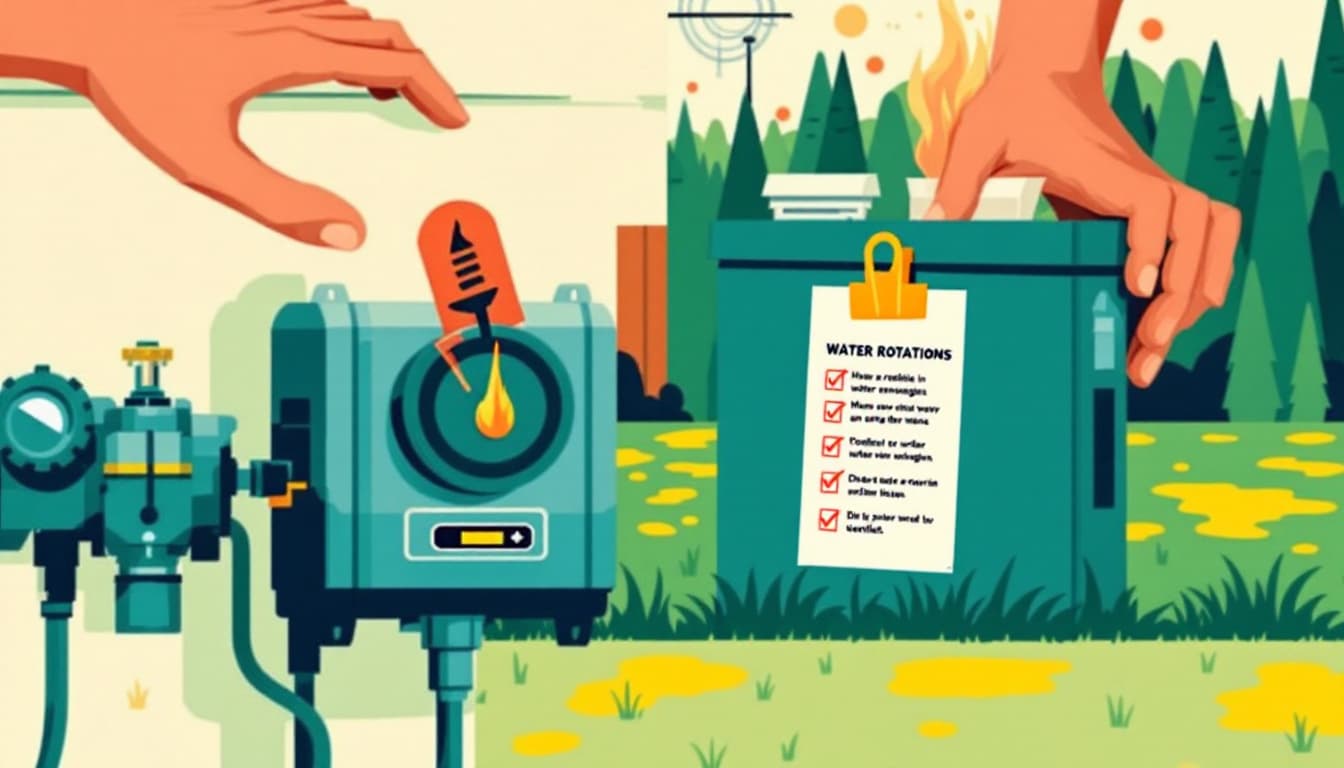
Audit your outdoor water use before restrictions force the issue. Irrigation typically accounts for 50–70% of residential water use in Florida, according to state water management district estimates. If you're running a timer-based system on a daily schedule, check whether your controller has a rain sensor (required by Florida law for all new installations, but many older systems were grandfathered in without one). A non-functional or bypassed rain sensor can waste hundreds of gallons per cycle. Fix it now or face a fine later.
If you're on a private well, have your water tested. Drought concentrates contaminants — nitrates, arsenic, and bacteria all rise in yield-stressed wells. The Florida Department of Health offers low-cost testing through county environmental health offices. Baseline data collected now tells you whether changes you notice later are drought-related or something more serious.
Learn your utility's drought surcharge structure. Several Central Florida utilities already have tiered pricing that imposes significant surcharges once you exceed a monthly threshold. During a Phase II or III restriction period, those thresholds often tighten. One unexpectedly high bill is manageable; two in a row is a household budget problem. Log into your utility account and find the rate schedule — it should be a public document.
The bigger picture
Florida isn't running out of water on a timeline measured in months. But the aquifer isn't infinite, population growth in Central Florida has accelerated faster than water infrastructure planning, and droughts of this length are not rare events. They happen roughly every decade, sometimes more frequently.
The goal here isn't to stockpile your way out of a regional water problem. It's to make sure your household doesn't face a crisis when the broader system is already stressed. Two weeks of stored water, a functional irrigation sensor, and a working knowledge of your water source transforms a drought inconvenience into something you've already accounted for.
That's durable. That's the whole point.