Your irrigation timer is probably still set for twice a week. In Northeast Florida right now, that may already be illegal.
A report this week from AOL.com covers new water-use restrictions taking effect across Northeast Florida in response to a worsening regional drought. The restrictions — issued through the St. Johns River Water Management District, which oversees water use across a 18-county swath of North and Central Florida — limit outdoor irrigation schedules and, in some zones, tighten them further than the baseline two-day-per-week rule most homeowners already ignore.
This is not a boil-water notice. Nobody is shutting off your tap. But it is a signal worth reading carefully, because how water management works in Florida is genuinely unusual, and most households don't understand their exposure until a restriction letter arrives or a fine does.
What's actually changing
Florida's water management districts operate independently of municipal utilities. Your city or county delivers water; the district controls how much can be drawn from the aquifer or surface sources. When a district declares a water shortage, it can impose restrictions that override your utility's standard rules — and compliance is the homeowner's responsibility, not the utility's.
Northeast Florida has been running below-normal rainfall for several consecutive months. The St. Johns River Water Management District has a four-phase shortage framework; recent district communications indicate Phase I or Phase II conditions in parts of the region, which translate directly to irrigation day limits, time-of-day windows, and in some cases prohibitions on certain types of outdoor water use entirely.
What the news coverage doesn't say: these restrictions have real enforcement teeth. Fines for violations start in the hundreds of dollars per incident in most district jurisdictions. Repeat violations can result in utility shutoff. And — critically — the restrictions apply whether you're on city water or a private well. Well owners often assume they're exempt. They are not.
The broader context: Florida's population has grown faster than its water infrastructure planning in many counties. Aquifer recharge rates in Northeast Florida, which depend heavily on summer rainfall, are lower in drought years. This is not a one-season anomaly; it is a pressure that will keep recurring.
What we'd actually do
Check your specific address against the current district restrictions before this weekend. The St. Johns River Water Management District publishes a restriction lookup tool at sjrwmd.com. Your county may have layered additional restrictions on top of district minimums. Five minutes now prevents a $200 fine next week.
Understanding your actual restriction level matters because the rules differ meaningfully between phases. Phase I typically limits irrigation to two designated days per week before 10 a.m. or after 4 p.m. Phase II drops some zones to one day. If your landscaping is automated, log into your controller app or timer box and update the schedule today. Most smart controllers (Rachio, RainBird, Hunter) allow you to set a restriction calendar — use it.
Audit your indoor water use for the low-cost wins. Outdoor irrigation is restricted, but indoor consumption in a drought still matters. A running toilet can waste 200 gallons a day. Dye-tablet tests cost nothing at most hardware stores. Fix any flapper valve issues before summer, when water demand peaks and district scrutiny tightens.
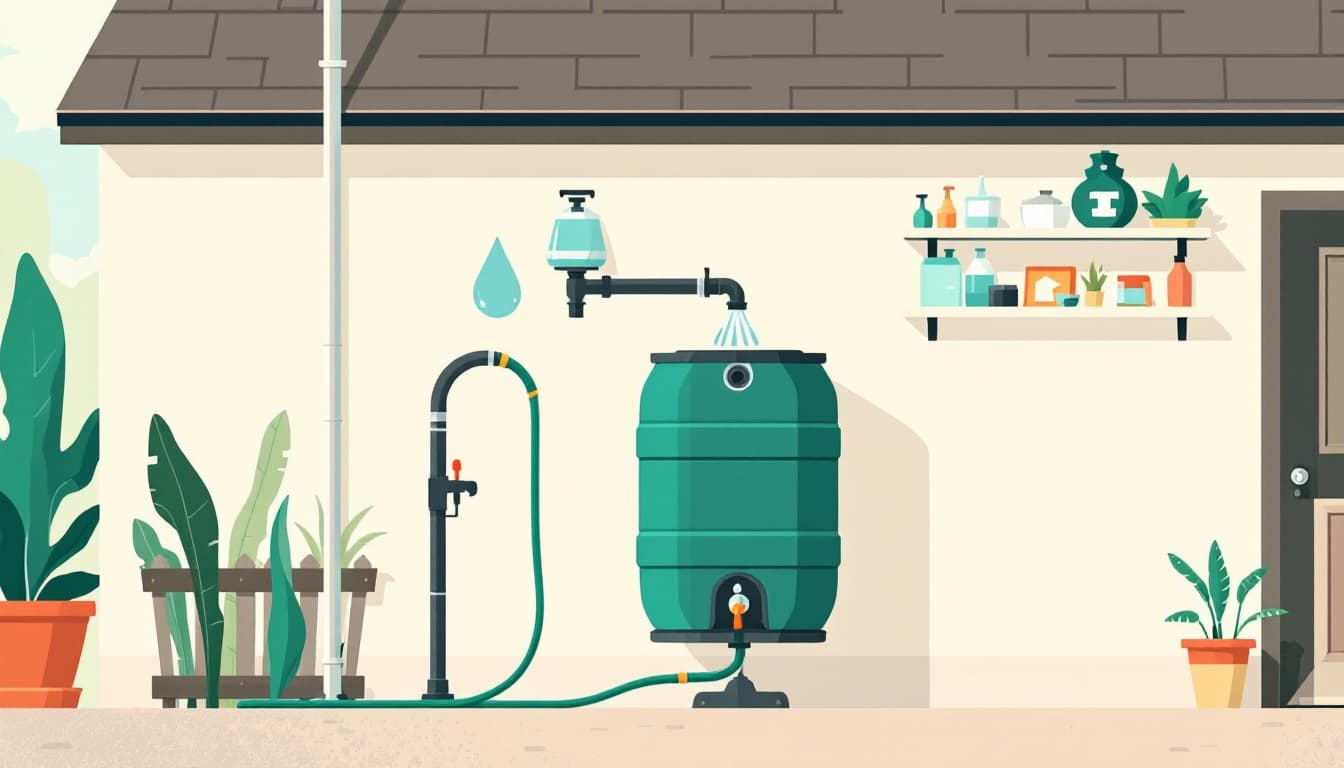
Store a functional 72-hour water supply, separate from your tap. Northeast Florida drought conditions rarely threaten municipal supply directly, but the combination of drought, a named storm, and aquifer stress can disrupt service for days. FEMA's baseline guidance is one gallon per person per day for three days — a minimum, not a target. A family of four should have at least 12 gallons of stored, rotated water on hand at any time. Food-grade 5-gallon jugs from a hardware store cost about $8 each and last years if kept cool and dark.
If you have a lawn irrigation system, consider a soil-moisture sensor. These run $25–$60 at most home improvement stores and override your timer when soil is already wet — meaning you use less water even on your permitted days, reducing your risk of accidental over-irrigation during a dry period when neighbors and inspectors are paying attention. They pay for themselves in one season in Florida summers.
The bigger picture
Drought restrictions in Florida are not an emergency. They are a management tool, and the St. Johns River Water Management District has been running this framework for decades. What has changed is frequency — these restrictions are being issued more often, earlier in the year, and with tighter phase thresholds than they were 15 years ago.
For a household, the right response is not stockpiling or panic. It is a one-time audit: know your restriction level, fix your irrigation schedule, check your indoor leaks, and keep a modest water reserve. That takes an afternoon and costs very little. The goal is a household that runs normally under moderate stress — not one that scrambles when a notice arrives in the mail.