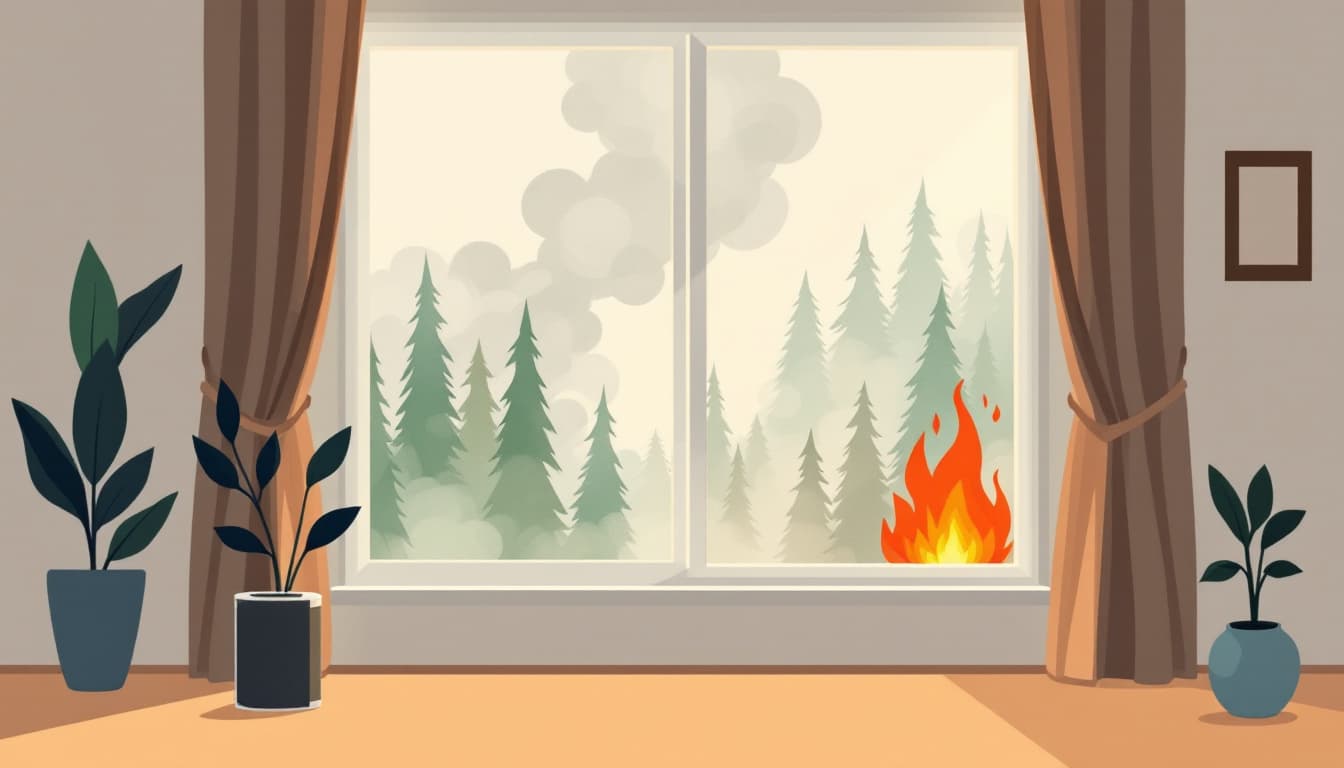
A report this week from ABC30 Fresno documented the Fields Fire pushing smoke across the San Joaquin Valley and triggering air quality warnings for communities in and around Fresno County. The Valley sits in a geographic bowl — the Sierra Nevada to the east, the Coast Ranges to the west — and that topography traps particulate matter with unusual efficiency. When a fire burns nearby, Valley residents don't just smell smoke. They breathe concentrated PM2.5 for days.
This is a mid-summer fire. It will not be the last one. California's fire season now runs effectively year-round, but July and August are when the Valley gets hit hardest — dry fuel, low humidity, afternoon winds. If your household isn't set up to manage smoke exposure indoors, a bad air day becomes a health event.
What's actually happening with smoke and indoor air
The hazard from wildfire smoke isn't the visible haze. It's the fine particulate matter — particles smaller than 2.5 microns — that penetrates deep into lung tissue. The California Air Resources Board (CARB) and local air districts issue AQI readings, but those measure outdoor air. Indoor air quality during a smoke event depends almost entirely on how well your home is sealed and filtered.
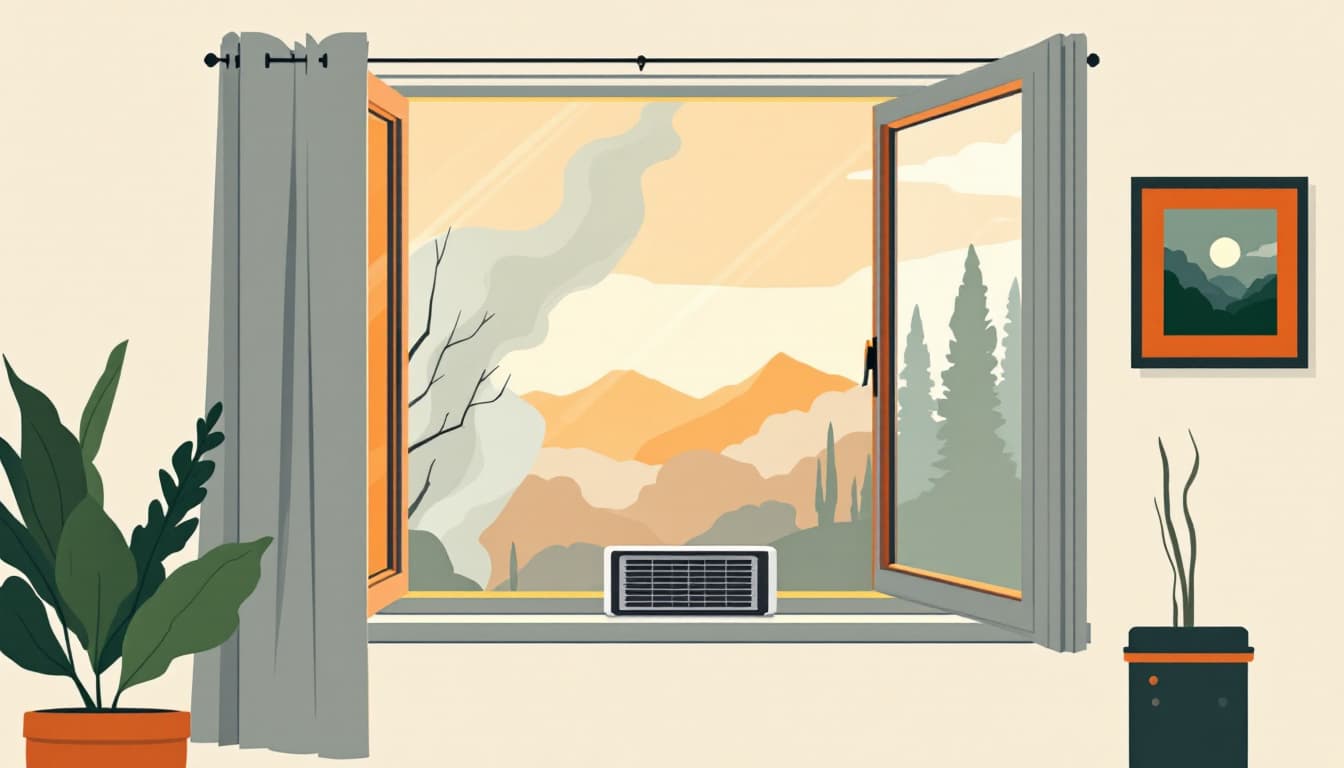
Most California homes, especially older Central Valley housing stock, are not tight. HVAC systems set to "auto" draw in outside air. Gaps around windows and doors let smoke seep in passively. Running a window AC unit during a smoke event is one of the fastest ways to pull contaminated air directly into a living space.
The good news: you can dramatically improve indoor air quality with low-cost interventions. The less good news: most households haven't done them yet.
What we'd actually do
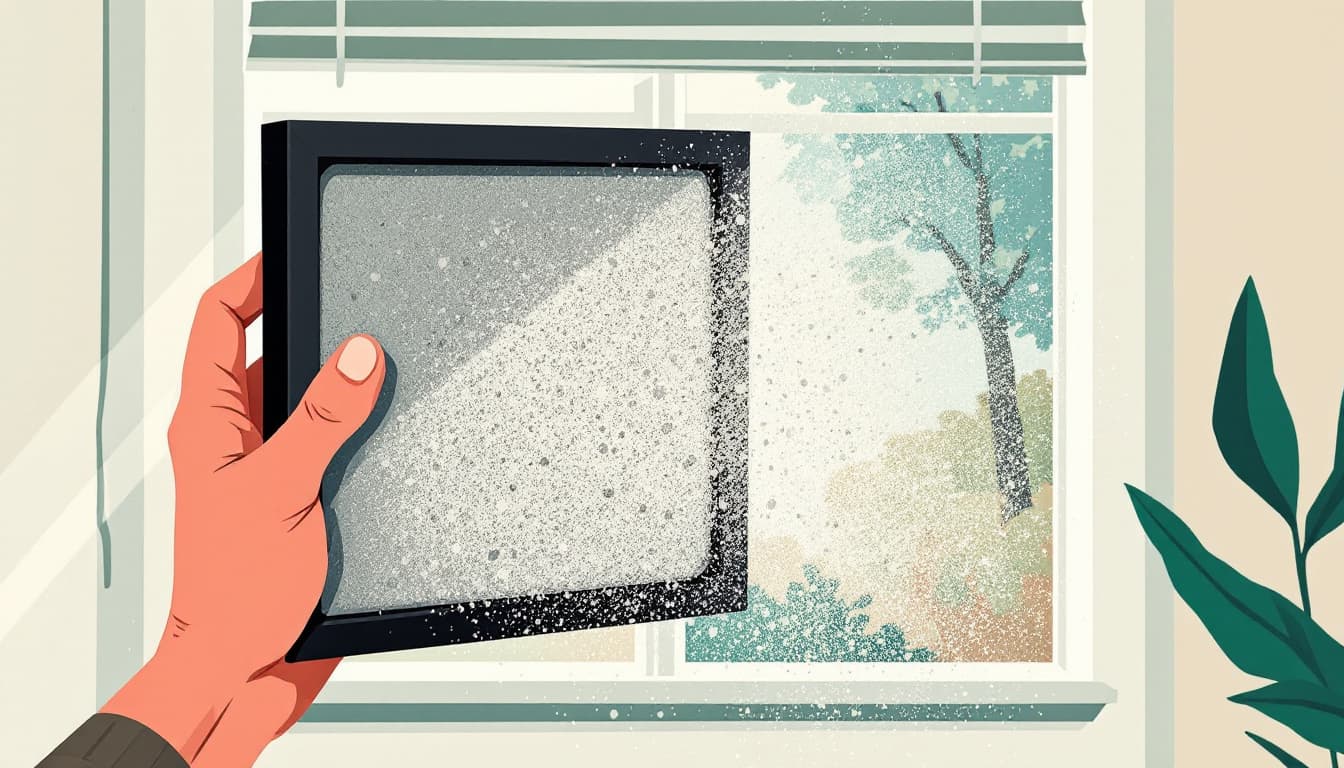
Run your HVAC on "recirculate" or "fan only" with a MERV-13 or higher filter installed — and check what filter you actually have right now. Most residential systems ship with MERV-8 filters, which do almost nothing for fine smoke particles. A MERV-13 filter, available at any hardware store for under $30, captures the particle sizes that matter most. Set the fan to circulate air continuously rather than waiting for the thermostat to kick it on. The California Air Resources Board has published guidance on exactly this approach for smoke events.
Build at least one "clean room" in your home using a box fan and a furnace filter. The DIY Corsi-Rosenthal box — a box fan with MERV-13 filters taped to the intake side — costs roughly $50 in materials and can clean a medium-sized room's air meaningfully within 20-30 minutes. If you have young children, elderly family members, or anyone with asthma or COPD, this is the room they should be in during peak smoke hours. This isn't fringe advice; air quality researchers have validated it in peer-reviewed settings.
Seal gaps at doors and windows with cheap weatherstripping before the next event, not during it. Foam weatherstripping tape costs a few dollars per door at any hardware store. During an active smoke event, you can also roll up wet towels against door bottoms as a stopgap. The permanent fix takes 20 minutes per door and pays off in both smoke events and energy bills.
Check your N95 supply and assign one mask per family member for outdoor trips during smoke events. N95 respirators filter PM2.5 effectively when worn correctly — meaning fitted snugly, with no gaps at the cheeks. Surgical masks and cloth masks do not. Valley residents who need to be outside during an air quality alert — to manage livestock, commute to essential work, or handle an emergency — need a properly fitted N95. Keep a small stock. They don't expire quickly if stored sealed.
Look up your local air district's alert system and sign up for notifications. The San Joaquin Valley Air Pollution Control District runs a free notification system. So does the Bay Area AQMD for residents farther west who catch smoke drift. These alerts give you a few hours of lead time to close up your home and shift outdoor activities. Most households don't have this turned on.
The bigger picture
The Fields Fire is this week's event. The smoke management problem it exposes is permanent. The Central Valley has some of the worst baseline air quality in the country even without wildfire smoke added to it. Layering a fire event on top of that baseline creates genuine health risk, particularly for children, older adults, and anyone with a respiratory condition.
Preparedness for wildfire smoke isn't about bunkers or evacuation bags. It's about making your home a functional refuge when the outdoor environment becomes briefly hostile. A $25 filter upgrade and a $50 fan assembly do more for your family's health during a smoke event than a week's worth of bottled water.
Durability looks like a house that stays breathable when the air outside doesn't cooperate. That's achievable for most California households this weekend.