The pavement on a Denver surface street can reach 150°F on a 95°F afternoon. That number matters because a dog's paws burn at 125°F, and because most families discover this fact after the fact.
A report this week from CBS News highlighted warnings from Denver-area health specialists about escalating heat risks for both people and pets during the current stretch of extreme temperatures on the Front Range. The piece covered the basics — hydration, shade, limiting outdoor time. What it didn't cover is the specific way Colorado households are exposed differently than families in, say, Phoenix or Houston. That gap is worth closing.
What's actually different about Colorado heat
Colorado's semi-arid climate at elevation creates a heat profile most heat-safety checklists don't account for.
First, the humidity is low enough that sweat evaporates fast — which is good for cooling, but also masks how hard your body is working. People routinely underestimate exertion in Colorado summer heat because they don't feel as wet as they would at sea level. The fatigue hits later.
Second, Denver sits at 5,280 feet. UV radiation intensity increases roughly 10 percent for every 1,000 feet of elevation. On a 95°F day on the Front Range, you are managing both thermal load and significantly elevated UV exposure at the same time. Sunburn accelerates dehydration.
Third, afternoon thunderstorms are common from July through August — but they don't always arrive, and when they do, they don't always cool the ground significantly. Families who plan outdoor activity around "it'll cool off in the afternoon" are gambling on a forecast that fails regularly.
Fourth, Colorado homes built before the mid-2000s — and many newer ones at the lower price points — weren't designed for sustained 95°F-plus temperatures. Passive cooling assumptions break down. If your home doesn't have central AC, you should know right now how hot your interior gets at 4 p.m. on a hot day. If you don't know, find out this week.
What we'd actually do
Map the cool spots in your home before the next heat event, not during it. Walk your house at 4 p.m. on the next hot afternoon with a cheap indoor thermometer. Note which rooms stay coolest. If you don't own a thermometer, a $12 one from any hardware store works fine. Knowing your home's thermal map lets you make fast decisions when a heat event arrives — where the kids sleep, where the dog rests, which rooms to close off to trap morning cool.
Audit your cooling equipment right now, not when it's already hot. Fans, window AC units, and evaporative coolers all have failure points. Run yours for 20 minutes today. Evaporative coolers — common in Colorado because they work well in low humidity — need pads replaced periodically and perform poorly when relative humidity rises above 50 percent, which can happen during monsoon season. If yours is the household's primary cooling system, have a backup plan for the days it doesn't cut it.
Build a pet heat protocol that's written down. "Don't walk the dog when it's hot" isn't a protocol. A protocol says: walks only before 8 a.m. or after 7 p.m. during heat advisories; paws checked on return; a designated cool floor tile or damp towel spot in the house; and a clear decision rule for when to call a vet (excessive panting that doesn't slow after 10 minutes inside, drooling, disorientation). Write it on paper and put it somewhere visible. This matters if a pet-sitter or family member is caring for the animal.
Identify your family's fallback cooling location and confirm its hours. Denver Public Library branches, recreation centers, and some community centers operate as cooling centers during heat advisories. Look up the one closest to you today, note its hours, and save the address. The Denver 311 line can also direct you to active cooling centers during declared heat emergencies. This is not a "worst case scenario" plan — it's a 20-minute errand that removes a decision under stress.
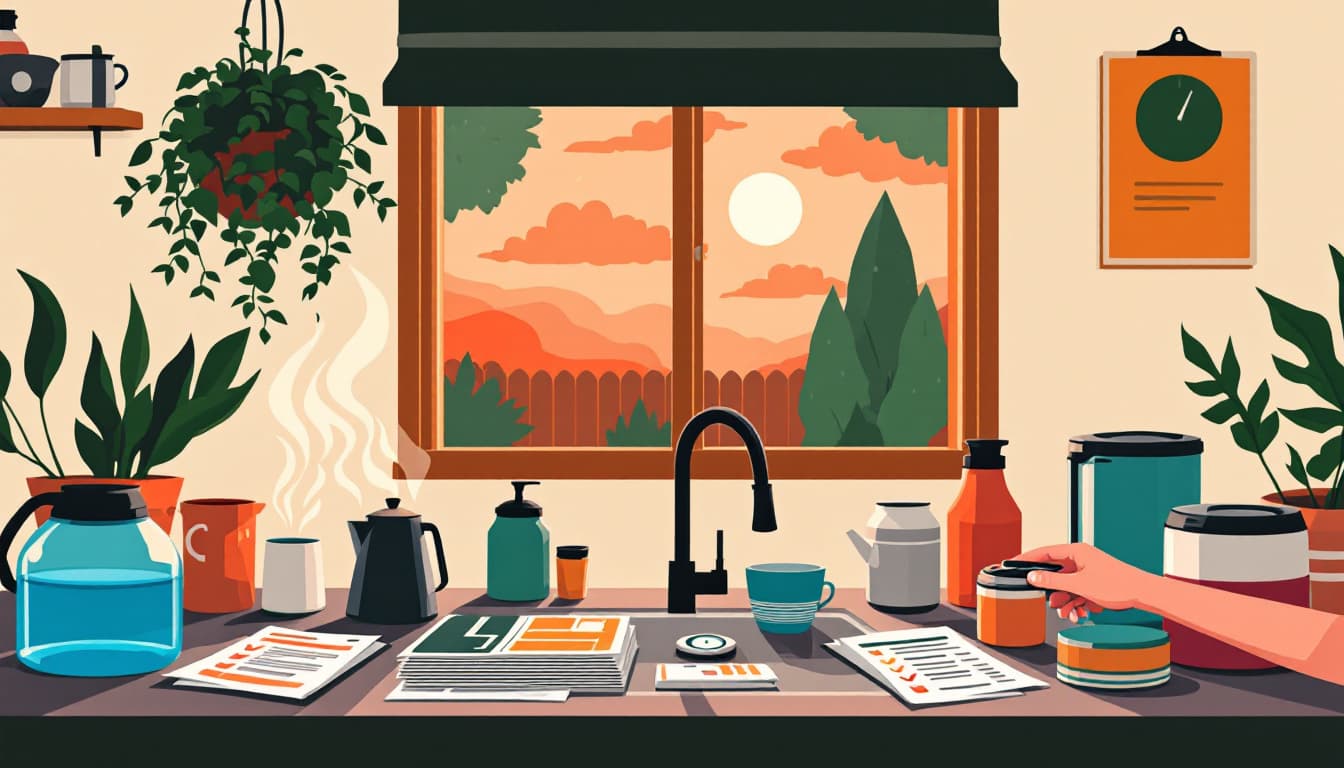
Set a water floor, not a water goal. "Drink plenty of water" is advice that evaporates under pressure. A floor is: before anyone leaves the house during a heat advisory, they have already consumed 16 oz. This is especially important for older adults and kids, who don't reliably register thirst until they're already mildly dehydrated. Consider a pitcher on the counter — visible, not in the fridge — as a behavioral nudge.
The bigger picture
Colorado's heat season is lengthening. That's not a prediction about any single summer; it's a pattern visible in historical temperature records from NOAA's Western Regional Climate Center. Households that treat this week's advisory as a one-off event will have the same conversation next July.
Durability in heat preparedness means building routines cheap enough to maintain indefinitely: the thermometer walk, the pre-walk water habit, the cooling center address in your phone. None of this requires gear. It requires 90 minutes of attention this week, once, so you're not making decisions under a 100°F afternoon sky.