The U.S. Drought Monitor does not grade drought by politics or convenience. This week, it's drawing a hard line through Colorado: conditions improving in the northern mountains, conditions worsening — in some areas reaching extreme classification — across the southeastern plains, including Kiowa County. A report from the Kiowa County Press captures that divide plainly, and for households anywhere in the state, the split matters more than either half of the story on its own.
What's actually changing
A two-speed drought is harder to manage than a uniform one. When northern snowpack recovers, reservoirs like Horsetooth and Dillon get breathing room. Water managers in Denver and Fort Collins can loosen restrictions. That's real, and it's worth acknowledging.
But the southern half of the state is moving in the opposite direction. Kiowa, Prowers, Baca, and neighboring counties are seeing agricultural stress compound — winter wheat stressed, cattle operations under pressure, groundwater draws accelerating. Southeastern Colorado relies heavily on the Ogallala Aquifer, which does not recharge on a human timeline. When surface water disappears and producers pump harder, that's a structural problem, not a seasonal blip.
The household-level consequence for Front Range families who think they're insulated: you're not. Eastern Colorado produces a meaningful share of the beef, wheat, and dry beans consumed in-state. Regional price pressure on those commodities doesn't wait for a statewide drought declaration. It shows up at King Soopers first.
There's a fire dimension too. Dried-out grasslands and rangeland in the southeast and San Luis Valley create early-season fire corridors. The Kiowa County terrain — flat, wind-exposed, low humidity — can move a grass fire faster than most mountain scenarios. Smoke events originating from the plains have reached Denver before. Families with respiratory conditions should treat this as a planning variable, not a hypothetical.
What we'd actually do
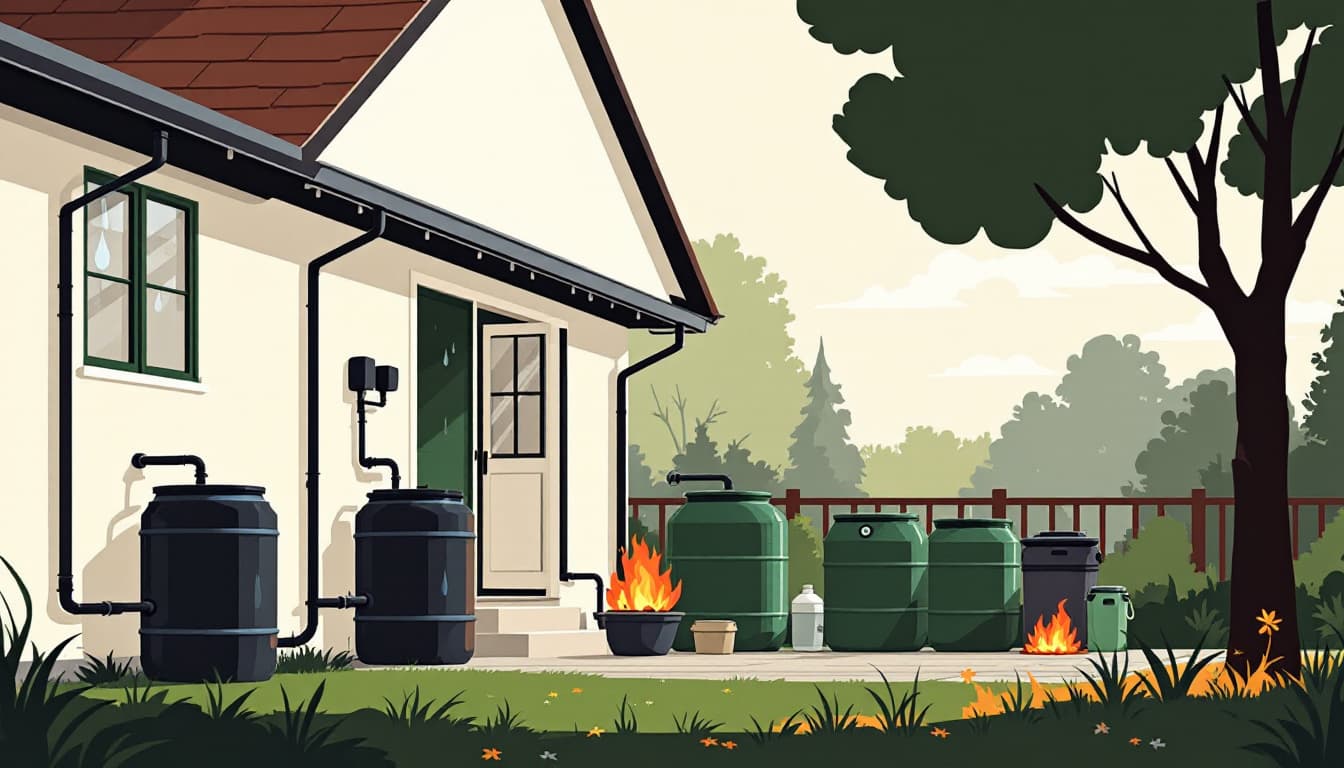
Audit your household water storage this week. Most Colorado municipal customers operate under tiered pricing but no formal restrictions right now. That window won't stay open indefinitely if the south's extreme classification spreads. A practical baseline is two weeks of drinking water — roughly one gallon per person per day — stored in food-grade containers in a cool location. FEMA's guidance hasn't changed on this number, and it's achievable in a weekend for under $40.
Buy a 90-day buffer on shelf-stable proteins and grains. Wheat and beef are both drought-sensitive commodities, and both are already exposed to Colorado's southeastern stress. This isn't a prepper bulk-buy — it's buying an extra bag of dry pinto beans and a few extra cans of tuna each grocery run for six weeks. Pinto beans, specifically, have deep roots in southeastern Colorado agriculture. Price the local signal before the national one does.
Check your home's defensible space and air sealing before June. Colorado's fire season has been starting earlier in recent years. A grass fire in Kiowa County is not your immediate threat if you live in Aurora — but a fire in the foothills west of you is, and smoke from plains fires can travel. The Colorado State Forest Service has a free defensible space checklist. Air sealing gaps around windows and doors also reduces smoke infiltration and is worth doing regardless of fire risk.
Know your county's water source. This sounds obvious and most people cannot answer it. Denver Water pulls from South Platte and Blue River systems — both in the northern recovery zone. Colorado Springs Utilities draws from a mix, including the Fryingpan-Arkansas Project, which crosses the divide. Pueblo Water pulls from the Arkansas River, currently under stress. Knowing your utility's source tells you which drought map to watch.
If you're in the southeast, look at the USDA Livestock Forage Disaster Program. For rural households in Kiowa, Prowers, Baca, or Las Animas counties, the LFP program provides emergency compensation when drought conditions trigger specific thresholds. The FSA office in Lamar handles Kiowa County applications. Don't assume it will come to you — confirm eligibility now, before conditions worsen.
The bigger picture
Colorado has always lived with water scarcity. What's different in a split drought year is the temptation to treat the good news as the whole story. Northern snowpack recovery is real and welcome. It does not fix the Ogallala, it does not rehydrate the southeastern plains, and it does not reduce fire risk in the grasses south of the Arkansas River.
The goal of household preparedness isn't to survive a catastrophe. It's to reduce the number of decisions you have to make under stress. A modest water reserve, a stocked pantry, and a clear sense of where your utility pulls its water from costs almost nothing and removes a surprising amount of anxiety from a split-drought summer.