A report this week from Kiowa County Press puts a number to what anyone who drove I-70 through the high country this spring already noticed: extreme drought conditions are tightening their grip on Colorado's mountain zones, and the severe-drought footprint is expanding. The U.S. Drought Monitor, which the Colorado Water Conservation Board tracks closely, classifies portions of the state at D3 — extreme — with surrounding areas moving toward D2. That classification matters to households because it's the threshold where water managers begin talking about curtailments, not just conservation requests.
What's actually changing
Colorado's water system runs downstream. The snowpack that accumulates above 10,000 feet feeds the South Platte, the Arkansas, the Colorado, and the Rio Grande. When the high country dries out, it doesn't just affect Telluride and Summit County. It affects the Aurora municipal system, the Pueblo Reservoir, and the farms on the Eastern Plains — including Kiowa County itself — that depend on senior water rights delivered from those mountains.
This year's late-spring conditions compressed the runoff window. Water that should have moved through river systems over six to eight weeks ran off faster or didn't run at all. Reservoirs that enter July below 60 percent capacity face a compounding problem: less carryover going into next winter, which means a dry 2026–27 water year is possible even if snowpack recovers to average.
For households, the near-term signal is municipal water restrictions. Denver Water, Colorado Springs Utilities, and Aurora Water have tiered restriction frameworks that activate at specific reservoir levels. If you haven't checked your provider's current stage, this week is a reasonable time to do it. Stage 2 restrictions in most Colorado metro systems prohibit outdoor watering more than two days per week and can include fines. That's not an emergency — but it does affect gardens, and gardens are part of a food-resilience plan.
The longer-term signal is grocery prices. Eastern Plains agriculture — wheat, cattle, melons, corn — depends on both surface water allocations and groundwater from the Ogallala Aquifer. Sustained drought in back-to-back years tends to push commodity prices up with a six-to-twelve-month lag. That's not a reason to panic-buy, but it is a reason to think about your pantry baseline.
What we'd actually do
Check your water provider's current restriction stage and your household's actual usage. Most Colorado utilities publish your billing cycle consumption online. Find it. Stage 1 in Denver Water asks for a 10 percent reduction from your baseline. If you don't know your baseline, you can't hit the target — and you definitely can't beat it.
If your household uses a well, pull your last two or three water tests and check the static water level record if your driller provided one. Shallow alluvial wells along the Front Range foothills are the first to feel drought stress. If you're on a well and haven't had it tested in the past two years, schedule that now — Colorado State University Extension can point you to certified labs, and tests run roughly $30–$75 depending on the panel.
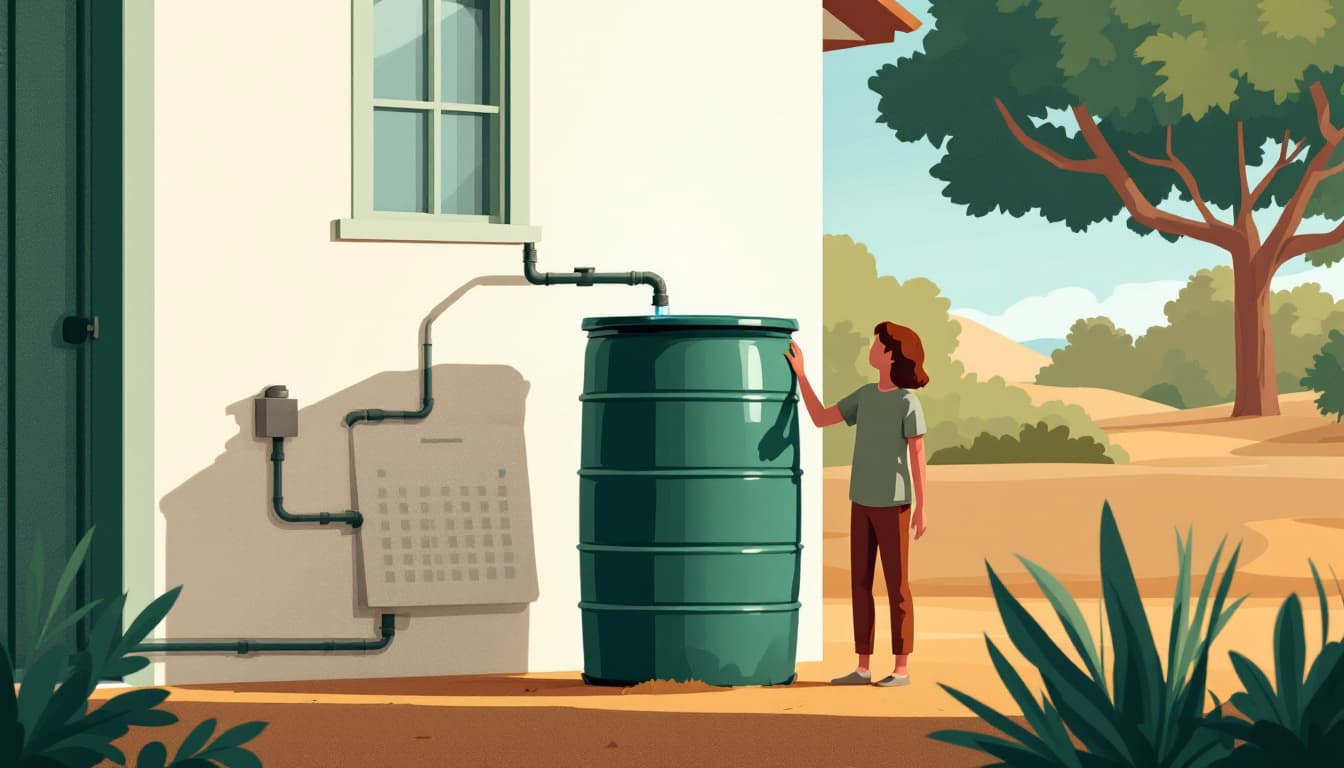
Add a two-week water reserve if you don't have one. FEMA's baseline recommendation is one gallon per person per day. For a family of four, two weeks is 56 gallons — achievable with a combination of commercially filled 5-gallon jugs and 55-gallon food-grade barrels available at most Northern Colorado or Denver-area farm supply stores for under $30 used. This isn't about surviving a collapse; it's about having a buffer if a boil order or infrastructure problem hits during a dry summer when systems are already stressed.
Audit your garden's water efficiency now, before restrictions tighten. Drip irrigation can cut outdoor water use by 30–50 percent compared to sprinkler systems, according to Colorado State University Extension data. Soaker hoses cost about $15 for a 25-foot run. Mulching vegetable beds 2–3 inches deep cuts soil evaporation noticeably. If you lose garden access under Stage 2 or 3 restrictions, you lose a food source — converting to drip keeps you legal and keeps plants alive.
Incrementally build your pantry around drought-sensitive staples. Wheat, beef, and produce from the Arkansas Valley are all exposed to this year's conditions. Adding an extra 10-pound bag of flour or rice to your next two or three grocery runs — and rotating it — is not prepper theater. It's basic buffer stock against predictable regional price volatility.
The bigger picture
Colorado has managed drought cycles for as long as it has had cities. The Colorado Water Plan, the interstate compacts, the curtailment priority system — these exist precisely because the state knows scarcity is periodic, not exceptional. Your household's job isn't to prepare for the system to fail. It's to build enough slack that routine stress doesn't become a household crisis.
A checked restriction stage, a tested well, a few weeks of stored water, and a slightly deeper pantry — that's the whole list. None of it requires a bunker or a bug-out bag. It requires about two hours this weekend and a willingness to treat dry summers as a normal feature of living in the Mountain West.