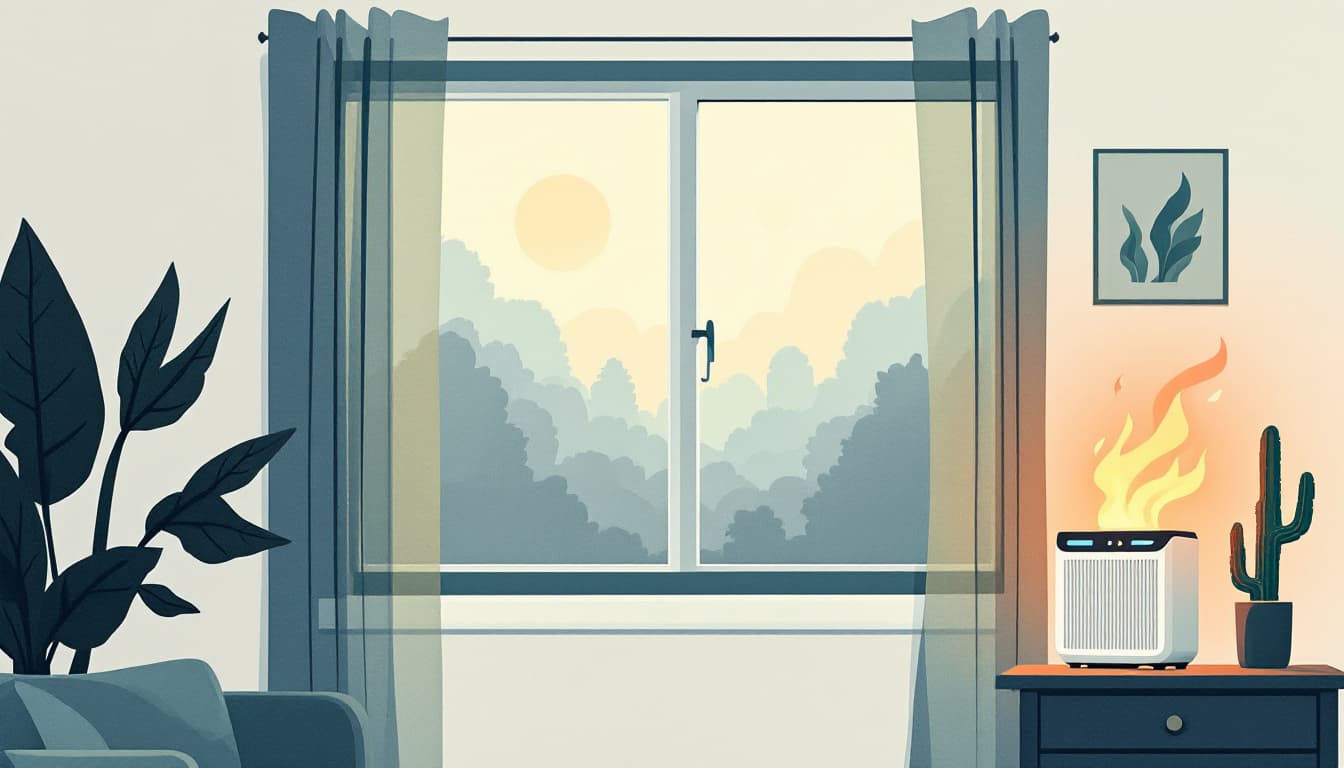
Colorado is heading into the Fourth of July holiday with air that is already compromised. Wildfire smoke from regional burns has pushed Front Range air quality into unhealthy territory for stretches over the past several weeks, and as The Denver Post reported this week, fireworks will layer an additional wave of particulate matter — fine particles, heavy metals, and combustion byproducts — directly into that degraded baseline.
This is not a freak coincidence. It is a pattern that has repeated most summers since at least 2020, and it is worth understanding mechanically before you make decisions about the holiday weekend.
What's actually happening
Wildfire smoke and fireworks pollution are both measured in PM2.5 — particles smaller than 2.5 microns that penetrate deep into lung tissue. They don't cancel each other out; they compound. When the Colorado Department of Public Health and Environment issues an Air Quality Action Day (AQAD), it reflects the cumulative load, not individual sources. This weekend, the cumulative load is higher than a typical July 4th.
The geography matters too. Colorado's Front Range communities — Denver, Boulder, Fort Collins, Colorado Springs, Pueblo — sit in a semi-enclosed corridor where smoke can pool overnight and concentrate through inversion layers in the morning. Fireworks add a ground-level burst of pollution typically between 9 p.m. and midnight, right as evening inversions are setting up. Monitoring stations along the Front Range routinely show PM2.5 spikes of three to five times daytime levels during fireworks events, based on CDPHE historical monitoring data.
Children, the elderly, and anyone with asthma or COPD face the highest acute risk. But even healthy adults who spend hours outside in elevated PM2.5 — attending outdoor shows, grilling, lingering at parks — accumulate real exposure.
What we'd actually do
Check AirNow.gov or the CDPHE air quality map before you commit to outdoor plans, not the morning of — the night before. Air quality forecasts for Colorado are available 24 hours out. The AirNow.gov map gives you an hourly breakdown by monitoring station, so you can see whether your specific zip code — Lakewood versus Loveland versus Pueblo — is in the orange, red, or purple range. Don't rely on a generalized "Denver metro" number. Conditions vary significantly between the urban core and surrounding valleys.
If you're staying home, make your house work as a clean-air zone. Close windows and doors by early evening, before fireworks start. If you have a central HVAC system, switch it to recirculate mode (not fresh-air intake) and verify you have a MERV-13 or higher filter installed. A box fan with a MERV-13 furnace filter taped to the intake — sometimes called a Corsi-Rosenthal box — costs about $30 to build and measurably reduces indoor PM2.5. Designate one room as the clean room if you can't cool the whole house.
Equip anyone with respiratory conditions with a properly fitted N95 before they go outside. Cloth masks and surgical masks do not filter PM2.5 effectively. An N95 rated respirator, worn correctly with a nose-wire seal, cuts fine particle inhalation significantly. If you have kids with asthma, talk to their pediatrician or pulmonologist before the weekend about whether they should have a rescue inhaler on hand and what the threshold is for staying inside entirely.
Know how to find real-time CDPHE Air Quality Action Day alerts. Sign up for CDPHE email or text alerts at colorado.gov/cdphe. This is not a preparedness-panic step — it's the same service meteorologists and school nurses use to decide whether outdoor recess happens. It takes three minutes to register and is useful from now through October, which is wildfire and ozone season in Colorado.
If you're choosing between fireworks venues, elevation and wind direction matter. Communities above 7,000 feet often see better air movement and less inversion pooling. Events in mountain towns like Breckenridge or Steamboat Springs may have meaningfully lower PM2.5 than events in the Denver metro basin on a smoky night. Check the wind forecast on Weather.gov alongside the air quality map.
The bigger picture
Colorado households are going to face this overlap — smoke season and celebration season — most summers. That's not alarmism; it's the current climate pattern in the mountain West. The preparedness response isn't to stop going outside or buy a bunker air filtration system. It's to build a small set of habits and tools that let you make real decisions based on real conditions: a good indoor filter, a working N95 for each family member, and a ten-second habit of checking AirNow before outdoor plans.
Durability looks like a family that adjusts its Fourth of July logistics when the air is genuinely dangerous, enjoys the show on a cleaner night, and doesn't burn through its health reserves chasing a tradition. That's the kind of resilience that actually compounds over time.