The Sierra Nevada snowpack functions as California's largest reservoir. It doesn't hold water behind concrete — it holds it in frozen form across millions of acres, releasing it slowly through spring and early summer into the rivers and aqueducts that supply roughly 30 million people and the most productive agricultural region in the country. When it disappears ahead of schedule, the system runs on deficit from June onward.
That's where California is right now. A recent report from Record Searchlight documents rising drought risk as the snowpack has collapsed well below seasonal norms, shrinking the buffer that communities and farmers rely on through the driest months of the year.
If you live outside California, you might be tempted to scroll past. Don't.
What's actually changing
California's Central Valley produces a disproportionate share of the country's almonds, tomatoes, garlic, pistachios, strawberries, and dairy. When water becomes scarce, growers face a real arithmetic problem: allocate water to your highest-margin perennial crops and fallow the annuals. That decision ripples outward within one to two growing seasons.
Recent USDA commodity data shows that domestic fruit and vegetable prices already trend higher in drought years tied to California supply disruptions. The lag isn't immediate — grocery prices reflect contracts signed months earlier — but families who shop for fresh produce will feel it by late summer and into fall.
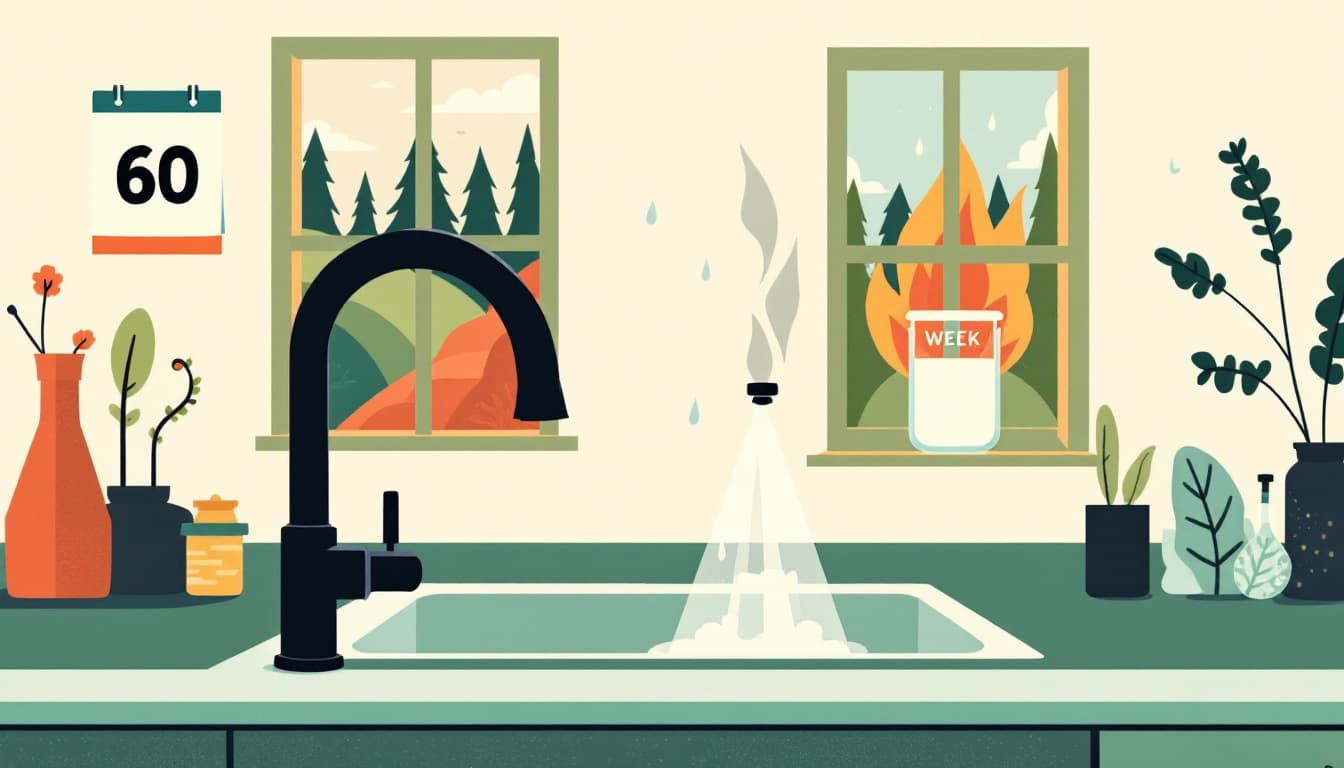
Beyond food prices, the more immediate household exposure is utility and fire risk. Drought years in California correlate directly with elevated wildfire conditions. Smoke events now routinely affect air quality across neighboring states. If your family includes anyone with asthma or cardiopulmonary conditions, a California drought is relevant to your indoor air quality planning regardless of your zip code.
For California households specifically, the risk is more direct: tiered water pricing escalates quickly once a district declares shortage conditions. In the last major drought cycle, some districts in Southern and Central California moved to mandatory reductions of 20-30 percent with surcharges on overuse. That happened faster than most households were prepared for.
What we'd actually do
Audit your household's water footprint before any restrictions arrive. Most families have no idea how many gallons per day they use until a utility bill arrives with a red flag on it. Pull your last three billing statements and calculate your daily average. Your utility's website will show you where you stand relative to district averages. That number becomes your baseline for any cuts you'd need to make.
Most indoor water use is invisible until you track it — toilet flushes, laundry cycles, and dishwasher loads add up faster than long showers do. Knowing where your usage is concentrated tells you where reductions are actually achievable without lifestyle disruption.
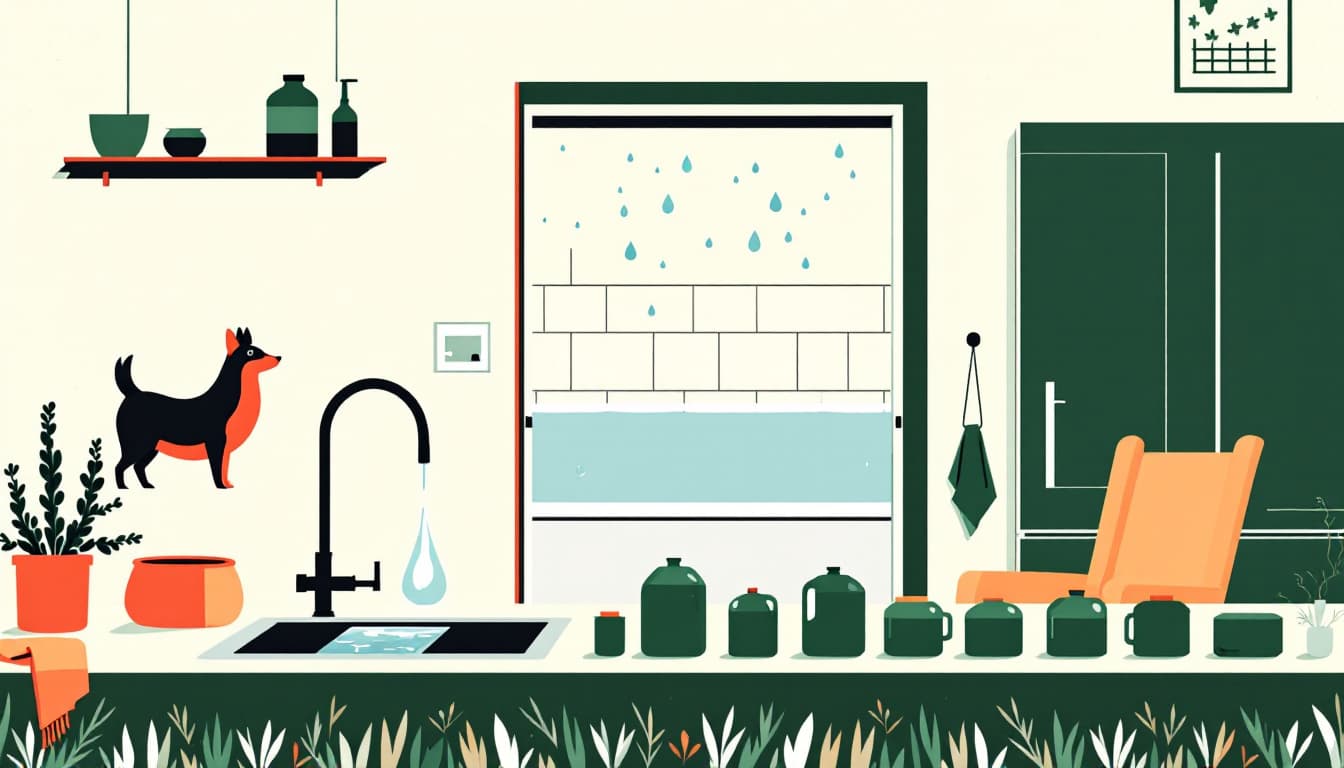
Stock a two-week water supply for drinking and cooking. FEMA's baseline recommendation is one gallon per person per day for drinking alone; two gallons per person is more realistic when you include basic hygiene. For a family of four, that's 56 gallons — about nine standard seven-gallon water containers stored in a cool space. This is not a doomsday measure. It covers you for a main break, a boil-water notice, or a utility disruption during a fire event.
Fill and rotate on a six-month schedule. Mark the containers with the fill date.
Build fresh produce redundancy into your pantry now, before seasonal price increases. This doesn't mean buying a year's supply of canned tomatoes. It means stocking six to eight weeks of canned and dried goods that your family already eats — beans, lentils, tomato products, dried fruit — while prices reflect pre-shortage supply. If prices rise significantly this fall, you've already bought at a lower cost.
If you're in California, check your district's current water allocation status. Most municipal water districts in California post their current shortage stage publicly. Stage 1 is typically voluntary; Stage 2 often triggers mandatory cuts and surcharges. Knowing your district's current stage, and what triggers the next one, gives you lead time to adjust before bills escalate.
For households near fire-prone areas, verify your air filtration before fire season peaks. A MERV-13 or higher filter in your HVAC and a HEPA-rated room purifier in your main sleeping area are the two most cost-effective interventions for wildfire smoke. Check that your current filters are rated appropriately and aren't overdue for replacement. Smoke events last days, not hours — indoor air quality matters.
The bigger picture
Drought years reveal which households are running with margin and which are running lean. The goal of preparedness isn't to survive a collapse scenario. It's to absorb disruptions — higher grocery bills, a boil-water notice, a week of heavy smoke — without those disruptions becoming a crisis. Two weeks of water, a modest pantry buffer, and an air filter you've actually checked are not dramatic interventions. They're the difference between a rough week and a genuinely hard one.
California's snowpack is a long-cycle system. One bad year doesn't break it permanently. But the pattern of earlier melt and deeper deficits is consistent enough that planning for it at the household level is no longer optional thinking — it's just good arithmetic.