A Coastal Review report this week captured the situation in Brunswick County precisely: rain has fallen, conditions have marginally improved, and the drought is still there. For households along the Cape Fear coast and into the Brunswick islands, that's not a contradiction — it's the normal shape of a lingering summer drought, and it's worth understanding what it actually means before the next dry stretch arrives.
What "improving but persistent" actually means
The U.S. Drought Monitor updates weekly, and its categories — D0 through D4 — don't reset just because a region gets a few inches of rain in August. Drought at the D1 or D2 level means soil moisture deficits have accumulated over weeks or months. A single wet week reduces stress on lawns and eases stream levels, but groundwater recharge and reservoir recovery lag by weeks to months. Brunswick County sits in a part of North Carolina where shallow aquifers feed many private wells. When those aquifers draw down through a dry summer, a couple of rain events don't fully restore them.
The North Carolina Department of Environmental Quality tracks drought response levels, and Brunswick County municipalities have the authority to move through voluntary and mandatory conservation stages independently of neighboring counties. What that means practically: the town of Leland might be at a different restriction level than Oak Island, and neither may match what's happening in Columbus County to the north. If you're on municipal water, your provider's website is the only authoritative source for current restrictions.
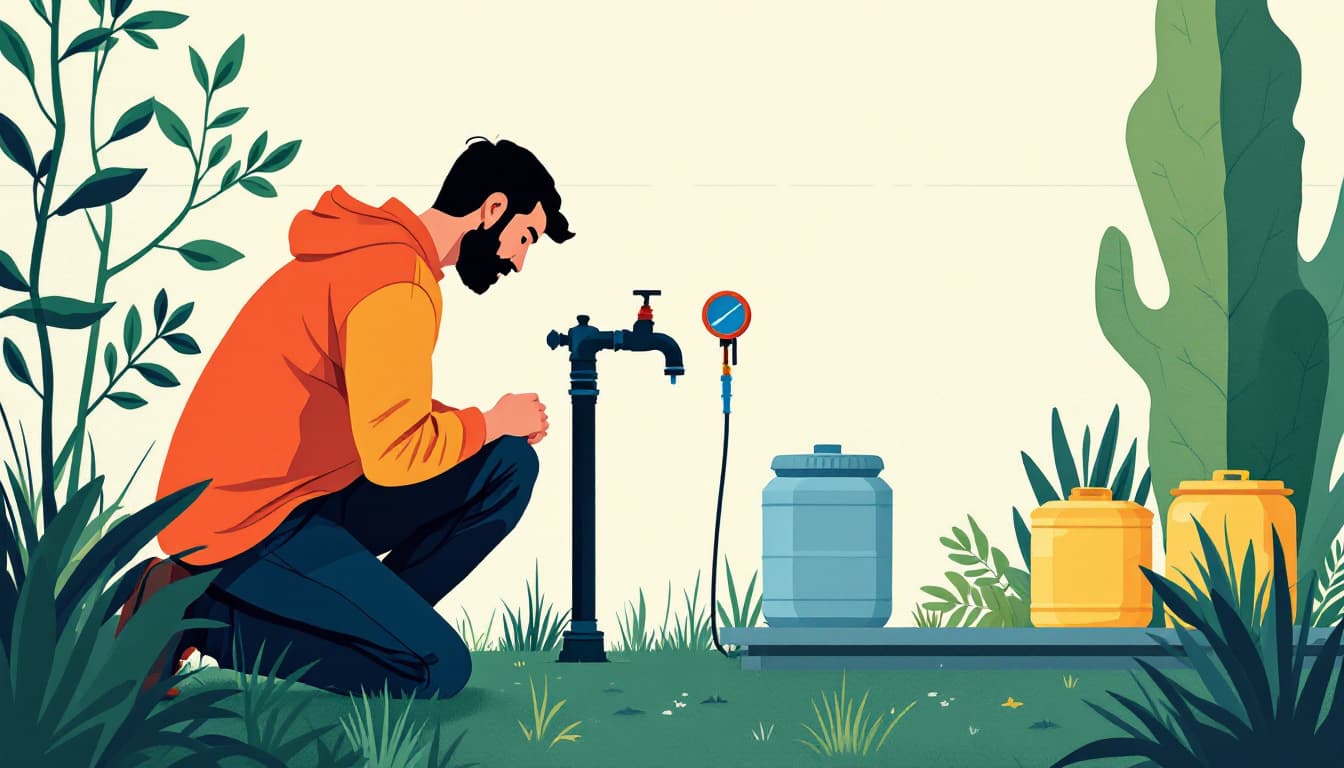
If you're on a private well — and a significant share of rural Brunswick households are — there is no automated alert system. You are the monitoring system.
What we'd actually do
Check your well's recovery rate now, before the next dry spell. Run water from your well at normal household demand for 30 minutes, then watch how quickly the pressure recovers. If it's sluggish or drops noticeably, your water table is lower than usual. This tells you something concrete about your margin before the next stretch of no rain.
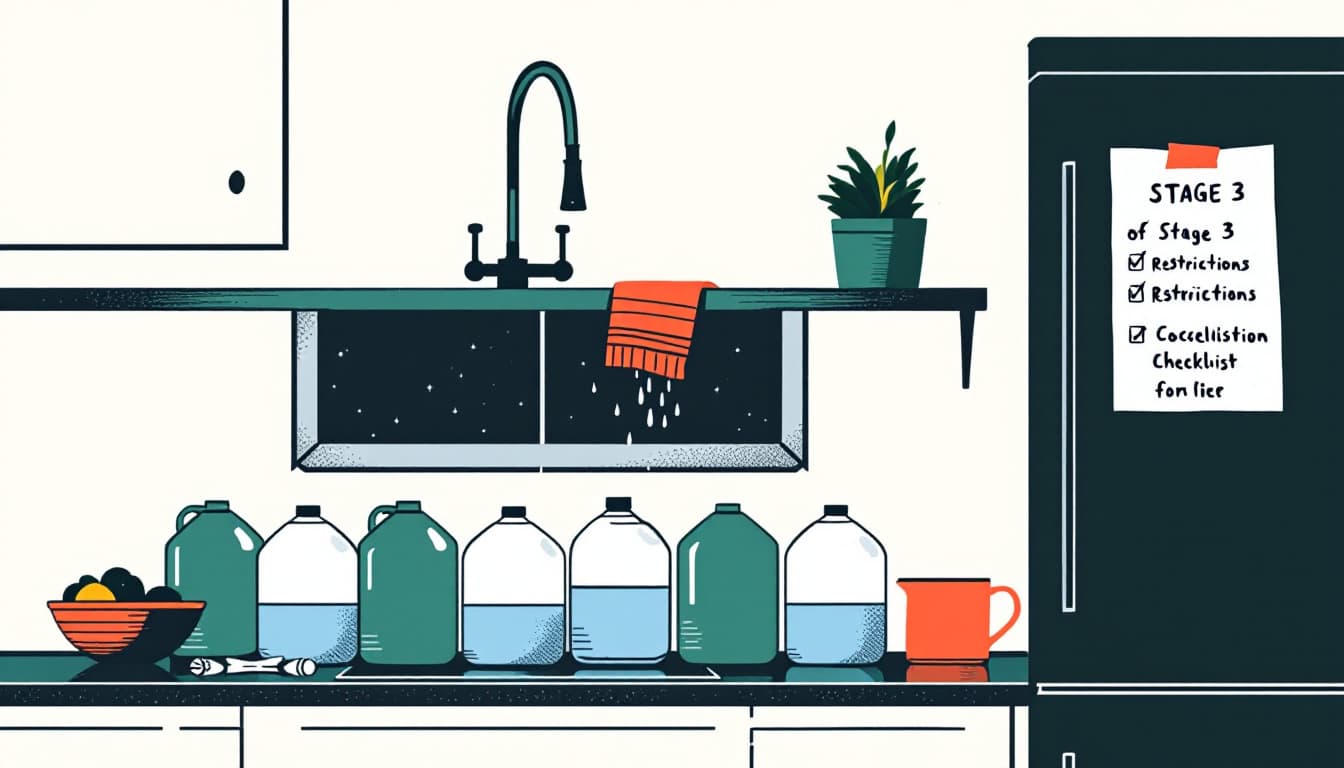
Store a minimum of two weeks of drinking water — not one week. The standard preparedness guidance of 72 hours was written for short-term emergencies like ice storms, not for slow-moving drought conditions where a well doesn't fail dramatically but gradually produces less. For a household of four, two weeks of drinking water is roughly 56 gallons. Food-grade 5-gallon jugs stored in a cool interior room are a simple, low-cost way to build that buffer without a dedicated tank system.
Know your county's drought stage triggers before you need them. Brunswick County and its municipalities publish drought contingency plans, and those plans specify at what Drought Monitor designation they move from voluntary conservation to mandatory restrictions. Download that document and keep it somewhere findable. The time to read the rules is not the morning your irrigation system triggers a citation.
Audit your gray-water habits. During D1 or D2 drought conditions, the fastest household reduction comes not from shorter showers but from stopping outdoor use: lawn irrigation, car washing, pressure washing. Coastal Brunswick's sandy soils drain quickly, so irrigation that looks productive is often just water moving through the root zone and evaporating. If you're on a well, that water is coming directly out of your aquifer.
Talk to neighbors who've been on their wells for 20-plus years. In Brunswick County, older residents on deep private wells have watched the water table through multiple drought cycles going back decades. Their informal knowledge of when wells typically recover, which dry stretches are unusual, and which neighborhoods historically have lower-yielding aquifers is not available in any official report. It's worth asking.
The bigger picture
Coastal North Carolina is not the arid West. Droughts here are episodic, not structural, and they do end. But Brunswick County is also one of the fastest-growing counties in the state, and every new subdivision and golf course places new demand on the same aquifers and treatment systems that served a smaller population. Rain that would have fully recharged local water tables a generation ago is competing with significantly more draws.
The goal is not to build a bunker around your water supply. It is to have enough margin that a two-week dry stretch in September — which is well within the normal range for coastal North Carolina late summer — doesn't put your household in a reactive position. Right now, while conditions are improving and attention is low, is exactly when that margin is cheapest to build.