Brunswick County sits at the southeastern tip of North Carolina, wedged between the Cape Fear River and the South Carolina line. It is also, as of this August, the driest county in the state. A report from the Goldsboro News-Argus this week puts Brunswick at the leading edge of a drought pattern that is spreading across the coastal plain — the region that grows a significant share of North Carolina's sweet potatoes, corn, and tobacco.
That's not a lawn problem. That's a supply-chain problem with roots thirty miles from Wilmington.
What's actually changing
Drought in Brunswick doesn't stay in Brunswick. The Cape Fear basin feeds municipal water systems for communities stretching up through Bladen and Cumberland counties. When surface water levels drop, utilities draw harder on groundwater, which takes years to recharge. Households on private wells in the coastal plain are the first to feel it — and often the last to get assistance, because state emergency declarations are typically triggered by municipal system stress, not rural well failure.
The second pressure is food pricing. North Carolina's southeastern counties are working farmland, not scenic farmland. When a drought settles over the coastal plain during August — peak growing season — yield losses move quickly into produce prices at regional grocery chains. That price signal usually shows up 4-8 weeks after the growing-season damage is confirmed.
The third issue is fire risk. NCFS (North Carolina Forest Service) raises suppression-difficulty ratings as drought-index numbers climb. Brunswick and adjacent Columbus County share a landscape of pocosins and longleaf pine flatwoods — ecosystems that burn hot and fast once they dry out. A drought that starts as an agricultural story can shift into a wildfire-smoke story faster than most households expect.
What we'd actually do
Check your county's drought status at the U.S. Drought Monitor, then look up your water utility's drought response tier. The Drought Monitor updates every Thursday. If your county is in D2 (Severe) or higher, your municipal utility may already be moving toward mandatory restrictions. Knowing which tier triggers what restriction — and reading that document before the restriction hits — removes scramble from the equation.
If you're on a private well, have it flow-tested now, not when it slows. A static water level measurement costs less than an emergency pump repair. Well drillers in eastern North Carolina are already booking ahead in drought years; waiting until your pressure drops means waiting in line. Call a licensed NC well contractor for a simple level check. If your well is shallow (under 100 feet, common in the coastal plain's sandy geology), ask directly about drought vulnerability.
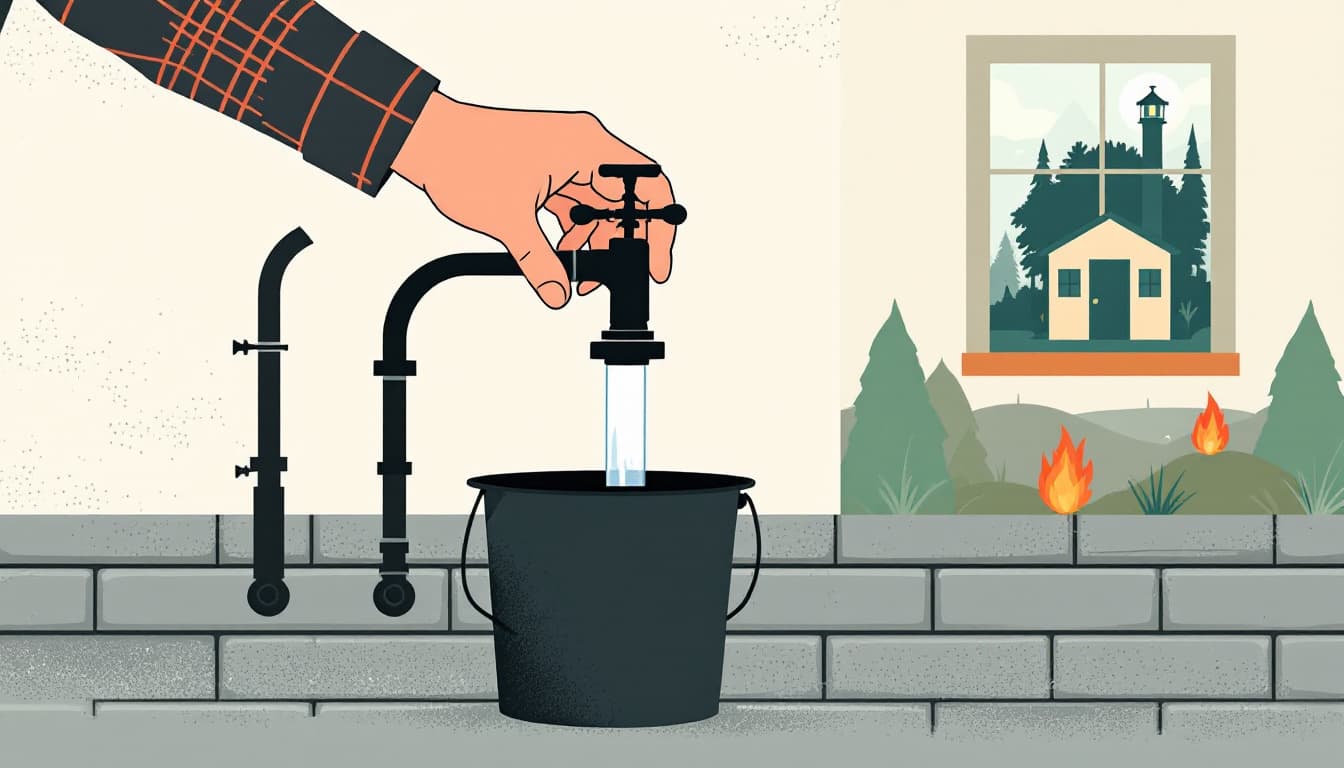
Build a two-week stored water buffer — specifically for drinking and sanitation. The preparedness default of "one gallon per person per day" is a floor, not a plan. For a family of four over fourteen days, that's 56 gallons minimum. Six seven-gallon Reliance Aqua-Tainer containers stored in a cool garage closet gets you there for around $80 total. Rotate every six months.
Audit your food pantry for drought-sensitive staples and buy one month's worth of alternatives now. Sweet potatoes, corn, and peanuts — three of eastern North Carolina's biggest crops — are all moisture-dependent and all vulnerable in a prolonged coastal plain drought. Rice, dried beans, and rolled oats are price-stable and drought-insulated from a supply perspective. Shifting your pantry toward a month's worth of those now hedges against the price bump that typically follows a bad growing-season report.
If you live in or near Brunswick, Columbus, or Bladen counties, clear defensible space around your home this week. NCFS guidance calls for 30 feet of reduced-fuel spacing around structures in fire-prone landscapes. The coastal plain's pocosin ecosystems don't give you much warning. Mow dry grass, clear dead pine needles from roof gutters, and move any woodpiles away from the house. This takes an afternoon, not a weekend.
The bigger picture
North Carolina has managed drought before and will manage it again. Brunswick County's current status is a real signal, not a catastrophe — but signals are only useful if you act on them before they become emergencies. The households that come through drought years best aren't the ones with the biggest water tanks; they're the ones who knew their water source, had a small buffer already built, and didn't have to make panicked decisions under pressure. That's the goal: durable, not dramatic.