The satellite image of a full reservoir and the reality you can see from a fairway fence are two different things. A CBS News report this week showed a stormwater reservoir at a Broomfield, Colorado golf course reduced to a fraction of its normal size, visibly shrunken against the dried grass around it. The story ran as a weather feature. It is actually an infrastructure story.
What's actually changing
Stormwater reservoirs are not decorative. Municipalities and water districts use them as buffers — to capture runoff, recharge groundwater, support irrigation contracts, and sometimes backstop potable supply in a pinch. When those buffers compress, the margin for error in the broader water system shrinks with them.
What's happening in Colorado's Front Range is not unique to Colorado. The western U.S. has been in a structural drought cycle for years, and recent NOAA drought-monitor data has shown large swaths of the Mountain West and High Plains in severe-to-exceptional drought status through the summer. What changes in a drought's later stages — which is where several regions now sit — is that the visible, dramatic losses (a reservoir you can see from a golf course) start appearing alongside quieter systemic stresses: pressure drops in residential lines during peak-demand hours, utility-mandated watering restrictions that tighten incrementally, and aquifers drawn down faster than seasonal recharge can replace them.
For a family in a western or southwestern suburb, the practical risk is not that your tap goes dry tomorrow. The risk is a cascading set of partial disruptions: mandatory outdoor watering bans, pressure fluctuations that affect appliances, emergency conservation tiers that raise your bill sharply for overages, and, in worst-case scenarios, boil-water notices triggered when supply falls low enough to affect treatment plant function. All of those are more likely in a severe drought year than a sudden, total loss of service.
If you're on a well rather than municipal supply, the picture is more direct: prolonged drought lowers the water table, and shallow wells fail before deep ones do. Neighbors have already started noticing this in parts of rural Colorado and New Mexico.
What we'd actually do
Pull your utility's current water-supply status report. Most municipal water utilities publish a supply dashboard or drought-stage document online, often updated monthly. Find yours, read the current tier, and note what restrictions trigger at the next tier. You are looking for two numbers: current reservoir or aquifer level as a percentage of normal, and what mandatory restrictions look like at the next drought stage.
Understanding where your utility sits on its own scale tells you whether you're dealing with a precautionary situation or one already inside the alert window. If your utility doesn't publish this, call and ask — that call itself is useful data about how seriously they're managing it.
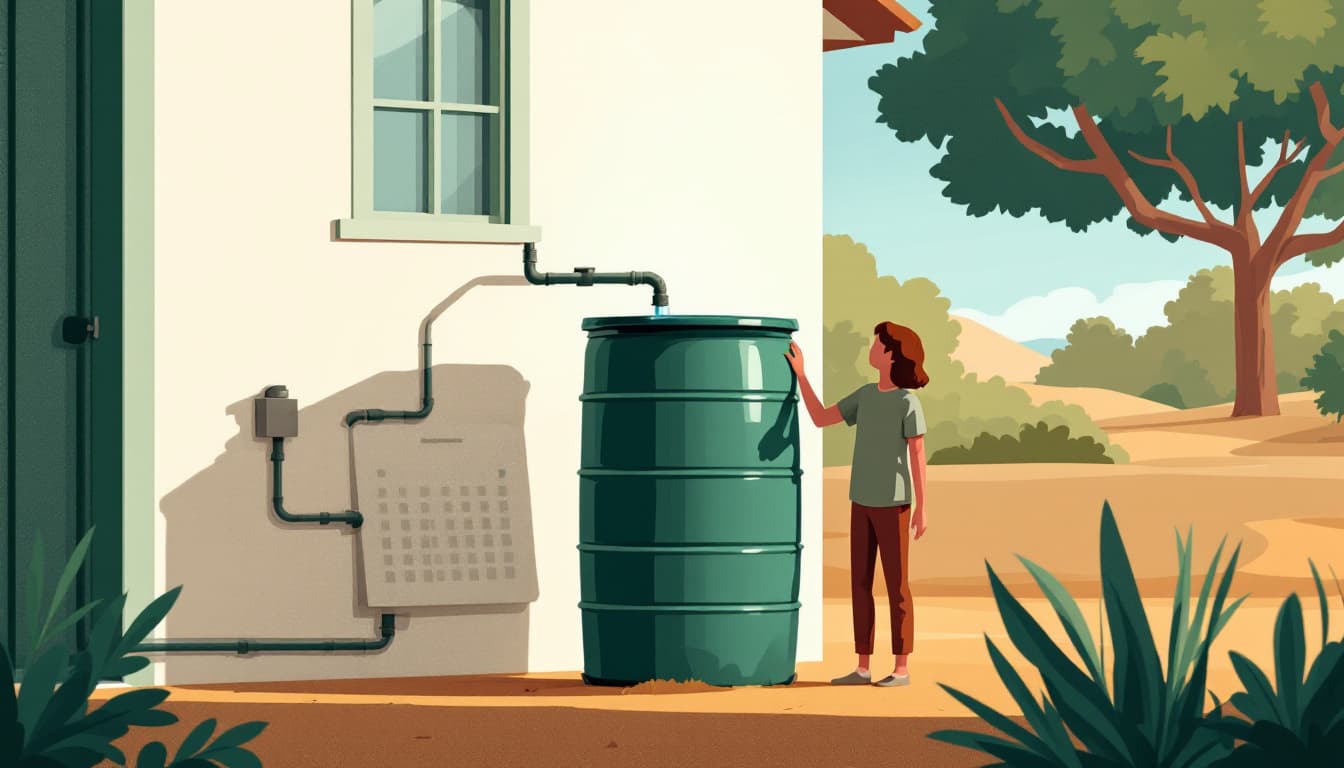
Store a meaningful quantity of water indoors, not a token amount. The standard emergency guidance is one gallon per person per day for three days. That's enough for a short boil-water notice. A two-week supply — roughly 14 gallons per person — covers a more realistic range of disruptions: extended pressure loss, a localized contamination event, or a utility asking voluntary conservation during peak stress. Used 55-gallon food-grade barrels run under $30 used; WaterBOB-style bathtub liners are around $35 new and store flat until needed.
Audit outdoor water use and cut anything that isn't load-bearing. Ornamental lawn watering is the first thing utilities restrict, but waiting for a mandate costs you goodwill with neighbors and sometimes money in overage fees. Shifting to drip irrigation for anything you genuinely want to keep alive (a vegetable garden, young trees) uses roughly 30–50% less water than sprinkler systems for equivalent coverage, per general irrigation-efficiency data. This is also the time to identify which plants in your yard will survive on rainfall alone and which won't — the ones that won't are a liability in a multi-year drought cycle.
Check your water heater and appliances for sediment buildup. This is not intuitive drought prep, but it's real: when reservoir levels drop, utilities often draw from lower in the water column, where sediment concentration is higher. That sediment reaches your water heater. Flushing your tank once a year (a 30-minute job, a standard garden hose) extends heater life and maintains efficiency. If your water has tasted or smelled different recently, a $20 inline sediment filter at the point of entry is worth considering.
If you're on a well, talk to a well driller or hydrogeologist about your local water table. Not to alarm yourself, but to get a baseline. Many will do a brief consultation for free or low cost. Knowing your well's depth and the current static water level in your area tells you how much margin you have before performance degrades. That knowledge costs nothing and changes how you plan.
The bigger picture
Drought coverage tends to focus on the dramatic — a dried lakebed, a reservoir you can see shrinking from a golf course fence. The household reality is more gradual and more manageable than the imagery suggests. Water infrastructure in the U.S. has real slack built in, and most families in affected areas will experience inconvenience before they experience crisis.
The goal is not to stockpile for collapse. It is to stay comfortable and functional through the disruptions that are actually probable: a two-week conservation notice, a pressure dip, a jump in your utility bill. A household that has done a 90-minute water audit and has a few weeks of stored water is, in practical terms, prepared for what a drought year in the American West actually delivers.
That is a different, more useful goal than fear.