A bag of lettuce sits in roughly 40 million American refrigerators on any given day. This week, some of those bags need to come out and go in the trash.
A report from 12News this week identified an Arizona-linked lettuce supplier at the center of a recall tied to potential contamination with Cyclospora cayetanensis — a microscopic intestinal parasite that causes watery diarrhea, cramping, fatigue, and nausea that can drag on for weeks if untreated. Unlike a 24-hour stomach bug, cyclospora illness tends to cycle — symptoms improve, then return — making it easy to misattribute to something else entirely.
What's actually happening
Cyclospora outbreaks tied to fresh produce aren't new. The CDC has tracked recurring summer clusters linked to lettuce, cilantro, and raspberries for more than a decade. The parasite requires a human host, doesn't spread person-to-person directly, and typically enters the food supply through contaminated irrigation water or field handling.
Arizona's role here matters geographically. The Yuma region supplies a significant share of the country's winter and spring leafy greens, and Maricopa and Pinal counties contribute additional supply during shoulder seasons. When a supplier with Arizona connections triggers a recall in midsummer, it's worth understanding whether the contamination point is in the field, in processing, or in distribution — because that affects how widely the affected product may have spread.
The recall notice, as reported by 12News, is the official signal. The FDA's recall database is where you confirm specific brand names, lot numbers, and UPC codes. That database updates continuously and is the authoritative source — more reliable than social media screenshots or forwarded text messages.
What recalls of this type rarely tell consumers: Cyclospora is invisible, odorless, and not killed by a quick rinse under tap water. The parasite's oocysts require either cooking or extended exposure to conditions most home kitchens don't produce. Washing leafy greens reduces surface bacteria; it does not reliably eliminate Cyclospora.
What we'd actually do
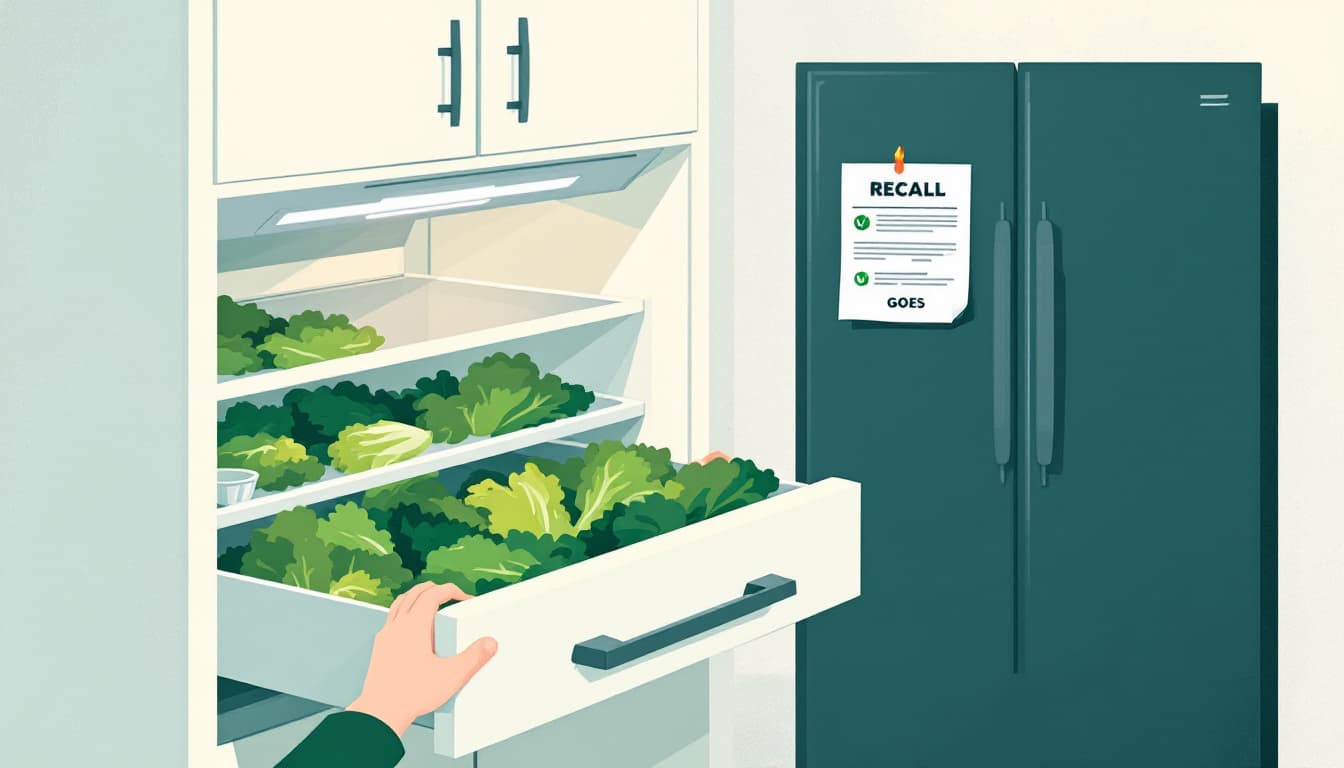
Pull everything in the recall category from your refrigerator right now, and cross-reference the lot numbers against the FDA database before eating any of it. Go to FDA.gov/safety/recalls-market-withdrawals-safety-alerts and search the current week's listings. Recalled product should be discarded or returned to the retailer — not rinsed and eaten. If you've already eaten lettuce from the affected brands in the past two weeks and develop persistent diarrhea or fatigue that seems to improve and then return, tell your doctor and mention cyclospora specifically. It's treatable with trimethoprim-sulfamethoxazole, but physicians have to think to test for it.
Set up FDA recall alerts so you don't depend on the news cycle to catch these. FDA offers email and RSS alerts at FDA.gov/safety/recalls. It takes about two minutes to subscribe. In a state where produce supply chains run through major regional distributors, this is more useful than general preparedness newsletters. You'll get the notice before it makes local TV.
Audit your household's produce sourcing habits — not to stop buying fresh vegetables, but to understand your exposure window. Arizona households buying from Fry's, Walmart, Costco, or restaurant supply chains are often drawing from the same regional distributors. That's not a reason to panic. It's a reason to keep a loose mental map of what you bought, when, and from where — so a recall notice can be acted on in under five minutes rather than an hour of guesswork.
Keep a small stock of oral rehydration salts (ORS) on hand. Cyclospora illness in healthy adults is rarely dangerous, but prolonged diarrhea in Arizona's summer heat is a dehydration risk on a timeline that matters. Commercial ORS packets — not sports drinks, which have the wrong sodium-to-glucose ratio — cost a few dollars and last years. This applies to any gastrointestinal illness, not just this recall.
If you have young children, elderly family members, or immunocompromised household members, act faster and more conservatively. Cyclospora hits harder and lasts longer in people with weakened immune systems. For those households, "when in doubt, throw it out" is not alarmism — it's the correct cost-benefit call on a $4 bag of lettuce.
The bigger picture
A single recall doesn't mean the food supply is broken. It means the monitoring system caught something. What's worth taking seriously is the pattern: fresh produce recalls are a recurring feature of summer, not a rare exception. Arizona households are upstream in a supply chain that feeds much of the country, and that proximity cuts both ways — we often have access to fresher product, and we're sometimes closer to the source of a problem.
The durable habit here isn't paranoia about salad. It's building a five-minute household recall-check routine into your weekly grocery unpacking. That's the kind of low-cost, high-return preparedness that actually holds up over time.