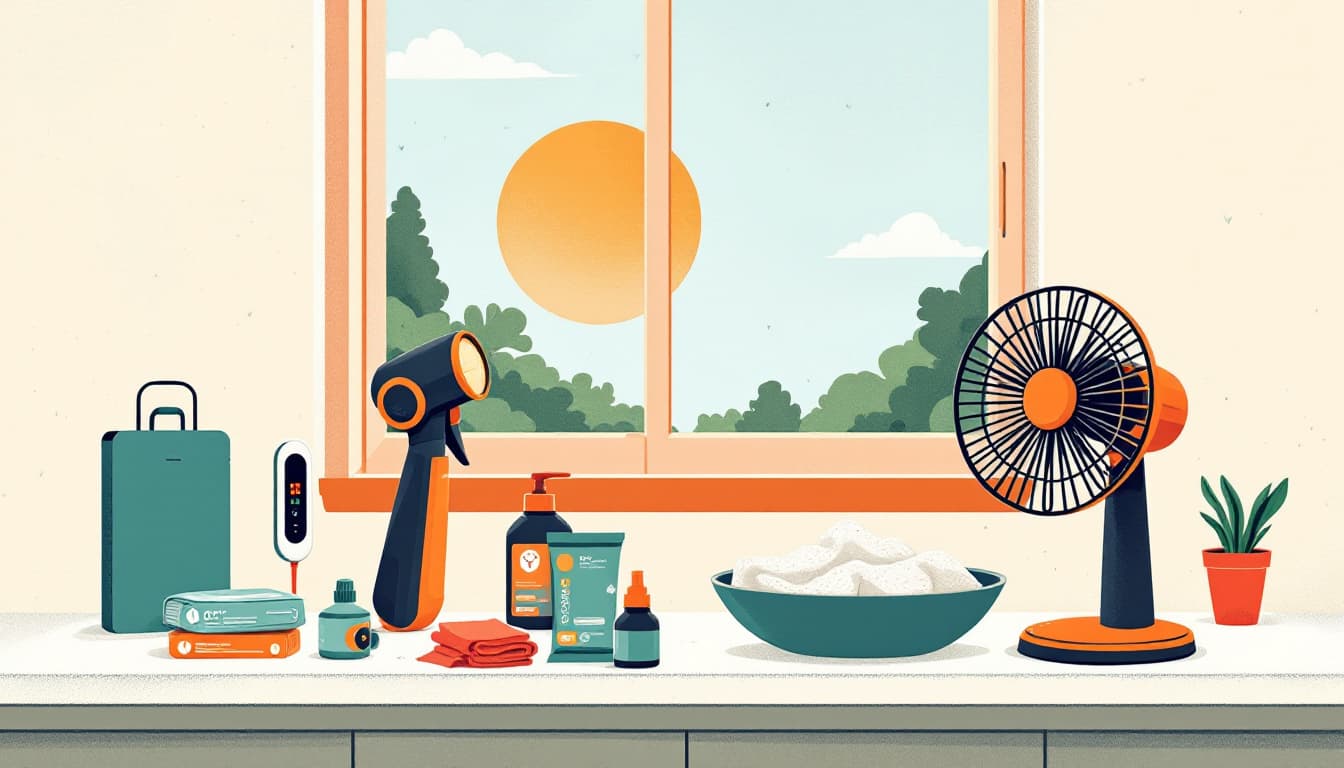
A report this week from AZ Family flagged what every Phoenix Basin and low-desert household already feels coming: temperatures climbing toward triple digits and the first monsoon storm chances beginning to organize. That combination — sustained heat followed by fast-moving, dust-and-lightning-laden storms — defines Arizona's most dangerous seasonal window, roughly June through mid-September.
The forecast itself isn't the story. The story is the gap between "it's going to be hot and stormy" and what that actually demands of a household.
What's actually changing
June in Arizona is not July. The early-season heat arrives before the moisture does, which means dry, sustained highs rather than the brief, cooling relief a good monsoon cell can bring. The National Weather Service Phoenix office tracks this transition closely, and in recent years the pre-monsoon heat has been arriving earlier and holding longer before the dew points climb enough to trigger storm activity.
That matters for two reasons. First, power demand. When the whole metro bakes for weeks before storms arrive, grid stress accumulates. APS and SRP both publish load data, and recent summers have shown demand peaks that leave little margin. Outages during this window tend to hit hardest at night, when households are depending on air conditioning to keep sleeping temperatures survivable. Second, when storms do arrive, they arrive fast. A haboob can reduce visibility to near zero in minutes. A microburst can drop winds above 70 mph with almost no warning. The storm risk in Arizona is not the slow-building hurricane you can track for days — it's the 20-minute event that already happened by the time you found your flashlight.
Neither of those risks is new. What changes year to year is how prepared individual households are when the window opens, not after the first bad night.
What we'd actually do
Check your cooling redundancy this week, before you need it. Run your AC unit at a lower set point for a few hours and listen for anything unusual — rattling, reduced airflow, ice on the lines. An HVAC service call costs far less in June than during a July heat emergency when every technician in the Valley is booked two weeks out. If you rent, submit that maintenance request now, in writing.
Build a 72-hour power-outage plan around heat specifically. A standard emergency kit assumes you can shelter in place. In an Arizona summer outage, your home can reach dangerous interior temperatures within hours, especially in newer construction with poor insulation. Identify your nearest public cooling center (Maricopa County and Pima County both maintain updated lists through their emergency management pages) and decide in advance at what indoor temperature you leave. Write it down. Don't negotiate with yourself at 2 a.m. when you're already heat-stressed.
Secure anything in your yard that a haboob can turn into a projectile. Patio furniture, umbrellas, potted plants, kids' toys — all of it. This takes 10 minutes. A 60 mph gust through an unsecured yard causes property damage and injures neighbors. Make it a standing habit before any storm watch, not a scramble after the wall appears on radar.
Top off water stored in your home and check storage containers for heat degradation. Water stored in direct sunlight in plastic containers — a garage, a shed — can leach chemicals and degrade container integrity over a hot summer. Move storage inside or into shade. Aim for at least one gallon per person per day for three days as a floor, not a ceiling. If you have pets or medical needs, recalculate accordingly.
Download the Arizona Emergency Information Network (AEIN) app or confirm your Wireless Emergency Alert settings are active. Most people assume their phone will alert them. That assumption fails when alerts are filtered or when you're somewhere without signal. Knowing the alert pathway before a fast-moving storm is more useful than any piece of gear.
The bigger picture
Arizona households that have lived here a decade know the drill. The concern isn't the longtime resident — it's the household in its first or second summer, the family that moved here during the remote-work years and has never watched a haboob roll over the Superstitions toward the East Valley. Preparedness in this state is not about stockpiling for collapse. It's about not being the person caught flat-footed by something that happens every single year.
Heat and monsoon season is predictable. That makes it one of the easier risks to prepare for. The actions above cost almost nothing and take an afternoon. Do them before the first heat advisory, not during it.