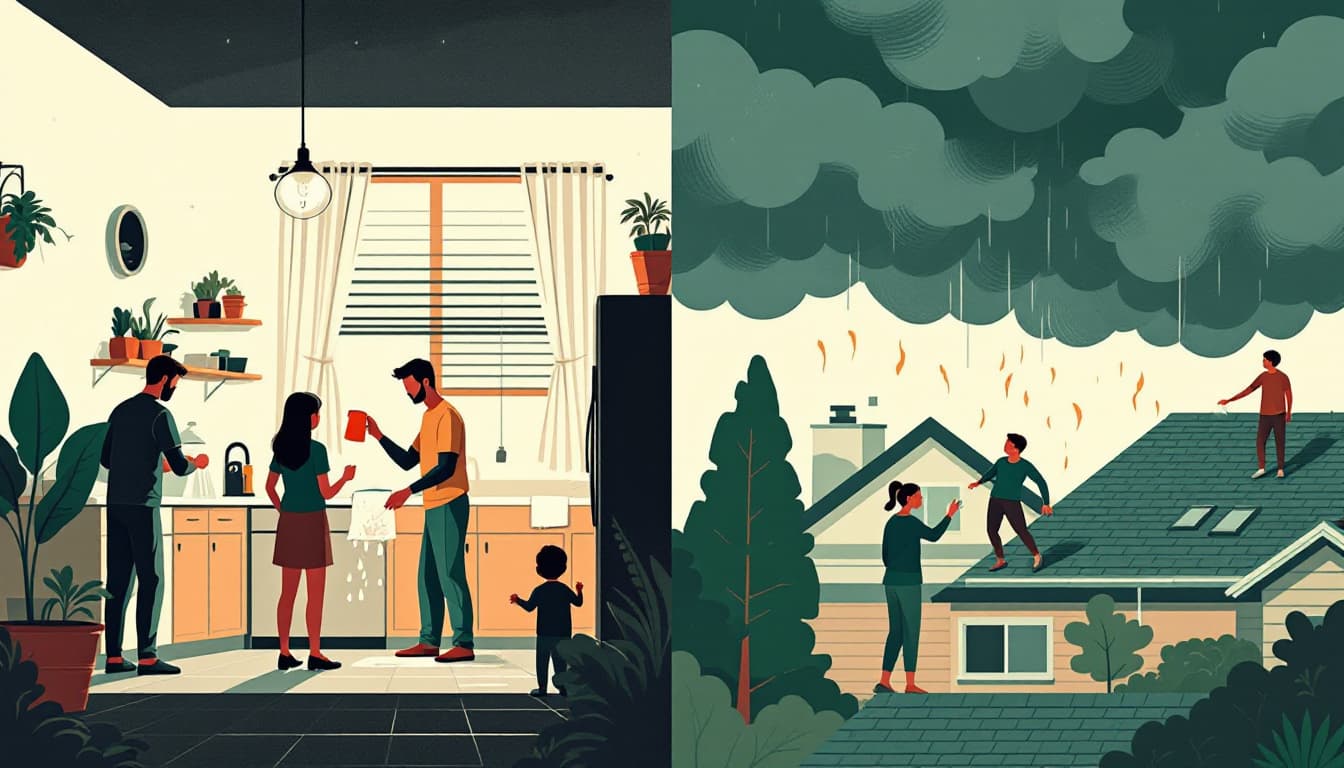
A heat warning that was already in place over the Phoenix metro got extended this week, according to AZ Family — and the same forecast brings monsoon storms behind it. That combination is the specific pattern that knocks out power, overwhelms storm drains, and kills people who thought they had one more day to get ready.
This is not a once-a-decade event. It is Arizona July. The question is whether your household is set up to absorb it or scramble through it.
What's actually happening here
The extension of a Heat Warning means the National Weather Service determined conditions dangerous enough to warrant keeping formal advisories active beyond their original window. In Maricopa County, that threshold is tied to overnight lows that don't drop below the mid-90s — the hours when bodies that were heat-stressed during the day can't recover.
The storms arriving behind the heat are classic Sonoran monsoon cells: fast-building, capable of producing 50+ mph outflow winds, blowing dust, and rain intense enough to flood streets that were bone-dry ten minutes earlier. The first storms of the season tend to hit the hardest because the ground is baked solid and can't absorb water. Dust-storm-reduced visibility and waterlogged electrical infrastructure are what cause the outage spikes APS and SRP document every July and August.
The compound threat is the point: households that lose power during a heat warning face a window measured in hours, not days, before indoor temperatures become dangerous — especially for anyone over 65, under five, or managing a chronic condition.
What we'd actually do
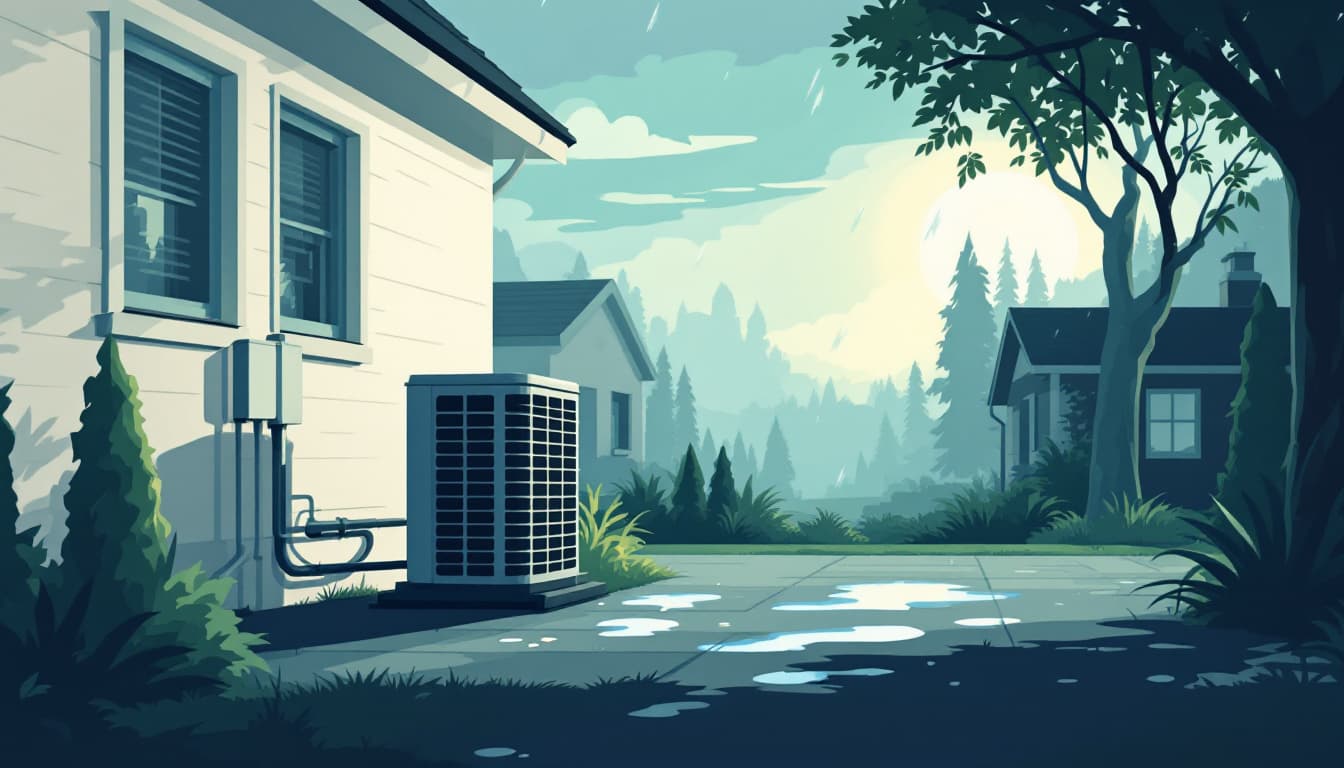
Verify your cooling redundancy before tonight, not before the storm. Every window AC unit, portable AC, or whole-house system should be tested under load right now. If your central unit is struggling to hold 80°F when it's 112°F outside, that's information you need before the power goes out and you're calling an HVAC technician who is already booked solid. Know the address of your nearest APS or SRP designated cooling center — both utilities publish updated lists each summer, and Maricopa County's Human Services Department maintains one as well.
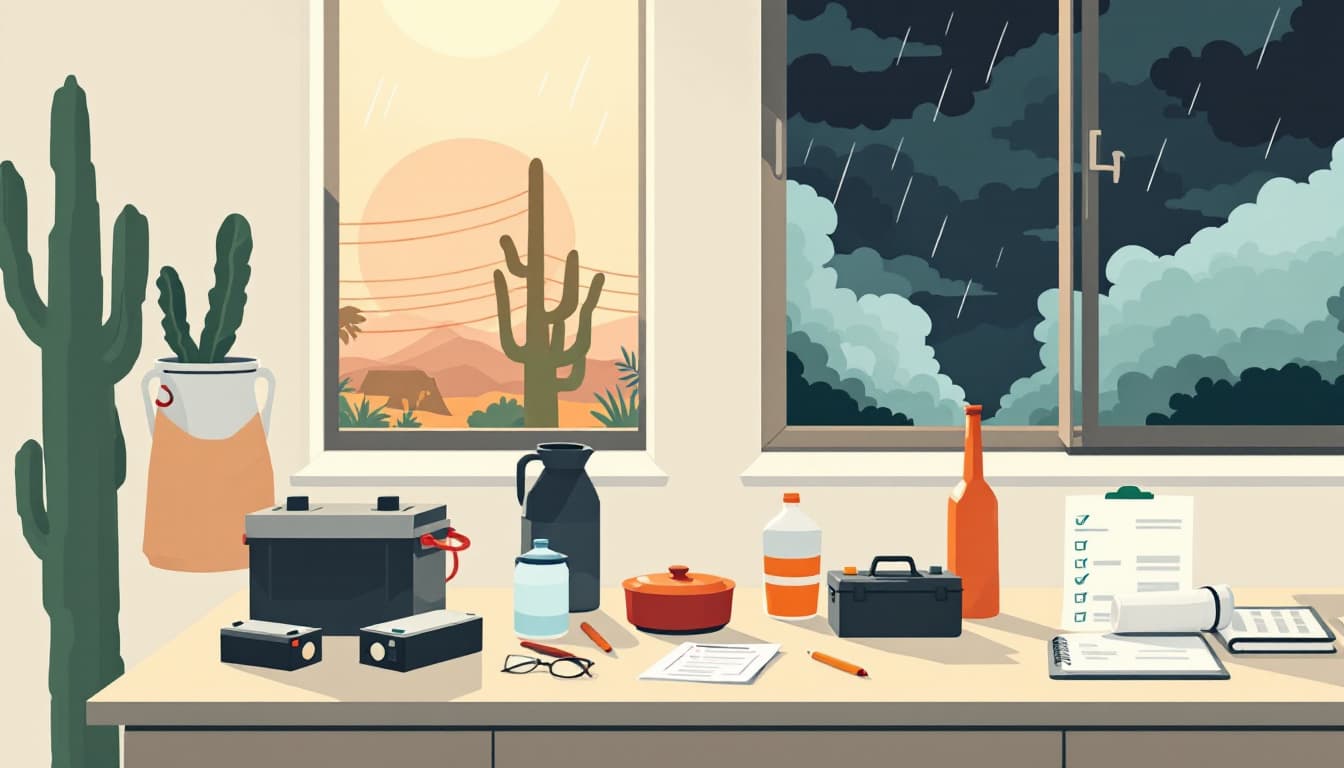
Fill your water storage tonight, and make it specific. Arizona preparedness guidance traditionally recommends one gallon per person per day — but that's a survival floor, not a comfort threshold in 115°F conditions. A family of four needs at minimum 16 gallons for a four-day disruption, stored in food-safe containers out of direct sunlight. If you're filling clean 2-liter bottles from the tap, do it now while water pressure is normal; monsoon storms can compromise municipal supply through contamination events, though this is uncommon with large systems like Phoenix's.
Charge everything and protect what draws power. Plug surge protectors — not simple power strips — into outlets for your refrigerator, home medical equipment, and HVAC control board. The voltage spikes that follow grid restoration after a storm outage are real and routinely damage appliances. A UPS (uninterruptible power supply) for any home medical device is not optional if someone in your household depends on it. Charge all portable battery banks fully before the storm window.
Identify your flash-flood exposure before the first storm. Phoenix's street flooding is geographic and predictable. FEMA's flood map and Maricopa County Flood Control District both maintain public-facing tools to check whether your address sits in or near a mapped floodplain. If it does, know which route out of your neighborhood avoids low-water crossings. Driving into flooded washes kills people in Arizona every monsoon season. The county's "Turn Around, Don't Drown" guidance isn't a slogan — it's the actual rule.
Build a 72-hour no-power meal plan around what you already own. This isn't about stockpiling. It's about knowing which items in your pantry don't require cooking or refrigeration and pulling them to an accessible shelf now. Canned beans, peanut butter, shelf-stable crackers, and electrolyte packets are a start. If a power outage lasts more than four hours in this heat, plan to eat from that shelf and leave the refrigerator closed.
The bigger picture
Arizona households that navigate July and August well tend to do one thing consistently: they treat the monsoon season as a planning unit, not a series of individual emergencies. The heat warning and the incoming storms are not separate problems. They are the same system, cycling through its annual pattern. Building resilience here — adequate water, cooling backup, surge protection, flood awareness — isn't catastrophe prepping. It's basic durable household management for the climate you actually live in.
The goal isn't to survive the worst-case scenario. It's to not be the family calling 911 because a three-hour outage became a medical emergency.