A wall of dust rolls in at 40 mph. Forty minutes later, rain turns your street into a wash. Then the power goes out. If you live in the Phoenix metro, Tucson basin, or anywhere along the I-10 corridor, that sequence is not a worst-case scenario — it is a standard Tuesday in late July.
A report this week from azcentral.com and The Arizona Republic confirmed dust storms and thunderstorms hit central and southern Arizona in the same weather cycle. That combination is exactly what makes Arizona's monsoon season harder to manage than a single-hazard event. You are not preparing for a dust storm or a thunderstorm. You are preparing for the compound effect of both.
What's actually changing
Arizona's monsoon window runs roughly June 15 through September 30, per the National Weather Service Phoenix office. Within that window, the dual-threat pattern — haboob followed by rain — is well understood. What households underestimate is the cascade effect.
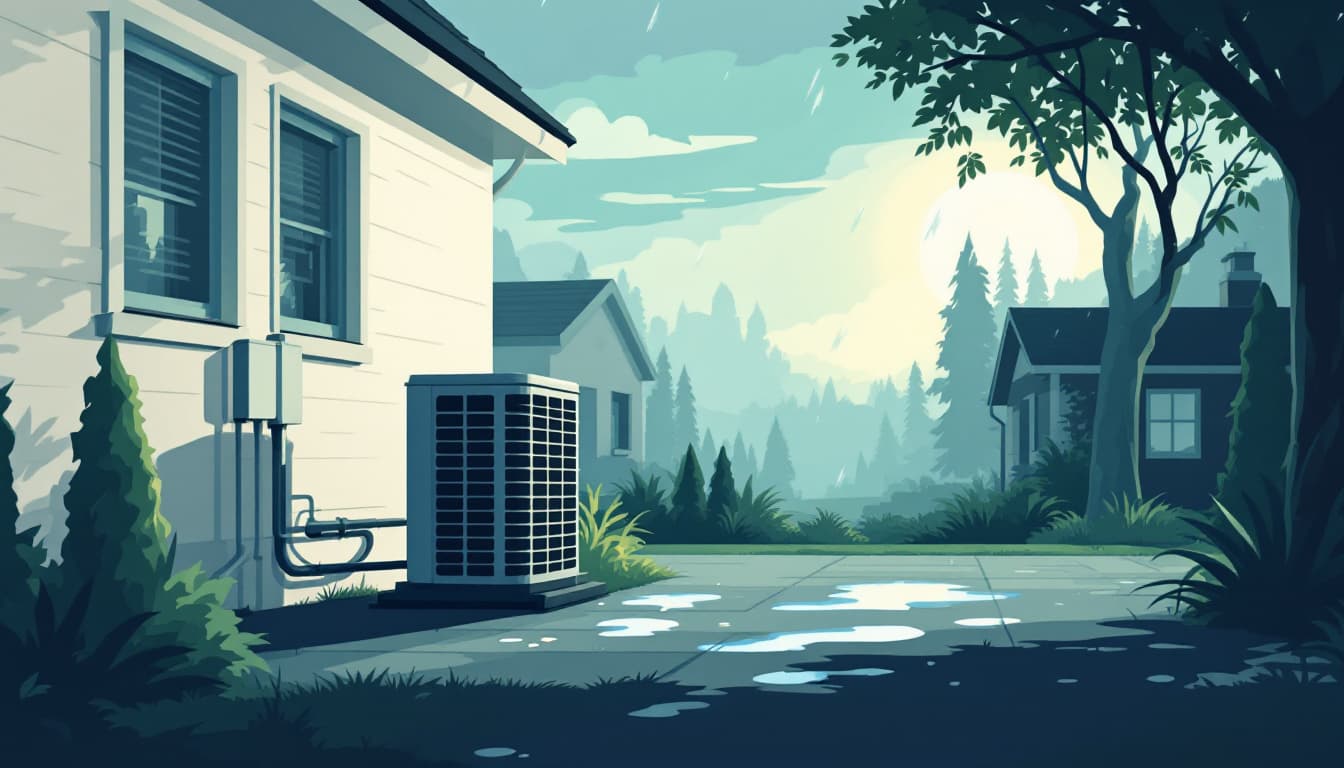
Dust reduces visibility to near zero, then rain turns that airborne particulate into a muddy coating on solar panels, AC condenser coils, and window seals. Grid stress from cooling demand plus lightning strikes on distribution lines creates the conditions for extended outages. APS and SRP both report spikes in outage tickets during monsoon activity, and restoration times in suburban fringe areas — Queen Creek, Maricopa, Surprise, Sahuarita — often run longer than in core urban grid zones because feeder lines serve larger geographic areas.
The air-quality side is not trivial. A haboob pushes PM10 and PM2.5 levels — coarse and fine particulate — into ranges that trigger health advisories from the Maricopa County Air Quality Department and Pima County's equivalent agency. For households with anyone managing asthma, COPD, or cardiovascular conditions, a single severe haboob event can mean two or three days of degraded indoor air quality, not just the hours the storm is visible.
What we'd actually do
Seal your home's weak points before the next storm cycle, not after. Walk every exterior door and window and replace any weatherstripping that is cracked or compressing unevenly. Arizona's dry heat degrades rubber and foam seals faster than humid climates. A hardware store run — $30 to $60 in materials — keeps more dust out of your HVAC return system and off your furniture than any air purifier running at max speed during a haboob. Focus on the windward side of your home, typically the west and south faces.
Build a 72-hour power-outage kit that accounts for heat, not just darkness. Most outage prep advice was written for cold-climate ice storms. Arizona's problem is the opposite. If your AC goes down during a monsoon-season outage, indoor temperatures can exceed safe ranges within hours for older adults, infants, and anyone on diuretics or antihypertensives. Identify the nearest APS or SRP cooling center in your zip code now, before you need it. Keep a battery-powered fan, at least one gallon of water per person per day, and a battery bank capable of charging phones and a CPAP if applicable. Know whether your garage door opens manually — most do, but many households have never tested it without power.
Keep a close eye on your solar panels and AC condenser after storms. Dust-coated panels can lose a significant share of output, and most Arizona homeowners do not notice until their next utility bill. A garden hose rinse after a haboob restores production. More important: check your condenser coils. Mud-caked fins restrict airflow and force the compressor to work harder during the hottest days of the year. A fin comb and a gentle rinse can prevent a mid-summer system failure. HVAC service calls during monsoon season book out fast.
Replace your N95 supply and check expiration dates. NIOSH-rated N95 respirators are the minimum effective filter for haboob-level particulate. If you are relying on a box left over from a previous year, check the manufacturer's expiration — most are rated for five years from production, not purchase. Keep at least four per household member. Maricopa County and Pima County schools have sent students home during severe air-quality events; having masks on hand is no longer a niche preparedness move.
Pre-position your car, cash, and documents. A single severe thunderstorm can close I-10 or US-60 for hours via flash flooding. Arizonans who live in low-lying areas near washes — and a large share of the Valley's newer suburban development sits near engineered channels that can surge — should know their evacuation route and not assume their normal commute path is passable. Keep a small amount of cash accessible: payment terminals go down during extended outages.
The bigger picture
Monsoon season in Arizona is not a disruption to normal life. It is a recurring feature of living here, and it has been for as long as anyone has kept records on the Sonoran Desert. The goal is not to be alarmed by every haboob warning on your phone. The goal is to be boring about it — to have already done the $40 weatherstripping run, to already know where the cooling center is, to already have the N95s in the closet. Durable households handle this stuff before it is urgent. The households that scramble are the ones who treated last year's monsoon as a one-off.