A kgun9.com report this week confirmed what Southern Arizona households already feel through their walls at 9 p.m.: Extreme Heat Warnings are back through the weekend, and the monsoon — the seasonal pattern Tucson and Phoenix residents count on to break the worst of late July — is not performing. Humidity is climbing enough to make the air feel heavier without producing the storms that drop temperatures by 15 degrees and wet the ground overnight.
That gap between what the monsoon is supposed to do and what it is doing right now is the real story.
What multi-day heat events actually do to a household
A single afternoon above 110°F is a nuisance. Five or six consecutive days of it, with overnight lows staying above 90°F across the low desert, is a different category of problem.
Overnight low temperatures are the critical number. The human body uses night hours to shed accumulated heat. When lows stay above 85 or 90°F — common in Phoenix's urban core and increasingly common in Tucson's expanding metro — sleep becomes medically consequential, not just uncomfortable. Fatigue compounds. Judgment degrades. People who were fine on day two of a heat event make bad decisions on day four.
Power infrastructure follows the same curve. Sustained demand across a multi-day event strains grid equipment in ways a single-afternoon peak does not. Arizona's grid operators plan for peak days, but prolonged events can surface equipment failures and localized outages that single-day demand spikes would not.
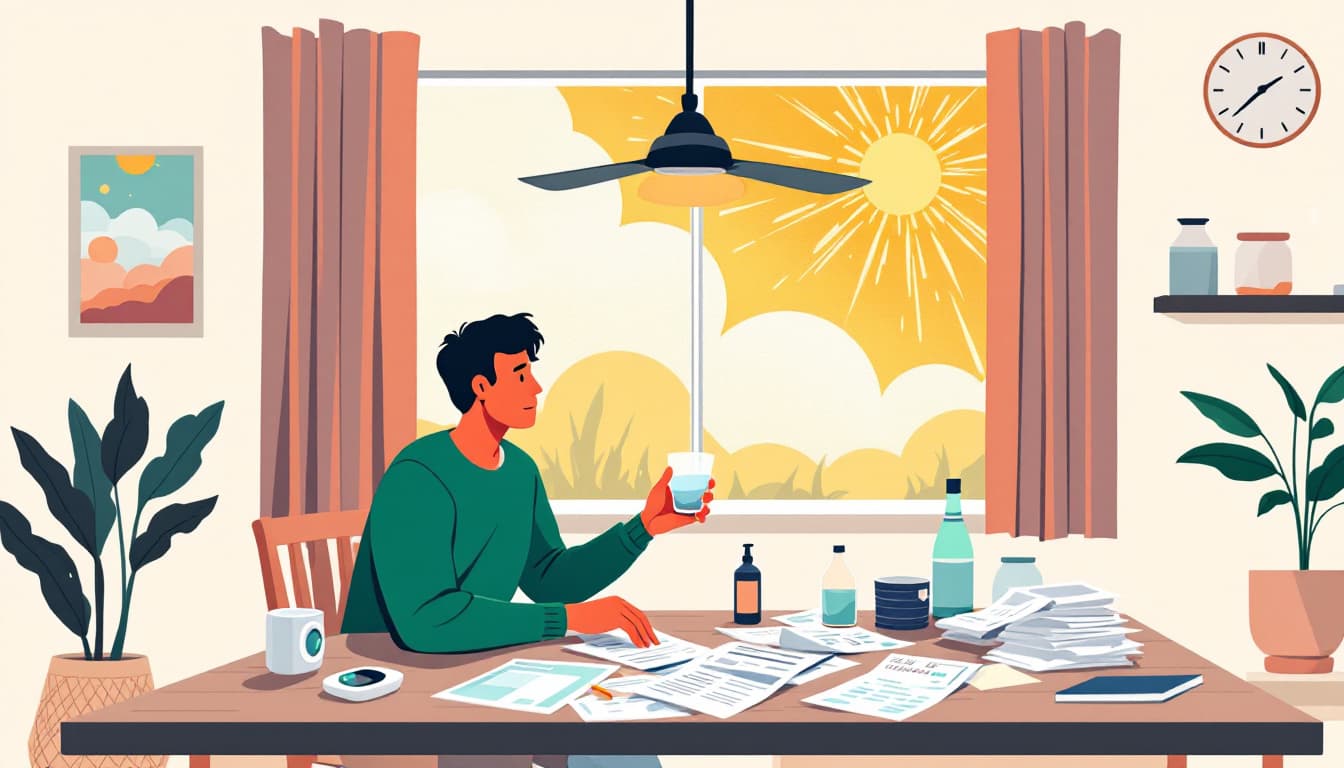
Medications are a second hidden pressure point. A significant share of Arizona households include someone on a drug that either requires refrigeration or is affected by heat exposure — insulin, certain thyroid medications, some liquid antibiotics, and several cardiac drugs among them. Most families have not thought through what happens on hour 36 of a power outage.
What we'd actually do
Audit what's in your refrigerator and medicine cabinet for heat sensitivity tonight. Pull out every medication in your house and check the storage requirements. Anything that says "store below 77°F" or "refrigerate" needs a plan. A small soft-sided cooler and two or three ice packs give you roughly 24-36 hours of protection if power goes out — but only if you've tested the setup before you need it. The FDA has published guidance on specific drug classes and heat exposure; your pharmacist can tell you which of your prescriptions are most vulnerable.
Know your nearest cooling center before you need it, with the address written down. Maricopa County and Pima County both operate cooling center networks that expand during Extreme Heat Warnings; the Pima County website and the Maricopa County emergency management page list current locations and hours. The key word is "before." When someone in your household is showing signs of heat illness, you do not want to be navigating a county website on a phone with a hot battery.
Lower your indoor temperature threshold now, not when someone feels bad. Most household thermostats in Arizona are set between 78°F and 82°F during the day to save on electricity. During a multi-day event with high overnight lows, consider dropping the daytime set point to 76°F and letting the system run harder during off-peak hours (typically after 8 p.m. under APS and TEP rate structures). The bill difference is real but smaller than an ER visit. If you are on a budget billing plan, call your utility — both APS and TEP have heat relief programs for qualifying customers.
Pre-position water and electrolytes for 72 hours without a store run. The number is simple: one gallon per person per day, plus enough electrolyte replacement (powder packets work fine) to cover two to three days of sweating. A family of four needs twelve gallons, stored somewhere cooler than the garage. Under a sustained heat event, store runs become genuinely uncomfortable and, for elderly or compromised family members, potentially dangerous.
Check on one neighbor who lives alone, every day, for the duration of the warning. Heat mortality in Arizona clusters among people who are elderly, who live alone, and whose social networks don't notice when they go quiet. A two-minute door knock or text check is a meaningful intervention. Arizona's heat death statistics — tracked annually by the Maricopa County Department of Public Health, which publishes a running heat-associated death report each summer — consistently show that isolation is among the strongest predictors of fatal outcome.
The bigger picture
Arizona's monsoon has always been unreliable. Some years it delivers; some years it teases. What's shifted is that the baseline temperatures the monsoon is supposed to relieve have risen, so a weak monsoon season now means sustained exposure to conditions that were once statistical outliers. Households that treat heat preparedness as a single-afternoon problem are under-prepared for what a multi-day event demands.
Durability here is not about dramatic gear purchases. It is about knowing your medications, knowing your neighbors, and having 72 hours of autonomy so that a grid hiccup or a difficult errand doesn't become a medical emergency.