Phoenix set a record for consecutive days above 110°F in the summer of 2023. Tucson and other Southern Arizona communities are now routinely hitting temperatures that human physiology wasn't designed to navigate without mechanical cooling. A KVOA report this week covered basic AC tips for staying safe and saving money in Southern Arizona's heat — useful at a surface level, but short on the analysis a household actually needs to make decisions.
Here's what the standard heat advisory misses.
What's actually changing
Extreme heat in Arizona is no longer a peak-week problem you white-knuckle through. The window of days above 105°F in Tucson and Phoenix has widened over the past two decades, and Arizona's electric grid — managed by APS and Tucson Electric Power, among others — faces maximum strain precisely when households are most dependent on it. APS has previously asked customers to voluntarily reduce usage during evening demand peaks in July and August, a sign that supply headroom is tighter than utilities prefer to advertise.
The second pressure is cost. Residential electricity rates in Arizona have risen steadily, and a central AC system running continuously through a Southern Arizona summer can push monthly bills well past $300 for a mid-sized home. Many households absorb that cost without auditing whether the system is working efficiently or whether the load can be shifted.
The combination — tighter grid margins and higher per-kilowatt costs — means a working AC unit isn't enough. You need a cooling strategy, not just a cooling appliance.
What we'd actually do
Get the AC serviced before the next billing cycle, not after it. Schedule a filter change and coil inspection with a licensed HVAC tech. A dirty evaporator coil can cut cooling efficiency by 20–30%, meaning your unit runs longer and costs more per hour of cooling delivered. In Southern Arizona, where the unit may run 16+ hours a day, that inefficiency compounds fast. APS and TEP both offer rebates on tune-ups in some years — check their current program pages directly before paying full price.
Map your home's thermal zones and decide which rooms you're actually cooling. Most Southern Arizona homes have a room or two that heats faster than the rest — west-facing bedrooms, rooms above a garage, spaces with poor insulation or single-pane windows. Closing vents in unused rooms and using a box fan to direct cool air toward sleeping areas costs nothing and reduces the total cooling load. Don't pay to cool the storage room.
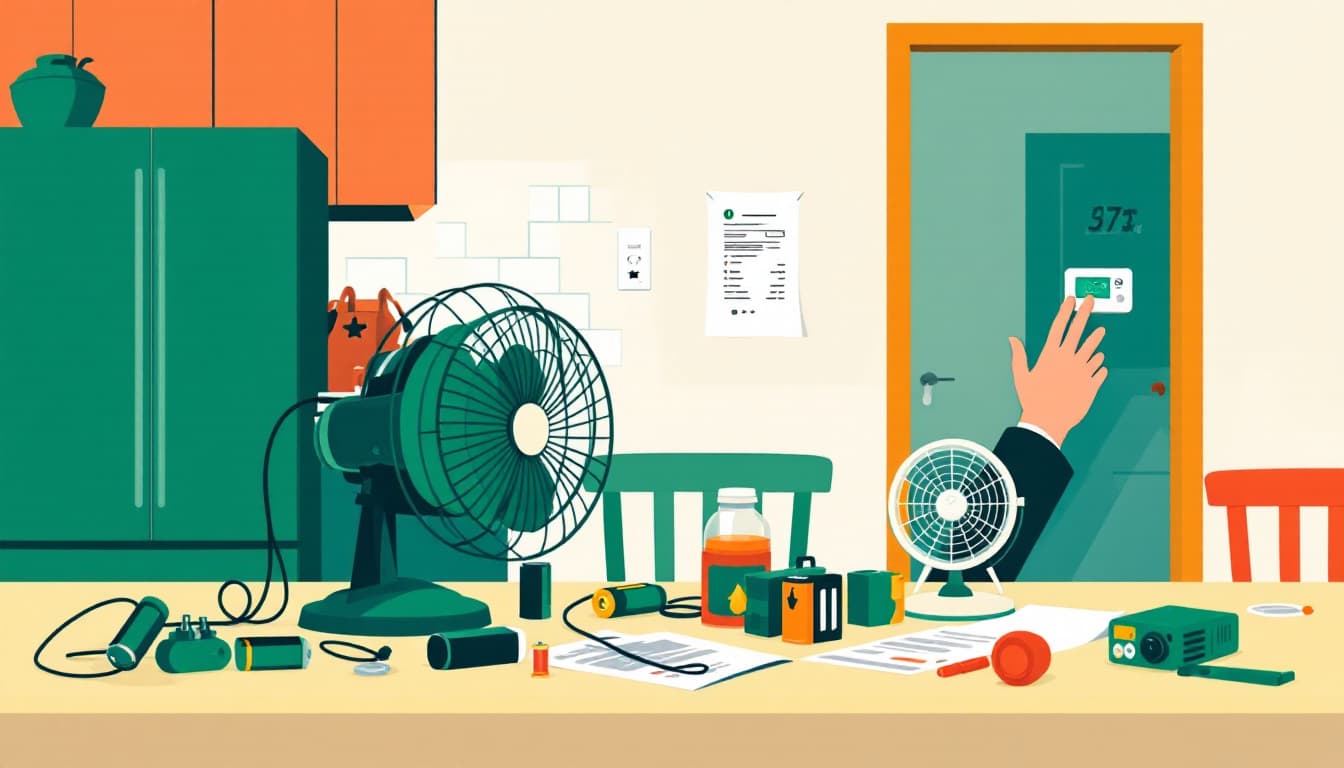
Build a 72-hour no-grid cooling kit before July ends. This is the action most households skip. If grid power fails during a heat event — and Arizona has experienced outages during peak demand — you need options. A battery-powered fan, reflective window film (available at hardware stores for under $30 per window), and a designated "cool room" with the most insulation buys time. Fill your bathtub with cold water during an outage; the thermal mass helps. Know the address of your nearest 24-hour cooling center — Maricopa County and Pima County both publish updated lists each summer on county health department sites.
Shift high-heat tasks out of daylight hours. Dishwashers, dryers, and ovens all add heat load to your home. Running them after 9 p.m. reduces both the internal heat your AC must fight and your electricity cost if you're on a time-of-use rate plan. Check whether your utility has enrolled you in a TOU plan — many Arizona customers are on them without realizing it, meaning peak-hour electricity costs significantly more per kilowatt-hour.
Keep a written record of your monthly kWh usage, not just the dollar total. Bills in dollars obscure rate changes. Tracking kWh lets you see whether your actual consumption is changing or whether the rate is moving. If kWh is stable but cost is rising, that's a rate issue. If kWh is spiking, the system or behavior is the problem. One sheet of paper taped inside a kitchen cabinet is sufficient.
The bigger picture
Extreme heat is the most statistically dangerous weather event in Arizona, more lethal in most years than floods or wildfires. It is also the preparedness risk that gets the least serious household-level attention, because running the AC feels like enough. It isn't — not when the grid is stressed, not when bills are climbing, and not when a multi-day outage during a heat dome becomes a genuine medical emergency for children, elderly family members, or anyone on medications that require refrigeration.
Durability here means not depending on a single system at maximum load during maximum stress. That's an engineering principle and a household principle. The goal isn't to survive a catastrophe. It's to have enough redundancy built in that a bad week in July stays a bad week, not a crisis.