A Patch report this week placed Tucson under an Extreme Heat Watch as temperatures push toward 110°F. For residents of Pima County and the surrounding metro, that number is not a headline — it is a logistics problem that starts roughly 48 hours before the peak hits.
The watch designation from the National Weather Service means conditions are favorable for extreme heat but not yet certain. That window is precisely when preparation costs the least and pays the most.
What's actually changing
Phoenix and Tucson households have always managed summer heat. What's shifted over the past several years is the combination of factors arriving at once: higher baseline nighttime lows (which prevent homes from cooling down overnight), aging grid infrastructure under heavier load, and a regional population that keeps growing into areas with fewer mature trees and more heat-absorbing pavement.
The Arizona Department of Emergency and Military Affairs tracks heat-related fatalities annually, and the pattern is consistent: the deaths are not clustered at the absolute peak temperature days. They accumulate across multi-day events when nighttime temperatures stay elevated and homes that lost power — or never had reliable air conditioning — never recover their internal temperature.
That is the actual risk model for a 110°F watch: not one brutal afternoon, but 72+ hours of compounding thermal load on your house, your body, and your power supply.
What we'd actually do
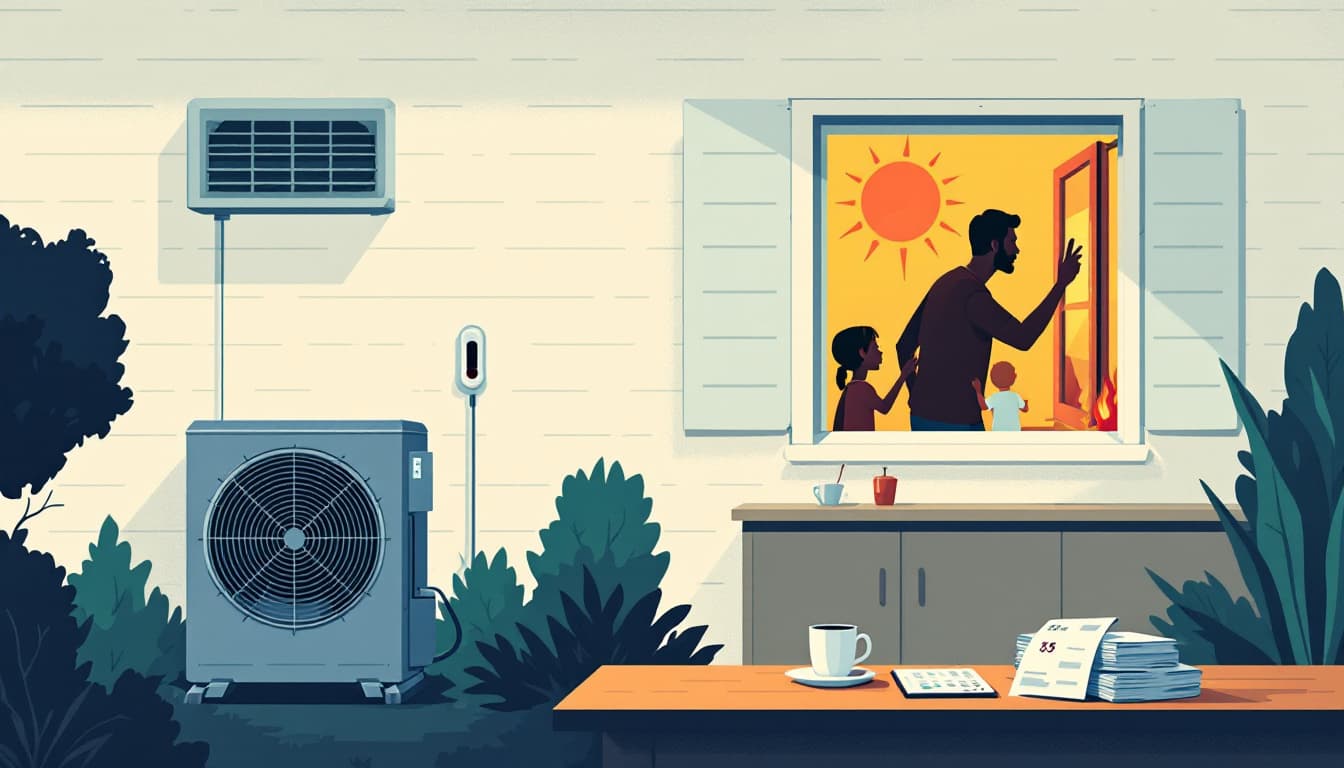
Get eyes on your HVAC unit now, before the peak hits. A system that's limping along at 95°F will fail at 108°F. If your unit hasn't been serviced this season, call today — not when you hear it struggling. APS and TEP both run appliance rebate programs that occasionally cover tune-ups; check their current offerings. At minimum, replace the filter and clear debris from the condenser outside.
Map your cooling refuges, in order. If your home loses power during a heat event, you need a decision tree that doesn't require thinking clearly in the heat. Write down: (1) a neighbor with a generator or strong south-facing shade, (2) the nearest library or community center with confirmed cooling hours — Pima County opens designated cooling centers during watches, and the county's website lists locations — (3) a family member outside the affected area you could reach within two hours of driving.
Store water beyond what you think you need. The standard one-gallon-per-person-per-day figure assumes temperate conditions. In 110°F heat with physical activity or power loss, that number climbs fast. A four-person household doing anything outdoors — including moving coolers, checking on a neighbor, or managing livestock — should plan for three to four gallons per person per day. Fill bathtubs and any food-safe containers you have before the watch period peaks.
Check on the specific people in your network who are most vulnerable. Not a generic "check on your neighbors" — make a list of names. Elderly residents, people with chronic respiratory or cardiovascular conditions, and outdoor workers are the statistically highest-risk groups during multi-day heat events in Maricopa and Pima counties. A 10-minute welfare check costs nothing. In a prolonged event, it can matter.
Know your utility's medical baseline rate program. APS, TEP, and SRP all offer reduced rates for customers with qualifying medical conditions that require powered equipment or climate control. If someone in your household qualifies and you haven't enrolled, do it now — the application takes about 15 minutes and the savings across a summer are real.
The bigger picture
Arizona households have more heat experience than almost any population in the country. That experience is an asset, but it can also produce a kind of familiarity bias — the assumption that because you've handled hot summers before, this one will manage itself too.
The goal here isn't to treat a 110°F watch as a civilization-ending event. It isn't one. The goal is to close the gap between what your household can handle smoothly and what would actually stress it. That gap is usually smaller than people fear and cheaper to close than they assume — but only if you close it before the thermometer peaks, not after.
Durability, not catastrophe. That's the standard.