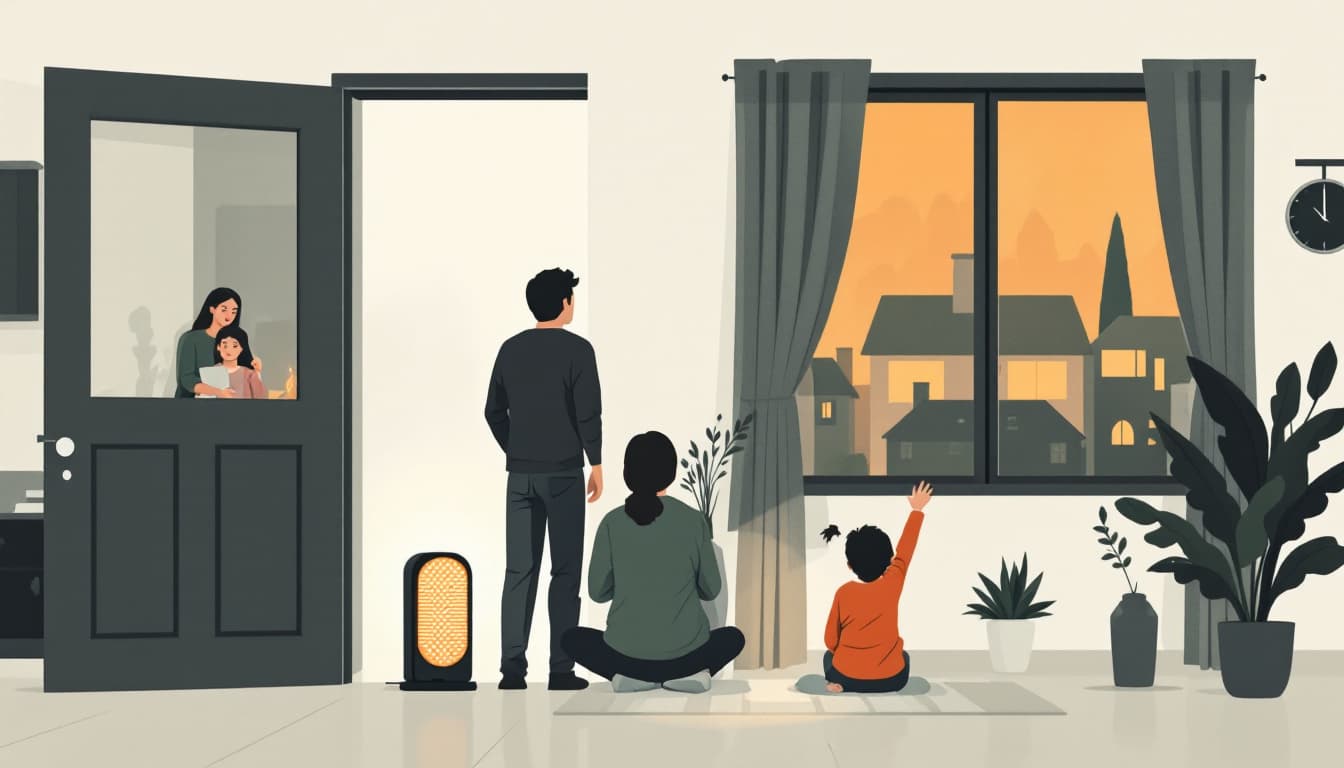
A report this week from Mirage News details how wildfire smoke has evolved from an occasional emergency into a persistent, season-long challenge for school districts across the United States. The piece documents a pattern of closures, early dismissals, and canceled outdoor activities tied directly to degraded air quality — disruptions that are no longer confined to states traditionally associated with wildfire risk.
The reporting describes school administrators grappling with decisions that didn't exist in their operational playbooks a decade ago: when AQI readings cross certain thresholds, districts must weigh the risks of keeping students indoors in buildings with aging HVAC systems against the logistical and academic costs of closure. Many districts, according to the report, lack consistent air quality monitoring at the building level and instead rely on county or regional readings that may not reflect what students are actually breathing inside specific schools.
What the Mirage News piece doesn't emphasize — but matters for anyone thinking about building-level air quality — is the structural gap between official AQI guidance and indoor air reality. Outdoor AQI measurements are taken at fixed monitoring stations, sometimes miles from a given school, and they reflect ambient outdoor conditions. Indoor air in a school with single-pane windows, gaps around doors, and a recirculating HVAC system that lacks MERV-13 or better filtration can reach PM2.5 concentrations that track disturbingly close to outdoor levels during heavy smoke events. Research from the EPA and independent air quality groups has consistently shown that "sheltering in place" in a poorly sealed, under-filtered building offers far less protection than the public health guidance implies — a gap that's directly relevant to household decisions about when remaining indoors is genuinely protective versus a false sense of security. Our portable air purifier testing has documented how dramatically room-level filtration changes those indoor numbers, which is the same logic schools are now applying when they decide whether a closure is warranted.
The geographic spread of the problem is notable. Districts in the Pacific Northwest and California have had smoke protocols in place for several years, but the Mirage News reporting indicates that Midwest and Mid-Atlantic school systems are now facing recurring smoke days they had no policies to handle as recently as 2022. That administrative unpreparedness — protocols written after the fact, mid-season — is part of what's driving the inconsistency in how districts respond to identical AQI readings.