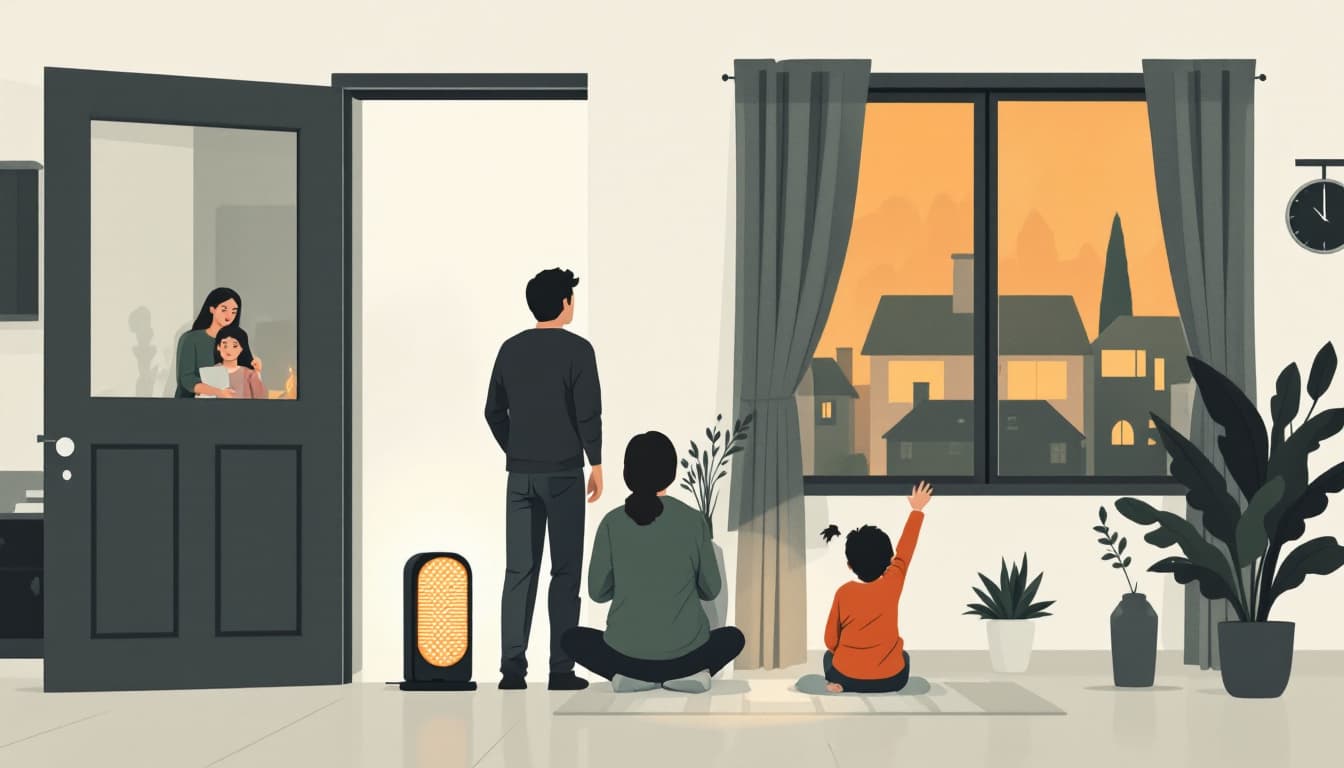
Wildfire smoke blanketing Montana's Flathead Valley this week prompted local organizers and health agencies to stand up a series of clean air pop-up events across the region, according to reporting from the Flathead Beacon. The events were designed to give residents — particularly those with respiratory conditions — access to filtered indoor spaces during what has become an increasingly compressed smoke season in the Northern Rockies.
The Flathead Valley, anchored by Kalispell and sitting adjacent to Glacier National Park, has seen recurring smoke intrusions in recent summers, but the current episode appears to have triggered a more formalized community response than prior years warranted. Clean air stations of this type are typically set up in libraries, community centers, or other public buildings equipped with HVAC filtration capable of capturing fine particulate matter — the PM2.5 fraction that poses the greatest cardiovascular and pulmonary risk. The Flathead Beacon's coverage did not specify the exact number of sites activated or the Air Quality Index readings that triggered the response, but pop-up clean air programs in comparable Montana events have historically launched when AQI values climb into the "Unhealthy" range, generally above 151 on the EPA scale.
What general news coverage of these events rarely addresses is the filtration gap that shows up precisely when pop-up sites matter most: household air filtration demand spikes sharply during regional smoke events, and supply at retail outlets in smaller markets like Kalispell frequently runs thin within 24 to 48 hours of an AQI advisory. Residents who rely on portable HEPA units — or who have pre-staged higher-MERV filters for their home HVAC systems — tend to be the ones who never need the pop-up sites at all. For those without that baseline, community clean air stations become a genuine lifeline, not a precaution. That dependency on public infrastructure is worth understanding on its own terms, separate from any individual preparedness calculus. Our portable air purifier review covers the performance differences between common consumer units under smoke conditions, which is the kind of specification data that rarely appears in public-health event announcements.
Montana's fire season in 2026 has been notable for its early onset, with significant burning in the Bob Marshall Wilderness complex and surrounding national forest land. The Flathead Valley's geography — ringed by mountain terrain that can trap smoke inversions — makes it particularly susceptible to multi-day poor air quality episodes even when active fire fronts are relatively distant. Flathead Beacon's coverage reflects a broader pattern visible across the Intermountain West this summer, where local governments are increasingly treating smoke response as a routine emergency management function rather than an exceptional one.