A reader letter published this month in the Detroit Free Press made a point that deserves more attention than the letters section typically gets: the wildfire smoke blanketing the Midwest and Northeast is not a Canadian problem that crossed the border. It is a structural feature of a warming fire season, and it will return.
That reframe matters because it changes the household decision calculus entirely. A one-off event from an unusually bad Canadian fire year is something you wait out. A pattern that repeats every summer is something you build for.
What's actually changing
Wildfire smoke air quality events have shifted from occasional disruptions to something closer to a seasonal condition across large parts of the U.S. The EPA's AQI tracker has recorded more Code Orange and Code Red days across the Upper Midwest and Mid-Atlantic in recent summers than in any comparable period in its monitoring history. Those aren't data artifacts — they reflect real changes in fire frequency, intensity, and smoke transport patterns.
The public health exposure is not trivial. Fine particulate matter (PM2.5) in wildfire smoke reaches indoor spaces more easily than most people assume. A house with average infiltration rates and no active filtration can see indoor PM2.5 reach 70-80% of outdoor concentrations within a few hours of a heavy smoke event. Children, anyone over 65, and people with asthma or cardiovascular conditions face the sharpest risk, but the evidence on repeated low-level smoke exposure for healthy adults has gotten harder to dismiss over the past several years.
The honest version of this picture: we don't fully know the long-term health effects of repeated seasonal smoke exposure at the household level. The data is accumulating, and it's not reassuring, but it's also not settled. What we do know is that reducing exposure during high-AQI events reduces acute symptoms, and the tools to do that are cheap.
What we'd actually do
Check your AQI source and stop relying on weather apps. Most weather apps report general air quality in a way that lags, rounds, and understates smoke events. The EPA's AirNow.gov updates hourly by zip code and shows the specific pollutant driving the index. Set it as a browser bookmark. During fire season — which now effectively runs May through October across much of the country — check it the way you check a rain forecast.
Knowing the number changes behavior. A household that sees AQI 155 (Unhealthy) on AirNow is much more likely to keep windows closed and cancel the backyard barbecue than one that sees "moderate air quality" on a weather widget that averaged the past 24 hours.
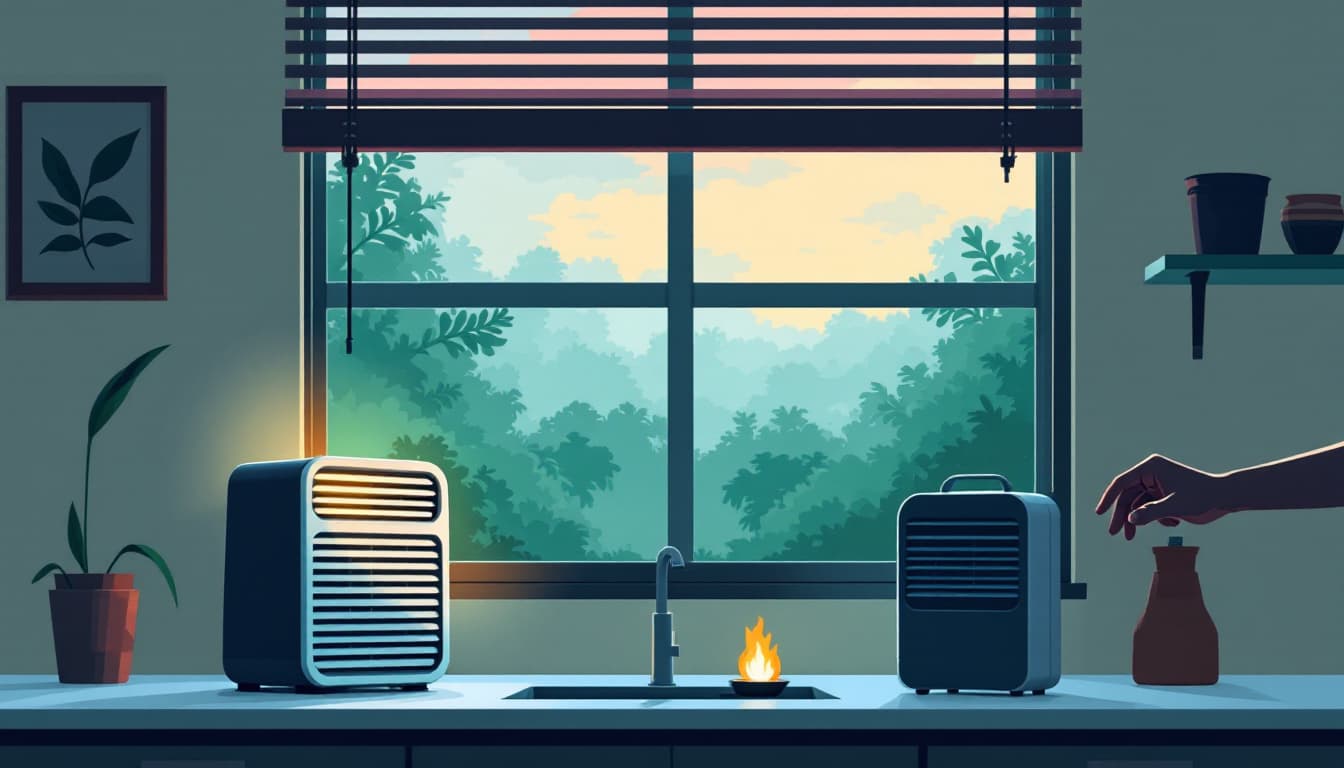
Buy one air purifier with a true HEPA filter for the room where your family spends the most time. This is the single highest-value purchase for smoke events, and prices have come down substantially. A unit sized for a 300-400 square foot room (look for a CADR rating above 200 for smoke) runs $80-$150 from several manufacturers. You do not need one for every room. You need one for the bedroom, or wherever young children sleep. During high-AQI days, close the door and run it on medium continuously.
This is not a gear-hype recommendation. It's the intervention with the strongest evidence base for reducing indoor PM2.5 during smoke events, and it's reusable every season. Replace filters annually or per the manufacturer's guidance.
Make a 20-minute home air-sealing assessment. Walk your house during a calm day and feel for drafts around window frames, door thresholds, attic hatches, and fireplace dampers. Weatherstripping and foam tape are not glamorous, but they meaningfully reduce smoke infiltration during events. A fireplace damper left open during a smoke event is a direct channel for PM2.5 into your living space. Close it. If you have a whole-house HVAC system, confirm the filter is a MERV-13 or higher — most systems ship with MERV-8, which does almost nothing for fine particulate.
Build a three-day indoor plan for your household, especially if you have kids or elderly family members. Know in advance: where will people sleep during a multiday smoke event? What's the backup if school closes or outdoor activities are canceled? Which neighbor or family member is most vulnerable and might need a place with filtered air? During the 2023 and 2024 smoke events, the families who managed best were those who had already made one or two physical changes to their homes — not those who had the most elaborate emergency plans.
The bigger picture
The Detroit Free Press letter was right to push back on the "blame Canada" framing. Assigning the smoke to a foreign origin obscures the pattern and lets households off the hook for preparation. A smoke event that comes from Canada is still smoke in your child's lungs.
The goal here is not to turn every summer into a bunker exercise. It's to spend $100-$200 and two hours of attention so that the next Code Red day is an inconvenience rather than a scramble. That's the gap between durability and surprise — and it's almost always a smaller gap than it looks.