The Air Quality Index on your phone reads 101 — "Unhealthy for Sensitive Groups" — and the official advice says to limit outdoor exercise. So you keep the windows cracked and let the kids finish dinner. That gap between what the guidance says and what's actually happening in your home is the problem a report this month from Innovation News Network put a name to: wildfire smoke public education is systematically missing critical health information.
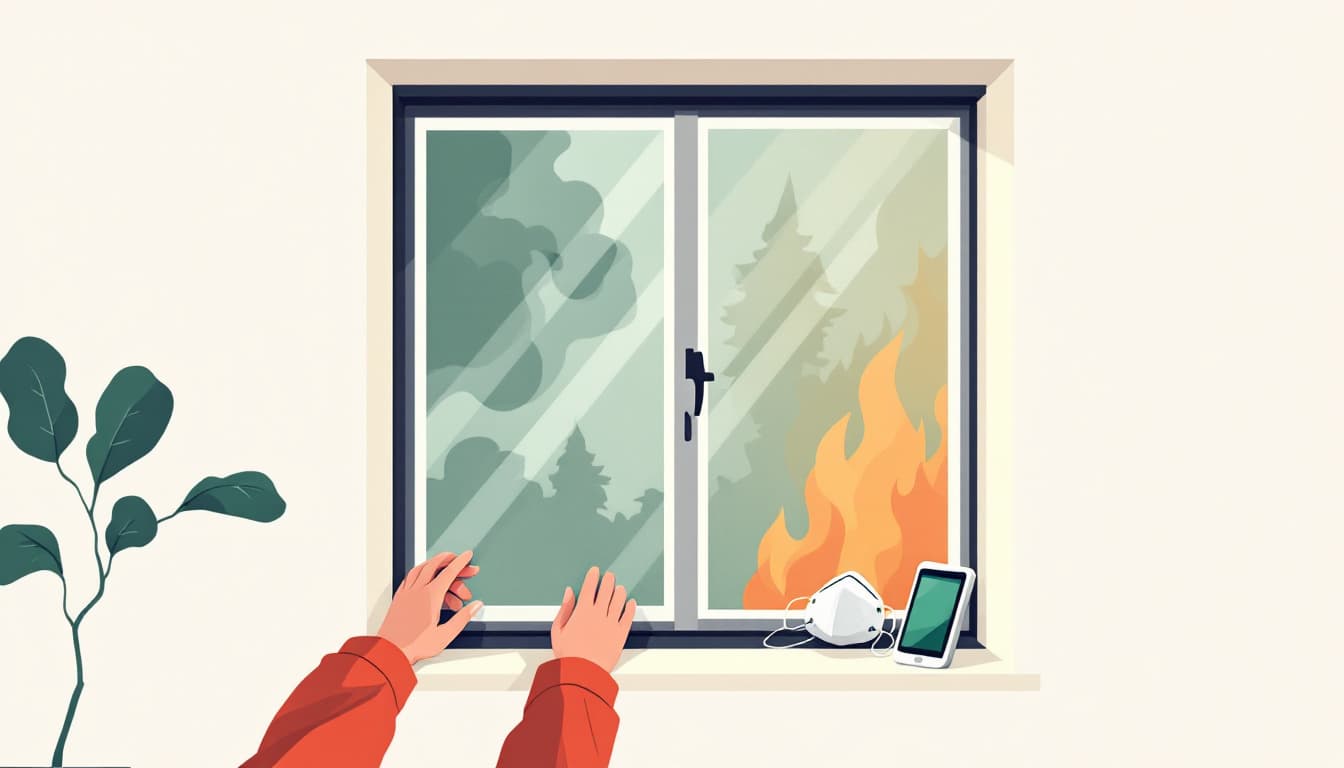
The piece doesn't overstate the case. It doesn't need to. The pattern it describes is familiar to anyone who has watched official smoke advisories during a bad fire season: they emphasize outdoor activity restrictions, they reference AQI thresholds, and they largely stop there. What they rarely communicate is that fine particulate matter — PM2.5, the fraction small enough to bypass your airway's defenses — infiltrates most homes within one to four hours of an outdoor spike. Closing windows slows that infiltration; it does not stop it.
What's actually changing
Wildfire smoke seasons in the western and increasingly the central and southeastern United States are longer than they were twenty years ago. That's not a projection — it's observable in NIFC seasonal fire data year over year. But the public health communication infrastructure was largely built for acute, short-duration events. A three-day smoke event near a single fire gets treated the same as a six-week regional smoke season that blankets multiple metro areas. The advice — "stay indoors, limit exertion" — doesn't scale to weeks of degraded indoor air, and it says almost nothing about the populations for whom even brief exposure carries serious risk: children under five, adults over sixty-five, anyone with asthma, COPD, or cardiovascular disease.
The second gap is economic. Official guidance implicitly assumes that "staying indoors" means staying in a well-sealed, climate-controlled home. For families in older housing stock — pre-1980 construction, single-pane windows, gaps around door frames — the indoor air during a smoke event may reach 60 to 80 percent of outdoor PM2.5 concentrations. The guidance rarely says that. It also rarely mentions that a box fan and a furnace filter can close most of that gap for about twelve dollars.
What we'd actually do
Build a DIY air cleaner for each main living space before the season peaks. A 20x20-inch MERV-13 furnace filter taped to a box fan running on high moves roughly 500 cubic feet of air per minute and cuts PM2.5 concentrations significantly — this is sometimes called a Corsi-Rosenthal box, though a single-filter version works. The filters cost roughly $10-15 at a hardware store and should be replaced after a prolonged smoke event. This is not a substitute for a HEPA air purifier, but it is far better than nothing, and it's available this week at a price that doesn't require a purchasing decision.
Establish one "clean room" in your home and use it. Pick the most airtight room — typically an interior bedroom. Run your air cleaner there continuously during smoke events. Have young children and elderly family members sleep there. Sealing door gaps with a damp towel is a meaningful additional step. Concentrating your air-cleaning capacity in one room is more effective than spreading insufficient filtration across a whole house.
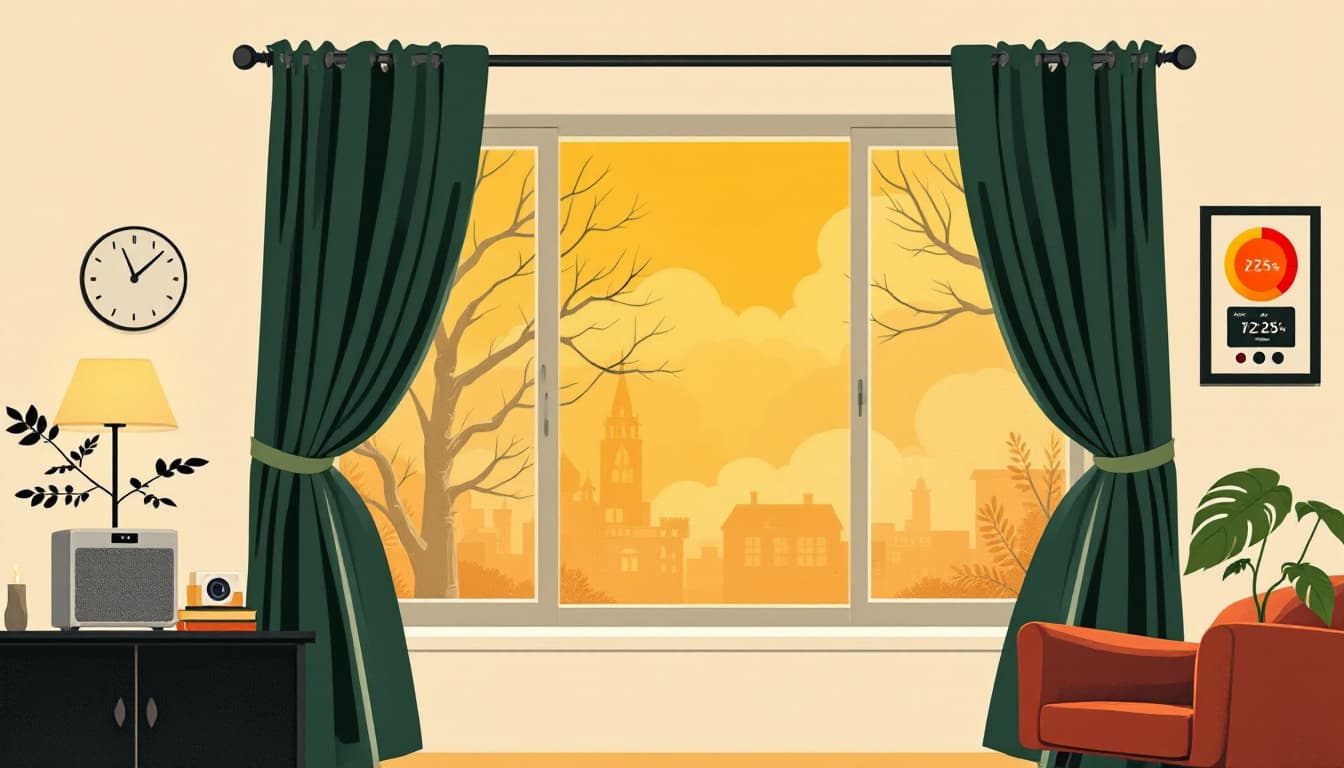
Learn what your home's AQI actually is, not just the outdoor reading. Low-cost PM2.5 sensors from brands like PurpleAir and AirThings run $80-250 and give you a real-time indoor reading. This matters because the moment you see indoor PM2.5 rising toward 35 µg/m³ — the EPA's 24-hour standard — you have actionable information, not a guess. One sensor in your main living area is sufficient to calibrate your response.
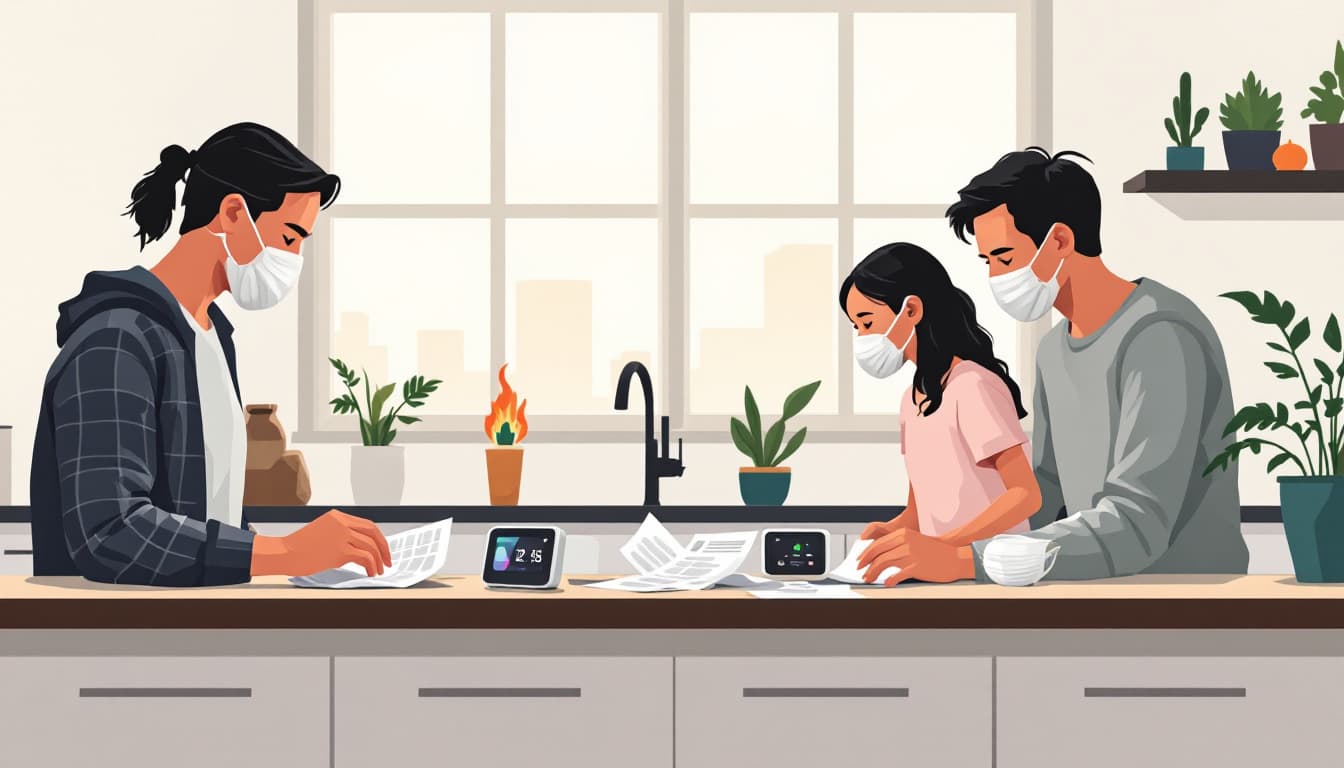
Stock N95 respirators for necessary outdoor trips, not cloth masks. Cloth masks do not filter PM2.5 meaningfully. An N95 or KN95 worn correctly does. Keep a small supply — twelve to twenty masks per adult — stored in a cool, dry location before the season. During a prolonged smoke event, you will need to leave the house. This is the moment for the respirator, not the neck gaiter.
Talk to any family member with a respiratory or cardiac condition about their action plan now, not during the event. This means a conversation with their doctor before smoke arrives about whether they should pre-fill prescriptions, identify evacuation thresholds, or have supplemental oxygen available. The time to learn that your asthmatic twelve-year-old's rescue inhaler is expired is not at 11 p.m. during an AQI of 175.
The Innovation News Network report is pointing at a structural problem: the public health system optimized its smoke communication for the fire seasons of thirty years ago. That's not a scandal — it's lag, and lag is addressable at the household level without waiting for the system to catch up.
The goal here isn't to survive a catastrophic event. It's to get through a two-week smoke season without a preventable asthma hospitalization, without your toddler's lungs taking on a load they shouldn't carry, without your sixty-eight-year-old parent deciding that feeling short of breath is just how things are now. Durable families don't just react to warnings. They build the small systems that make warnings less necessary.