The Cascade Range has been running a smoke corridor since late July. IQAir's wildfire map spotlight on Washington, published this week, shows active fire-driven air quality degradation across portions of the state — with Eastern Washington bearing the worst of it and the Puget Sound basin periodically pulling smoke west through the passes. AQI readings on bad days have pushed into the "Unhealthy" range, where cumulative exposure becomes a real health issue for anyone spending time outdoors, and a manageable but meaningful one even for people staying inside.
The signal here isn't that wildfires in Washington are unusual. They're not. The signal is that most households in this state still don't have a functional indoor air plan — and IQAir's real-time tracking makes it harder to pretend the smoke isn't measurable.
What's actually happening vs. what people assume
Most households assume the risk splits cleanly: Eastern Washington gets the fires, Western Washington gets the haze at worst. That's roughly true in terms of ignition points, but smoke doesn't respect the Cascades cleanly. When upper-level winds align, Spokane-area fires push particulate matter into the Wenatchee Valley, over Stevens Pass, and into King and Snohomish counties within hours.
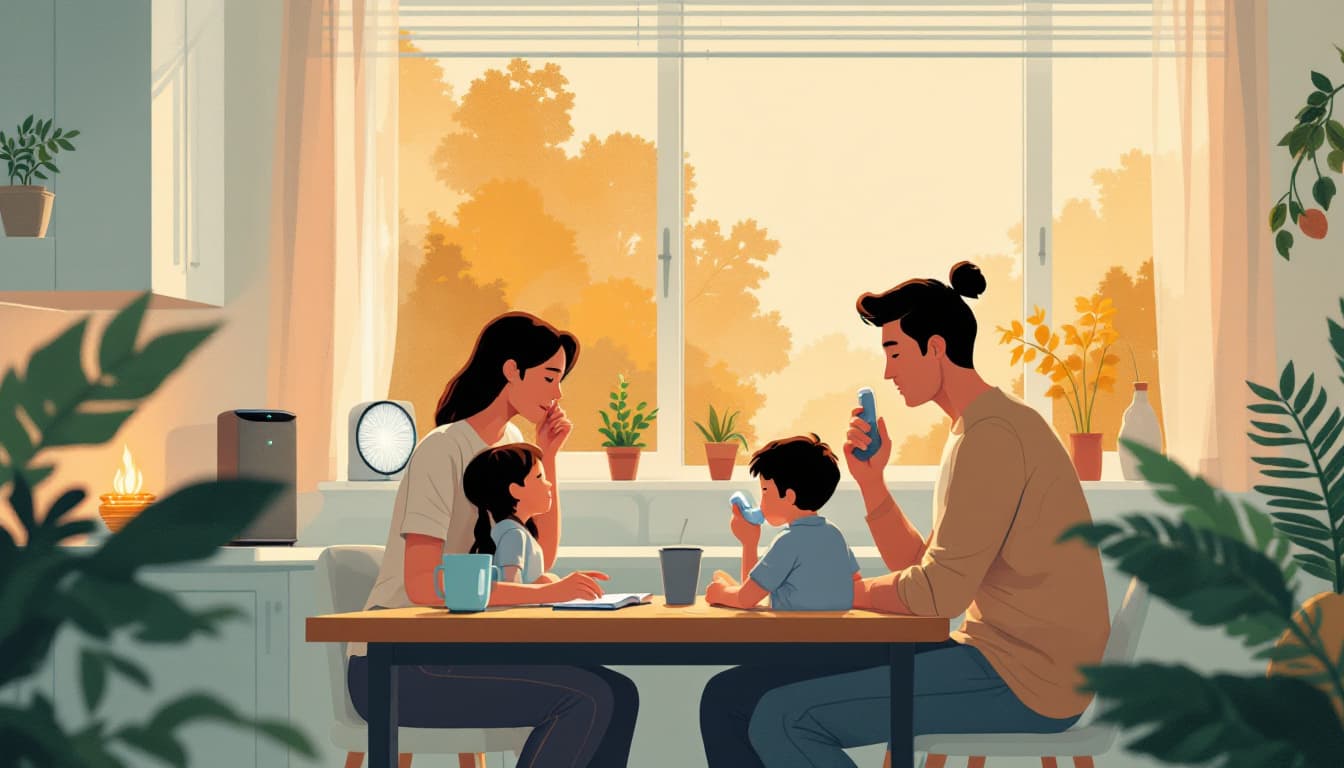
The other assumption worth questioning: that "staying inside" is enough. A standard home with windows closed still exchanges air with the outside at a rate that matters during a multi-day smoke event. Without filtration, indoor PM2.5 — the fine particulate that penetrates deep into lung tissue — can climb to 60–70% of outdoor levels, according to EPA indoor air research. That number gets worse in older homes and in houses with forced-air systems that lack proper filtration.
Washington's Department of Ecology maintains an air quality index tool (enviwa.ecology.wa.gov) with station-level data across the state. Bookmark it. It's more granular than national apps for Washington-specific conditions.
What we'd actually do
Check your HVAC filter rating and replace it before the next smoke event. A MERV-13 filter is the practical minimum for catching fine wildfire smoke particles in a central air system. Most homes run MERV-8 or lower. Upgrading costs under $30 at most hardware stores and takes five minutes. If you have a heat pump — common in newer Western Washington homes — confirm the filter slot before buying; some systems require specific sizes.
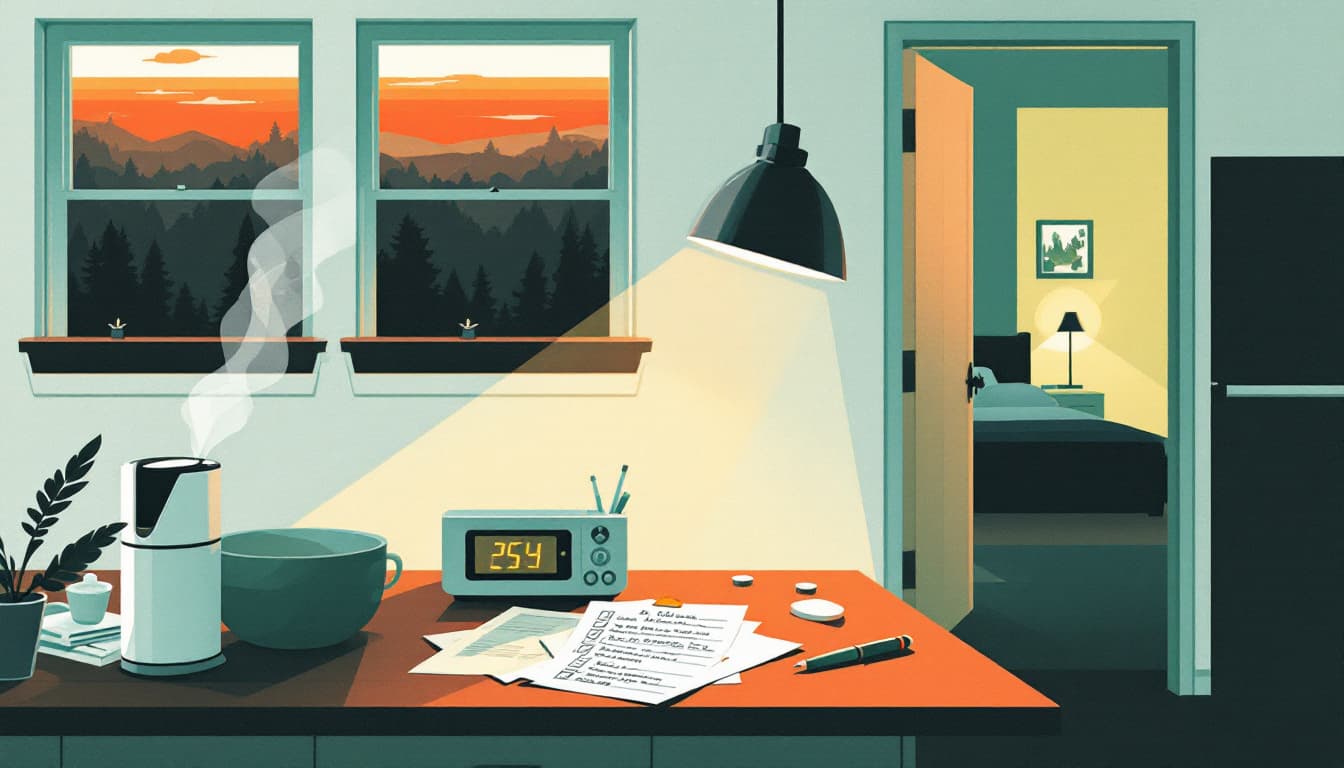
Build or buy one room-air cleaner before you need it. A box fan with a MERV-13 furnace filter taped to the intake — sometimes called a Corsi-Rosenthal box — costs about $40 in materials and moves enough air to meaningfully reduce PM2.5 in a bedroom or main living space. Commercial HEPA purifiers rated for 200–400 square feet run $80–$150 and are quieter. Pick one, set it up in the room where your family sleeps, and test it. The worst time to learn your setup has gaps is during a five-day smoke event.
Download IQAir or the Washington Ecology app and set an AQI alert threshold. The relevant threshold for most healthy adults is 100 (the "Unhealthy for Sensitive Groups" line). Set your alert there, not at 150. Children, older adults, and anyone with asthma or cardiovascular conditions should treat 100 as their action point. This is not a passive monitoring task — the alert is what triggers you to close the house and run the filter before conditions worsen.
Know your county's clean air shelter. King, Snohomish, Spokane, and Yakima counties have historically opened public cooling and clean-air shelters during prolonged smoke events. Call your county's emergency management office now, during a non-emergency week, and ask what the protocol is. Knowing where to go takes less than ten minutes and removes a decision from a moment when you'll be stressed and the air will be bad.
Have N95 masks that fit your family, and confirm they actually seal. N95s — not cloth masks, not surgical masks — are the minimum effective barrier for wildfire smoke. Run a fit check: cover the mask, exhale sharply, and feel for leakage around the edges. If you can smell smoke through the mask indoors, it's not sealing. Washington households, especially those east of the Cascades, should have at least two fitted N95s per person stored somewhere accessible.
The bigger picture
Washington's fire seasons have lengthened over the past two decades, with the highest-acreage years clustering more densely in the 2010s and 2020s than in any prior period on record. The households that weather this well are not the ones with the most elaborate gear. They're the ones who closed their windows at the right time, ran the right filter, and didn't wait for an emergency declaration to start thinking about air quality.
Durability here looks like a $30 filter change and a bookmark. That's within reach this week.