A Reuters report this week found that heat-linked deaths in the UK this year are tracking close to the 2022 record — a summer that killed more than 3,000 people in England alone according to the UK Health Security Agency's own retrospective count. The 2022 event shocked public health officials because it unfolded in a country that does not think of itself as a hot-weather place. The deaths were not from outdoor exertion. They were from bedrooms, living rooms, and care homes that had no mechanical cooling and no plan.
The UK pattern maps directly onto how heat kills in the American mid-Atlantic, Pacific Northwest, and upper Midwest: climates where households were built for cold retention, not heat dispersal, and where most families do not own central air conditioning or have never tested whether their window units can actually hold a room temperature below 80°F when outdoor temps push past 95.
What's actually happening
Heat is now the leading weather-related cause of death in the United States, outpacing floods and tornadoes most years according to NOAA historical data. Europe has been closing the gap. The 2022 UK event was not a fluke; it was a preview of a new baseline. UKHSA and equivalent agencies have since revised their heat alert thresholds downward, because the old thresholds were calibrated for a climate that no longer reliably exists.
The structural problem is that most heat deaths happen during multi-day events, not single-afternoon spikes. A house absorbs heat over 48 to 72 hours. By night three of a heat wave, interior temperatures in an uninsulated or poorly ventilated home can stay above 85°F even after outdoor temps drop. Elderly residents, infants, people on diuretics or antipsychotics, and people who live alone are the highest-risk groups — but healthy adults in their 40s and 50s who are sleep-deprived and dehydrated are not immune.
The other structural problem is cognitive. Heat impairs judgment before it produces recognizable symptoms. People underestimate how hot they are. They delay seeking cooling. They decline help. This is not weakness; it is physiology. Planning for heat has to happen before the heat arrives, not during it.
What we'd actually do
Map the cool spots in your home and your neighborhood before the next alert. Walk your home at 2 p.m. on a hot day with a $12 indoor thermometer and record actual temperatures by room. Most families are surprised which rooms are tolerable and which are dangerous. Know the nearest public library, grocery store, or cooling center that is open evenings — heat kills at night, and many public cooling centers close at 5 p.m.
Buy a window unit rated for the room you actually sleep in, not just a large common area. A single 8,000 BTU window air conditioner costs $180–$250 and can hold a 250-square-foot bedroom below 78°F even during a multi-day event. This is the single highest-return preparedness purchase for families in non-air-conditioned homes in temperate climates. If cost is a barrier, many utility companies and state energy offices run low-income AC assistance programs; look up yours now, not in August.
Establish a daily check-in protocol for vulnerable people in your network. This means a phone call or text before 10 a.m. and again after 6 p.m. on any day with a heat advisory. The UK data, and equivalent US data from the 2021 Pacific Northwest heat dome, consistently show that people who died alone had not been checked on in the prior 24 hours. This costs nothing.
Rehydrate proactively, not reactively. By the time you feel thirsty during a heat event, you are already mildly dehydrated. The practical standard is 16 ounces of water before any outdoor exposure and consistent intake throughout the day. Alcohol and caffeine accelerate fluid loss. Know which medications in your household increase heat sensitivity — diuretics, antihistamines, beta-blockers, and several antidepressants all make thermoregulation harder.
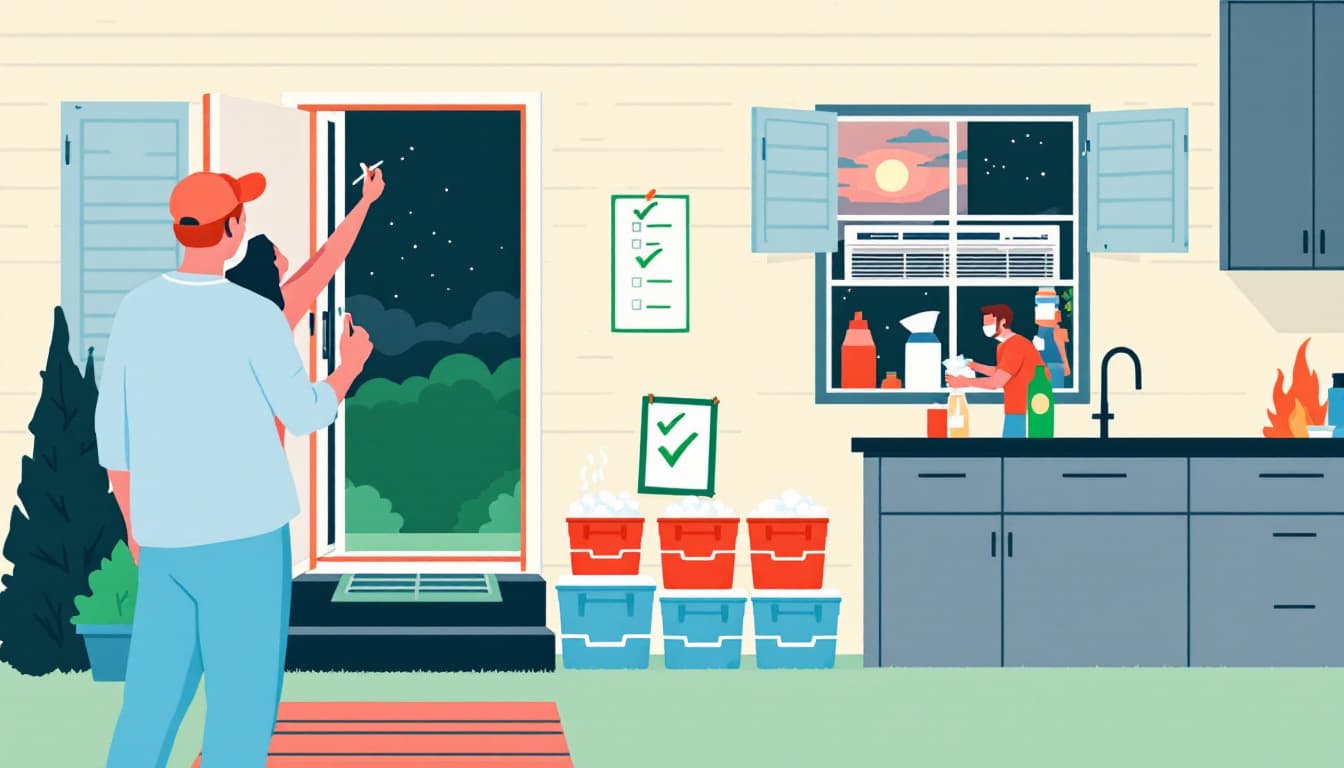
Prepare your home the evening before a forecast multi-day event. Open windows after 9 p.m. when outdoor air cools below indoor air temperature, run fans to flush the heat stored in walls and floors, then close everything up before 8 a.m. the next morning. This pre-cooling strategy can lower a home's thermal baseline by 5–8 degrees before the day's heat peak arrives — meaningful when the difference between tolerable and dangerous is narrow.
The bigger picture
The Reuters report is not a UK story. It is a signal about what happens when infrastructure built for one climate meets a different one. Most American housing stock was designed for the climate of 30 to 60 years ago. Households that treat heat as a preparedness category — like they treat hurricane season or winter storms — will have options. Households that treat it as an inconvenience will be improvising on day three of the next heat dome.
Durability is the goal. Not bunkers. Not generators. A thermometer, a window unit, and a phone call.