San Bernardino County is under an extreme heat warning through Monday evening, according to a Sacramento Bee report this week. Temperatures across parts of the Inland Empire are forecast to push well past 110°F. That is not an anomaly anymore — it is a recurring pattern, and the gap between "it got hot" and "someone died" is measured in hours, not days.
Most families are underprepared for that gap.
What's actually changing
Heat events in California's inland desert communities have always been severe, but the combination of longer duration, higher overnight lows, and faster ramp-up times has changed what household preparedness actually requires. The critical variable is overnight recovery. When nighttime temps stay above 85°F, a house that was merely warm at 10 p.m. can become genuinely dangerous by 3 a.m., particularly for older adults, infants, and anyone on diuretics, beta-blockers, or antipsychotics — drug classes that impair the body's cooling response.
A second shift: the grid. California's power infrastructure has improved since the rotating outage years, but demand spikes during multi-day events still stress the system. A warning that runs "until Monday evening" is a warning that spans the highest-demand window twice. That is when curtailments, if they happen, are most likely to hit.
The third shift is economic. Running central air hard for 72-plus hours during a peak-rate period is expensive. Households that defer that cost by limiting AC use are the same households most likely to end up at a cooling center — or an emergency room.
What we'd actually do
Map your household's heat vulnerability before the temperature peaks. Walk through who in your home is at actual risk: age over 65, under 2, any chronic illness, any medication that affects sweating or cardiovascular response. If that person is you, don't wait to feel bad. Heat illness progresses quickly and judgment degrades before physical symptoms become obvious. Set an alarm to check on yourself and others every two hours.
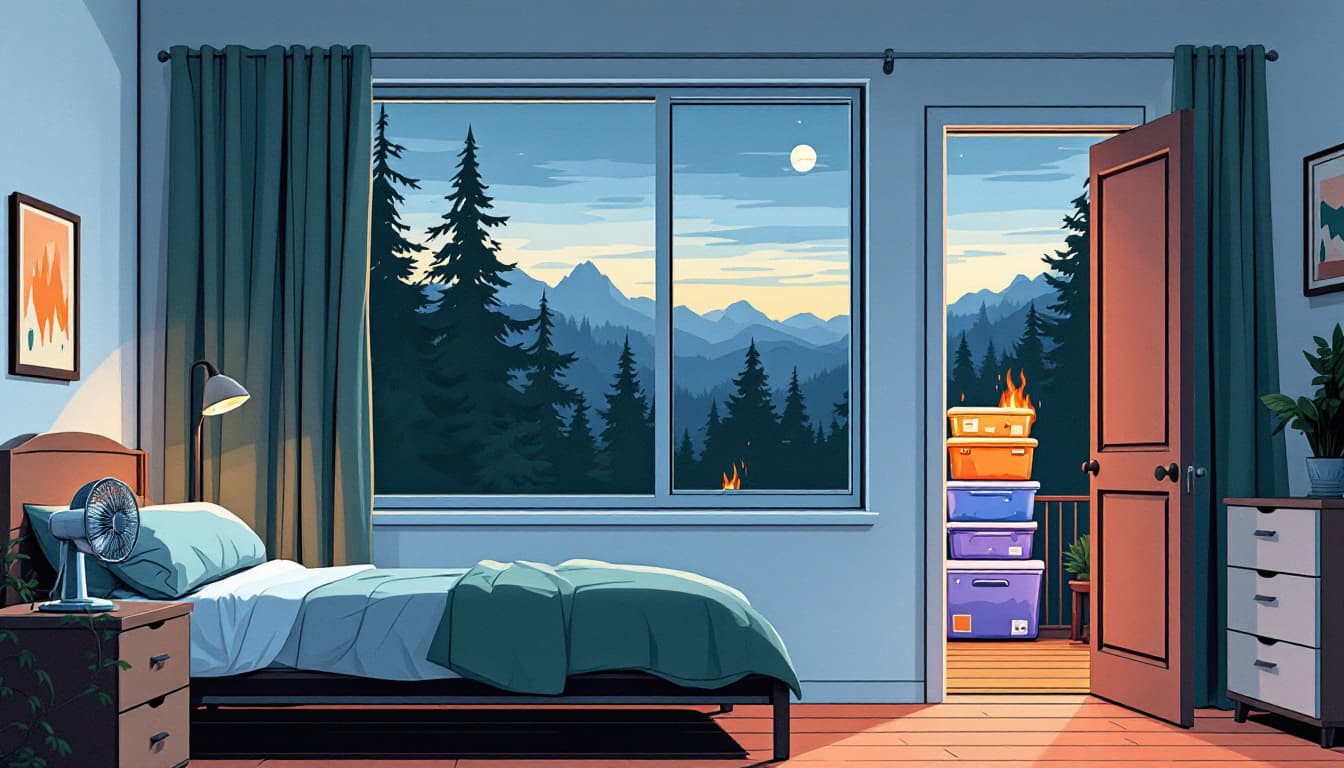
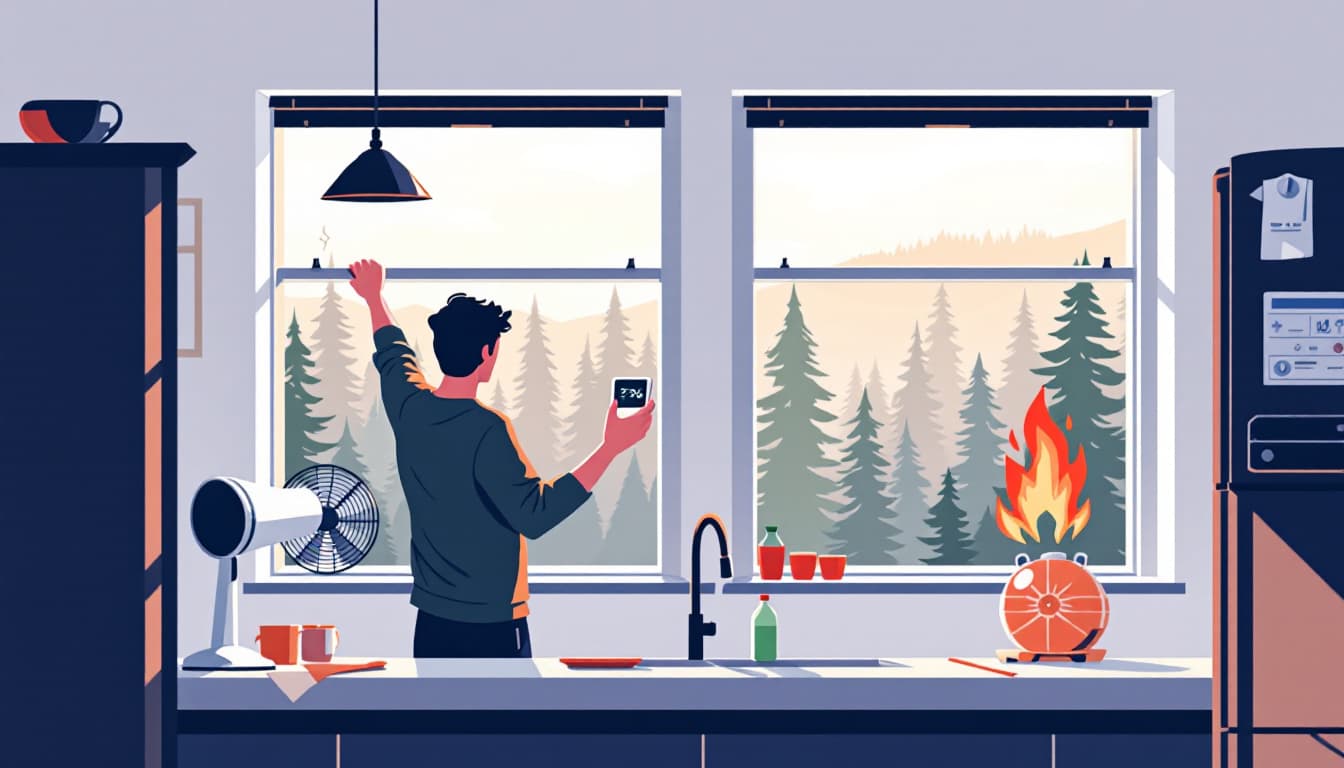
Prepare your home for a grid interruption now, not after the outage starts. Fill your bathtub with cold water before a potential outage — it is thermal mass that keeps a bathroom cooler longer and provides cooling water if your AC drops. Hang or tape moving blankets or blackout curtains on south- and west-facing windows before noon. A $25 box fan pulling cool air in from the north-facing side of your house at night outperforms a window unit running in a sun-baked room.
Identify your nearest cooling center and treat it like a real option. San Bernardino County operates cooling centers during extreme heat events. Most families think of them as a last resort. They are not — they are a reasonable midday option for households with elderly members or young children, and they are free. Search "[your county] cooling center" plus the current year; lists update seasonally and locations change.
Build a 72-hour water buffer explicitly for heat, not just general emergency use. The standard one gallon per person per day assumes moderate conditions. In triple-digit heat with physical activity, FEMA's own guidance acknowledges that number can double. For a family of four, that means 24 gallons minimum for three days. A case of water bottles is not enough. Two or three filled and refrigerator-chilled gallon jugs, plus a cooler with ice, covers the gap if the power goes out.
Know the difference between heat exhaustion and heat stroke. Heat exhaustion: heavy sweating, weakness, cold or pale skin, nausea. Move the person to a cool place, give water, apply cool compresses. Heat stroke: hot and red skin, rapid pulse, confusion, loss of consciousness. This is a 911 call. Do not wait to see if it resolves.
The bigger picture
Extreme heat kills more Americans annually than floods, hurricanes, and tornadoes combined, according to CDC mortality data — and it remains the least-discussed hazard in mainstream preparedness culture, which tilts heavily toward dramatic, cinematic threats. A heat warning in San Bernardino County is not a grid-down scenario. It is not a bug-out moment. It is a 72-hour window where a few cheap, unglamorous interventions — blackout curtains, a filled bathtub, a known address for a cooling center — are the difference between a hard week and a medical emergency.
Durability is not about having the right gear. It is about knowing, in advance, what Tuesday morning looks like when the power has been out since Saturday and your house is 95 degrees inside.